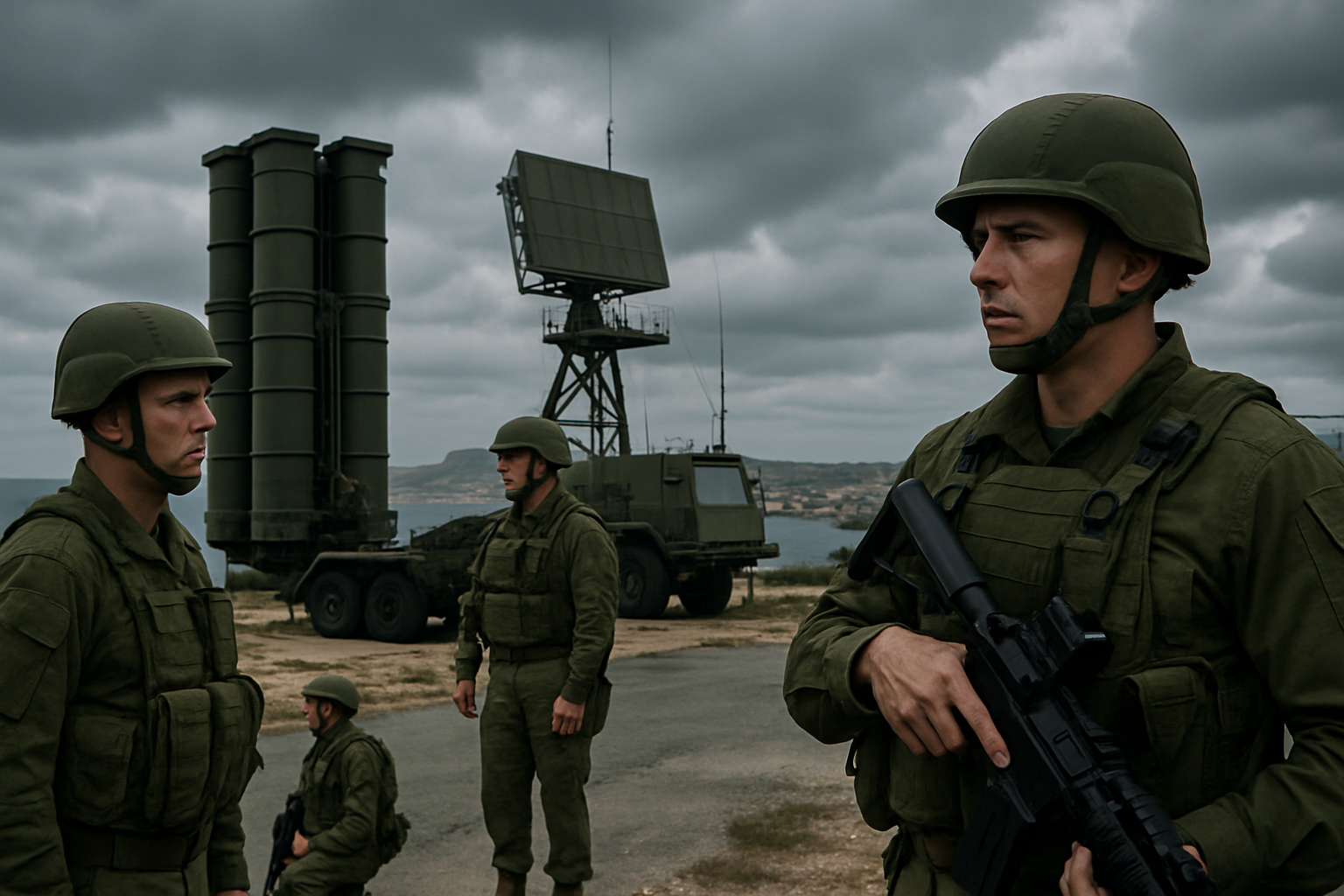
Cyprus maintains maximum security alert as France dispatches missile defense systems, anti-drone technology, and military frigates to the Mediterranean island, following unprecedented Iranian drone strikes on British sovereign bases that marked the first direct attack on European territory since World War II.
The emergency military support from Paris was confirmed early Tuesday morning by Cypriot President Nikos Christodoulides, who received personal assurance from French President Emmanuel Macron during two critical phone calls on Monday. The French deployment includes anti-missile systems, specialized anti-drone units, and the immediate dispatch of a frigate, with a second naval vessel to follow shortly.
Unprecedented Attack on European Soil
The crisis erupted when Iranian-manufactured drones, launched from neighboring Lebanon, successfully struck the British sovereign base at Akrotiri on Sunday night. According to Cypriot government sources speaking to French media, the attack represented the first time Middle Eastern conflicts have directly reached European sovereign territory since 1945.
The RAF Akrotiri base, housing approximately 3,000 UK personnel, serves as a critical Eastern Mediterranean hub located just 100 miles from Lebanon and 200 miles from Syria. The drone strikes caused limited runway damage but no casualties, though they triggered the first-ever activation of Cyprus's national ESTIA evacuation plan.
"Cyprus was not the target - the target was the British Bases. But this attack represents a dangerous escalation that threatens the security architecture of Europe itself."
— Konstantinos Letymbiotis, Cyprus Government Spokesman
Massive International Military Response
The Iranian drone strikes have precipitated the most significant military mobilization in the Eastern Mediterranean since the 1974 Turkish invasion of Cyprus. Greece has deployed two frigates - the "Kimon" and "Psara" - along with four F-16 fighter jets now stationed at the Andreas Papandreou air base in Paphos.
German Chancellor Friedrich Merz also responded positively to Christodoulides' request for naval support during Monday phone conversations, with formal German government authorization expected imminently. The coordinated European response reflects the gravity of what officials describe as an unprecedented breach of continental security.
British authorities briefly declared a "security threat" at Akrotiri early Tuesday morning, instructing personnel to "move away from windows and take cover behind substantial, solid furniture" before confirming the alert was lifted within minutes. This marked the third such warning since Sunday night's initial attack.
Regional Crisis Spillover
The Cyprus strikes occurred as part of Iran's "Operation True Promise 4," a massive retaliatory campaign following the death of Supreme Leader Ali Khamenei in coordinated US-Israeli "Operation Epic Fury" strikes. The Islamic Revolutionary Guard Corps (IRGC) declared that "no red lines remain," extending their targeting to include all US and Israeli assets - a declaration that now encompasses British sovereign territory.
The attack represents a dramatic expansion of Iranian strikes beyond the Gulf region to European territory, occurring amid a global aviation crisis that has seen over 18,000 flights cancelled worldwide as multiple Middle Eastern countries closed their airspace simultaneously.
European Security Implications
Cyprus has activated comprehensive emergency protocols, closing all schools in affected areas including Akrotiri, Asomatos, Episcopi, and Trachoni. The Cyprus Peace Council called the British bases "anachronistic remnants of colonialism," while government officials stress that the European Union must now confront the reality of Middle Eastern conflicts reaching its territory.
The island's civil defense capabilities have come under scrutiny, with Cyprus possessing only 2,200 registered shelters protecting approximately 30% of its population. The current crisis has exposed significant gaps in urban protection, with many shelters converted to rental properties or storage facilities.
Nuclear Diplomacy Collapse Context
The strikes occurred following the complete breakdown of US-Iran nuclear negotiations, despite recent Geneva talks achieving what Iranian Foreign Minister Abbas Araghchi called "broad agreement on guiding principles" - the most significant diplomatic progress since the 2018 JCPOA collapse.
The fundamental disagreement proved insurmountable: Iran maintained that ballistic missiles and regional proxies were "red lines" excluded from nuclear-only talks, while the US demanded comprehensive agreements addressing missiles, armed groups, and human rights issues.
Energy and Aviation Crisis
The broader Middle Eastern crisis has created severe global disruptions. Iran's threat to close the Strait of Hormuz - through which 40% of global oil transit passes - has sent energy prices surging, with natural gas increasing 24% in Europe and 78% in the United States.
Dubai International Airport, the world's busiest, remains completely shut down following missile damage, creating cascading effects throughout global aviation networks. The closure of critical Europe-Asia transit hubs has forced complex international rerouting affecting hundreds of thousands of passengers.
Historical Precedent and Implications
The March 2026 crisis marks a watershed moment in post-WWII European security, representing the first time Middle Eastern conflicts have directly targeted European sovereign military installations. The template-setting nature of these events demonstrates the rapid spillover potential of regional crises in an interconnected world.
Swedish terrorism researcher Magnus Ranstorp warns that Iran's weakened position may lead to increased asymmetric attacks against Western Europe as Tehran demonstrates continued capability despite facing unprecedented military pressure. The Cyprus attacks may represent the beginning of a new phase in which traditional geographic boundaries containing Middle Eastern conflicts no longer hold.
Coming Phase Decisive
As Greek Defense Minister Nikos Dendias arrives Tuesday for emergency consultations with Cypriot leadership, the international community faces a critical test of crisis management capabilities in the multipolar era. The success or failure of containing this escalation could provide a template for future nuclear dispute resolution or accelerate military solutions that reshape global geopolitics for decades.
The stakes extend far beyond the immediate regional context, encompassing global energy security, nuclear governance credibility, and the fundamental principles of international law enforcement that have governed post-WWII order. Cyprus finds itself at the center of what may prove to be the most consequential international crisis affecting energy markets, supply chains, and diplomatic precedents of the 21st century.