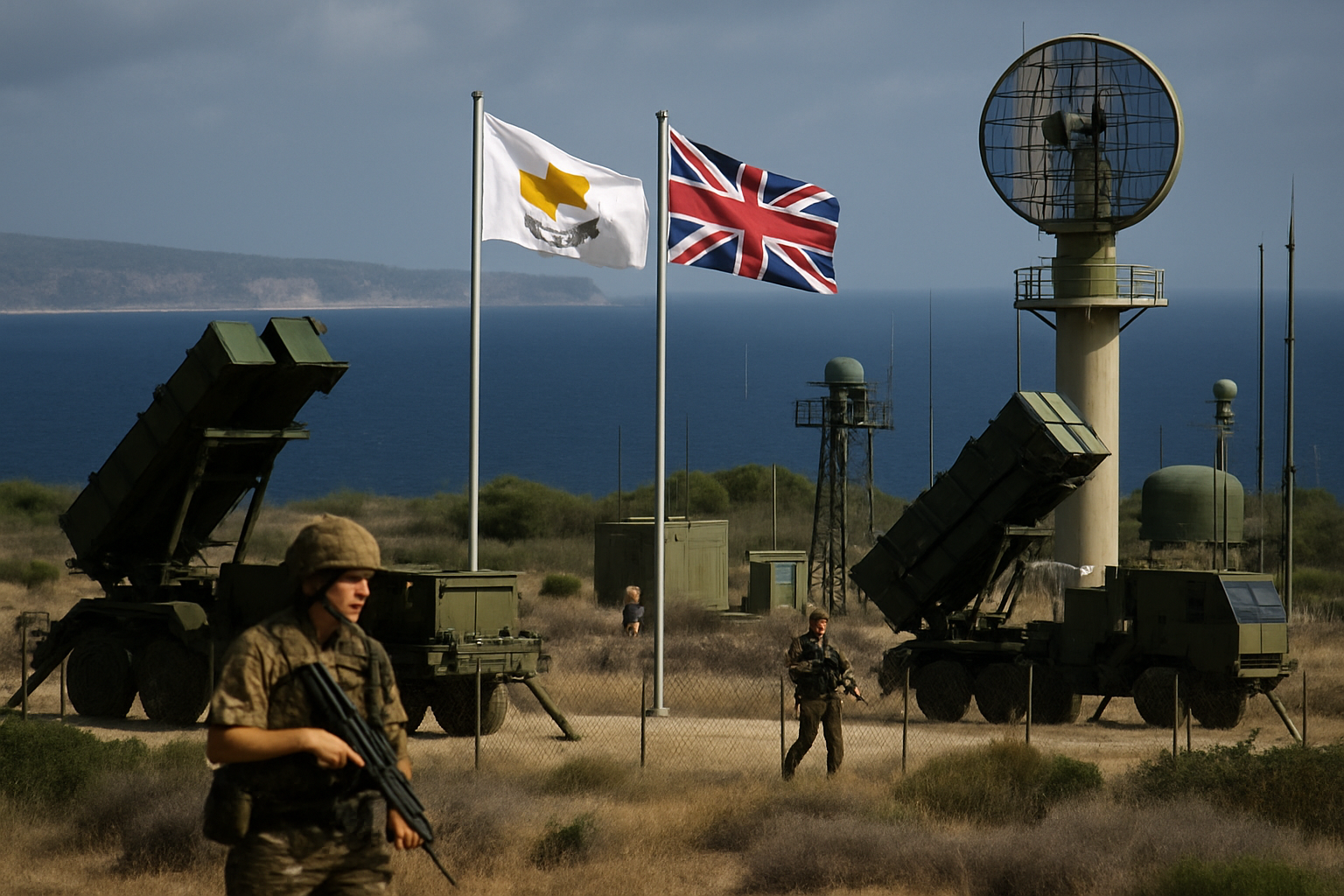
Cyprus has become an unexpected frontline in the escalating Middle East crisis, with the Mediterranean island nation experiencing multiple security incidents as Iran's "Operation True Promise 4" extends beyond traditional regional boundaries for the first time since World War II.
The strategic island, which hosts British sovereign military bases at RAF Akrotiri and Dhekelia with approximately 3,000 UK personnel, has found itself caught in the crossfire of the most dangerous international crisis since the Cold War. On Friday morning, sirens wailed across Akrotiri at 09:52 as British forces issued emergency shelter-in-place orders to local residents, marking the latest in a series of escalating security threats.
First European Territory Targeted Since WWII
The current crisis represents a watershed moment in European security, as Iranian drone attacks successfully struck RAF Akrotiri on March 2, marking the first time Middle Eastern conflicts have reached European sovereign territory since 1945. The attacks were launched by Hezbollah forces from Lebanon as part of Iran's massive retaliation campaign following the death of Supreme Leader Ali Khamenei in the US-Israeli "Operation Epic Fury."
According to Cypriot government spokesman Konstantinos Letymbiotis, the initial drone strikes caused "limited damage" to the runway but no casualties. However, the psychological and strategic impact has been profound, with Cyprus activating its national ESTIA evacuation plan for the first time in the country's history.
"There is an ongoing security threat. Please remain indoors and stay in place until further official notice. Move away from windows and take cover behind or beneath substantial, solid furniture."
— British Bases Emergency Message, March 6, 2026
Unprecedented European Military Response
The attacks on Cyprus have triggered the most significant European military mobilization in the Eastern Mediterranean since the 1974 Turkish invasion. Within hours of the initial strikes, a coalition of European powers deployed substantial military assets to defend the island.
France led the response, with President Emmanuel Macron personally ordering the deployment of advanced anti-missile systems, anti-drone technology, and the frigate Languedoc to Cypriot waters. The aircraft carrier Charles de Gaulle was redeployed from the Baltic Sea to the Mediterranean in the most significant French naval movement in decades.
Greece deployed four F-16 fighter jets and two naval frigates, including the advanced Belharra-class frigate Kimon equipped with state-of-the-art air defense systems. This represents the most substantial Greek military support for Cyprus since 1974.
Britain responded by deploying HMS Dragon, a Type 45 destroyer equipped with the Sea Viper missile system specifically designed to counter drone and missile threats, along with AW159 Wildcat helicopters featuring advanced counter-drone capabilities.
Strategic Vulnerability Exposed
The attacks have exposed critical vulnerabilities in Cyprus's defense infrastructure, with the island's civil defense systems proving inadequate for a modern conflict. Cyprus has only 2,200 registered shelters capable of protecting approximately 30% of the population, a figure that has actually decreased in recent years as owners declassify shelters for rental or storage purposes.
The activation of the ESTIA evacuation plan revealed gaps in emergency preparedness, with authorities scrambling to coordinate the evacuation of Akrotiri village and the closure of schools in surrounding areas including Asomatos, Episcopi, and Trachoni.

Warning System Under Strain
The frequency of security alerts has placed enormous strain on both military personnel and civilian populations. On Thursday alone, sirens sounded three times at RAF Akrotiri, each time triggering fighter jet scrambles and evacuation protocols, only for the all-clear to be given minutes later when the perceived threats proved non-existent.
According to informed sources, the bases automatically assume they are the target whenever any object is detected heading toward Cyprus from the Lebanon area. This hair-trigger response system, while necessary for security, has created a tense atmosphere of constant alertness that residents describe as psychologically exhausting.
Geopolitical Implications
The targeting of Cyprus represents a fundamental shift in the nature of Middle Eastern conflicts, demonstrating that traditional geographic boundaries can no longer contain regional disputes. The island's strategic location, just 100 miles from Lebanon and 200 miles from Syria, makes it an inevitable staging area for Western military operations in the region.
However, this strategic value has made Cyprus vulnerable to retaliation, despite its EU membership and officially neutral stance. The island hosts Western military assets while attempting to maintain diplomatic independence, a balance that has become increasingly difficult to sustain.
Regional Coalition Under Pressure
The expansion of the conflict to European territory has severely strained the unprecedented Middle Eastern coalition of Saudi Arabia, UAE, Qatar, and Egypt that had been supporting diplomatic solutions. Egyptian President Abdel Fattah al-Sisi condemned Iranian attacks on "sisterly Arab countries," warning of "comprehensive chaos" if the violence continues to escalate.
The targeting of Cyprus has particular symbolic importance as it represents Iran's willingness to strike at European territory directly, crossing a red line that had held since World War II and potentially drawing NATO into the conflict through Article 5 collective defense obligations.
Comprehensive Defense Umbrella
The international response has created a multi-layered defense system around Cyprus featuring French anti-missile and anti-drone technology, Greek F-16 interceptors, British Sea Viper missile systems, and potential Italian reinforcements. This represents the most concrete expression of European strategic autonomy in decades, with rapid coordination demonstrating independent action capability when continental security is threatened.
The success of this coordinated defense effort could provide a template for future European territorial defense coordination, potentially defining the next phase of European integration in security matters.
Economic and Humanitarian Impact
Beyond the immediate security concerns, the crisis has had severe economic implications. The targeting of regional infrastructure has contributed to the global aviation crisis, with over 18,000 flights cancelled worldwide. Dubai International Airport, the world's busiest, remains shut down from missile damage, forcing complex rerouting through European hubs including Cyprus.
Energy markets have been equally affected, with oil prices surging 10% to over $80 per barrel as Iran has declared the Strait of Hormuz "unsafe," threatening 40% of global oil transit. Natural gas prices have increased 24% in Europe and 78% in the United States.
Nuclear Diplomacy Collapse
The current crisis stems from the complete breakdown of nuclear negotiations between Iran and the United States, despite achieving what diplomats described as "broad agreement on guiding principles" - the most progress since the 2018 JCPOA collapse. The fundamental disagreement over scope proved insurmountable, with Iran excluding ballistic missiles and regional proxies as "red lines" while the US demanded comprehensive agreements including missiles, armed groups, and human rights.
This diplomatic failure occurred against the backdrop of a broader nuclear governance crisis, with the New START Treaty having expired on February 5, marking the first time in over 50 years without US-Russia nuclear constraints.
Looking Forward
As Cyprus continues to face security alerts, the island has become a test case for European unity in the face of extra-regional threats. The success of the coordinated defense effort could establish new precedents for collective European defense, while failure could leave the continent vulnerable to future asymmetric attacks.
The crisis has fundamentally altered the security landscape of the Eastern Mediterranean, with Cyprus evolving from a peaceful EU member state to a frontline territory in a global conflict. The coming days will determine whether the protective umbrella created by European allies can effectively shield the island from further attacks while diplomatic efforts seek to contain the broader regional crisis.
For Cyprus, a nation that has worked for decades to maintain neutrality while hosting Western military assets, the current crisis represents an existential challenge to its carefully balanced foreign policy. The island's experience may well become a template for how small nations navigate the complex security challenges of an increasingly multipolar world where regional conflicts can rapidly expand beyond traditional boundaries.