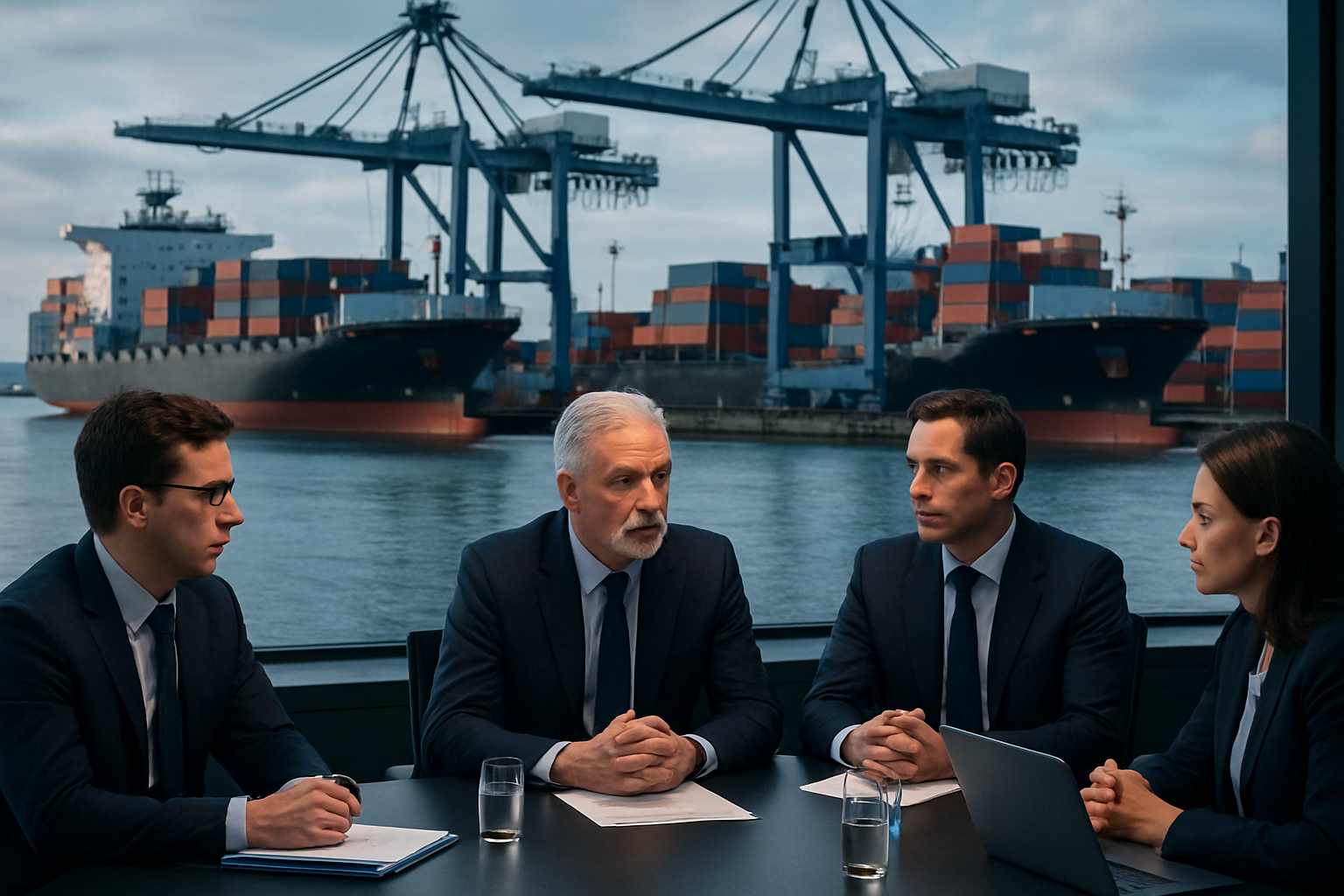
Cyprus positioned itself at the center of global shipping finance discussions this week as European transport infrastructure experiences unprecedented investment levels, with the 9th Capital Link Cyprus Shipping Forum bringing together industry leaders while Denmark celebrates record-breaking transport connectivity across the Øresund region.
Alpha Bank Cyprus participated as a key sponsor in the prestigious maritime finance conference held in Limassol, reinforcing the island nation's growing reputation as a hub for international shipping finance. The forum, organized under the auspices of the Deputy Shipping Ministry of Cyprus, attracted leading executives from shipping companies, banking institutions, and capital markets across the region.
At the forum's centerpiece panel entitled "Capital at Sea: The State of Ship Finance," Alpha Bank Cyprus was represented by Nikolaos Kagarakis, Shipping Finance Senior Relationship Manager of the Alpha Bank Group, who provided crucial insights into current market dynamics affecting the maritime finance sector.
Global Maritime Finance at Critical Juncture
The discussions focused extensively on developments in international shipping finance, regulatory changes, and geopolitical shifts that are reshaping the industry. Participants addressed mounting challenges arising from the ongoing energy transition and increasingly complex compliance requirements that are forcing maritime companies to adapt their operational strategies.
The forum comes at a pivotal moment for the global maritime industry, which has been navigating an extraordinary period of transformation. Since 2021, the Pure Car Truck Carrier (PCTC) market has witnessed over 280 new vessel orders, though 2025 saw subdued new ordering while delivery acceleration created significant market capacity surges.
Greek maritime companies, traditionally dominant players in international shipping, continue to demonstrate strategic adaptability. Recent developments include Atlas Maritime's dynamic return to the Suezmax tanker market, with new vessel orders from South Korean shipbuilders, reflecting industry-wide diversification strategies amid market uncertainty.
Transport Infrastructure Investment Surge
While Cyprus focuses on maritime finance, the broader European transport infrastructure landscape is experiencing unprecedented investment levels. Denmark's transport network achievements exemplify this trend, with the Øresund connection reporting over 40 million passenger journeys in the previous year, demonstrating the critical importance of cross-border transport links for regional integration.
These developments occur within a global context of massive infrastructure investment, with international projects totaling over $570 billion focused on transportation improvements. From Vietnam's $120 billion commitment to build 9,000 kilometers of expressways by 2050 to Saudi Arabia's historic electric high-speed railway agreement with Qatar, nations are prioritizing connectivity as the foundation of post-pandemic economic recovery.
"The maritime sector serves as the backbone of global trade, but success increasingly requires operational excellence, strategic flexibility, and the ability to identify emerging opportunities in evolving cargo markets."
— Industry Analysis from Recent Maritime Sector Report
Regulatory Environment and Market Challenges
The Cyprus forum addressed significant regulatory pressures facing the maritime industry, particularly following the European Union's 20th sanctions package against Russia, which introduced comprehensive maritime services bans affecting crude oil exports. This includes restrictions on insurance, maintenance, port access, and technical support, with 43 additional vessels added to the shadow fleet blacklist.
The regulatory environment has created additional complexity for maritime executives who must navigate sophisticated evasion methods employed by sanctioned entities while maintaining operational efficiency and compliance. Intelligence estimates suggest over 600 vessels worldwide participate in Russia's shadow fleet operations, using sophisticated networks to obscure ownership and destination information.
Environmental regulations are simultaneously driving demand for cleaner vessels, making older designs less attractive for long-term investment. This intersection of compliance requirements, technological advancement, and market uncertainty is creating unprecedented decision-making challenges for maritime industry leaders.
Technology Integration and Future Outlook
Modern maritime operations increasingly depend on advanced technology integration, including automated cargo handling, real-time tracking systems, and predictive maintenance capabilities. These technologies represent next-generation maritime logistics that are reshaping global supply chains and port operations.
The industry is also responding to changing cargo patterns, with automotive manufacturers regionalizing production and electric vehicle manufacturing growth altering the geographical distribution of production and component sourcing. These structural shifts are forcing business model reconsideration and exploration of new market opportunities beyond traditional shipping routes.
Regional Hub Development
Cyprus's strategic positioning as a regional maritime hub reflects broader trends in infrastructure development across Europe. Ports and shipping companies are investing heavily in infrastructure improvements to handle diverse cargo types and provide enhanced services to shipping lines navigating volatile markets.
The success of the Cyprus forum demonstrates the island's growing importance in international maritime finance discussions. This positioning is particularly significant given the geopolitical complexities affecting traditional shipping routes and the need for alternative hubs that can provide stability and expertise in an uncertain global environment.
Regional cooperation initiatives, including the African Continental Free Trade Area (AfCFTA) and bioceanic corridors, are supporting large-scale infrastructure investment and cost-sharing arrangements that benefit maritime connectivity across multiple regions.
Climate Adaptation and Resilience
The maritime and transport infrastructure sectors face increasing pressure to adapt to climate change impacts. Recent severe weather events across Europe, including the devastating February 2026 storm succession, have exposed infrastructure vulnerabilities and highlighted the urgent need for climate-resilient design approaches.
Modern infrastructure projects now incorporate climate adaptation as standard requirements, including weather resistance systems, energy efficiency optimization, and renewable energy integration. These considerations are becoming essential for securing financing and regulatory approval for major transportation projects.
Economic Multiplier Effects
Investment in maritime and transport infrastructure creates significant economic multiplier effects through job creation, enhanced connectivity, and improved competitive positioning. The success of Denmark's Øresund connection, with its 40+ million annual crossings, demonstrates how strategic infrastructure investments can generate sustained economic benefits across borders.
For Cyprus, the shipping finance sector represents a crucial component of the nation's economic diversification strategy, building on the island's strategic Mediterranean location and established expertise in maritime services. The banking sector's participation in international shipping finance provides essential capital for global trade operations while generating significant domestic economic activity.
Infrastructure development extends beyond traditional transportation to encompass comprehensive visitor support, renewable energy integration, and climate resilience measures that ensure long-term viability and economic returns.
Future Challenges and Opportunities
The maritime and transport infrastructure sectors face both unprecedented challenges and significant opportunities. Success requires strategic planning, international cooperation, innovative financing approaches, and community engagement across multiple transportation modes.
Companies demonstrating strategic agility through market diversification and operational excellence are positioned to outperform those focused solely on traditional shipping approaches. The recognition for operational excellence remains valuable even as market conditions continue to evolve rapidly.
Looking ahead, the convergence of technology integration, climate adaptation requirements, and international cooperation frameworks will likely define successful infrastructure development for decades to come. The Cyprus shipping finance forum and Denmark's transport achievements provide important templates for balancing immediate development needs with long-term sustainability objectives.