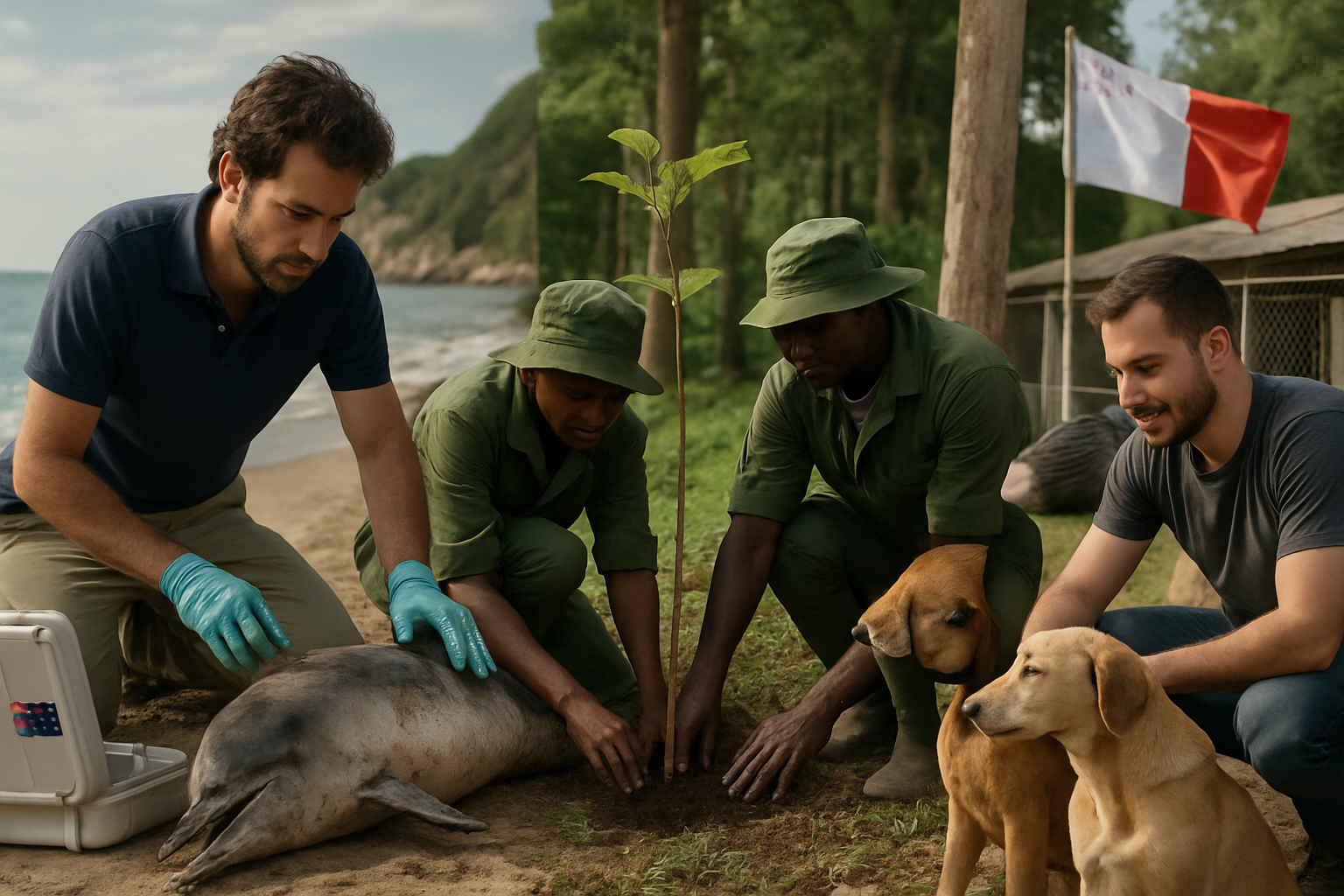
Environmental conservation efforts worldwide have achieved remarkable breakthroughs during March 2026, with Cyprus completing the restoration of a historic windmill and Hertfordshire Zoo celebrating the first UK-born elephant shrews, marking significant victories for both cultural heritage preservation and wildlife protection during the 19th consecutive month of global temperatures exceeding 1.5°C above pre-industrial levels.
The restoration achievements come as environmental initiatives across the globe demonstrate an unprecedented level of international coordination and technological innovation in addressing biodiversity loss and ecosystem degradation. From heritage preservation to cutting-edge wildlife breeding programs, these developments signal a shift toward proactive ecosystem service management during one of Earth's most environmentally challenging periods.
Cyprus Heritage Restoration Success
The restoration of the historic windmill in Limnia represents a landmark achievement in cultural heritage preservation, accomplished through the financial support of the European Union and technical assistance from the United Nations Development Programme (UNDP). This project exemplifies the sophisticated integration of traditional conservation methods with modern restoration technology that has become characteristic of successful environmental initiatives worldwide.
The windmill restoration project demonstrates how heritage conservation can serve as both cultural preservation and environmental education, creating living testimonies to agricultural history while supporting sustainable tourism and community engagement. The initiative builds on Cyprus's broader environmental leadership, including recent transformations of the Limassol Zoo into the "Fysi" Biodiversity and Urban Environment Centre through collaboration with the Cyprus Centre for Environmental Research and Education.
UK Wildlife Breeding Breakthrough
Hertfordshire Zoo's achievement in successfully breeding elephant shrews marks the first time these small mammals have been born in the United Kingdom, representing what zoo officials describe as a "significant victory for the wider zoological community." This breakthrough comes at a critical time when breeding programs for endangered species have become essential tools in global biodiversity conservation efforts.
Elephant shrews, despite their name, are more closely related to elephants than true shrews, making their successful breeding particularly significant for understanding mammalian reproductive biology and conservation genetics. The success builds on a year of remarkable wildlife conservation achievements, including the reintroduction of Eastern quolls to mainland Australia after 150 years and the successful breeding of critically endangered species across multiple continents.
"These newborns represent hope for species recovery programs worldwide and demonstrate the critical role that modern zoos play in conservation,"
— Hertfordshire Zoo spokesperson
Technology-Tradition Integration Revolution
The success of both the Cyprus windmill restoration and the UK elephant shrew breeding program exemplifies the sophisticated synthesis of cutting-edge technology with traditional ecological knowledge that has emerged as the most effective approach to environmental conservation in 2026. The restoration project employed advanced materials analysis and environmental monitoring systems while respecting traditional Mediterranean construction techniques, while the breeding program utilized genetic analysis and environmental DNA sampling combined with traditional animal husbandry practices.
This integration represents a fundamental evolution in conservation methodology, moving beyond purely technological or purely traditional approaches toward comprehensive frameworks that are both scientifically rigorous and culturally sensitive. Similar approaches have been documented across global conservation initiatives, from Kazakhstan's Przewalski's horse reintroduction program to New Zealand's marine conservation efforts.
Global Conservation Renaissance Context
These achievements occur within the context of what conservation scientists are calling a "global conservation renaissance" – an unprecedented surge in coordinated environmental protection efforts across multiple continents during 2026. The pattern includes major successes such as Zimbabwe's world-first DNA forensic prosecution of wildlife poachers, Ecuador's reintroduction of 158 giant tortoises to Floreana Island, and Romania's innovative marine cleanup technologies.
The conservation renaissance is characterized by several key elements: enhanced international cooperation frameworks, sophisticated technology-tradition integration, recognition of environmental protection as economic development strategy rather than regulatory burden, and sustained political commitment to long-term ecosystem service management. Countries implementing comprehensive environmental protection are demonstrating greater economic resilience and attracting sustainable investment across multiple sectors.
Climate Change Adaptation Strategies
The conservation successes in Cyprus and the UK are particularly significant given the ongoing climate crisis context. January 2026 was confirmed as the hottest month on record, extending an unprecedented 19-month streak of global temperatures exceeding the critical 1.5°C threshold. This sustained warming is overriding natural climate variability, including La Niña cooling effects, demonstrating that human-induced climate change has fundamentally altered Earth's atmospheric systems beyond natural recovery mechanisms.
Conservation programs are increasingly required to account for traditional threats while addressing rapidly changing environmental conditions that disrupt species life cycles, migration patterns, and ecosystem relationships developed over millennia. The successful adaptation of conservation strategies to these changing conditions represents a critical test of humanity's capacity to protect essential environmental systems during accelerating climate change.
Economic Development Through Conservation
Both the Cyprus windmill restoration and UK elephant shrew breeding program demonstrate how environmental protection functions as an economic development strategy rather than a regulatory burden. The Cyprus project enhances the nation's appeal as an eco-tourism destination while positioning it as a regional leader in sustainable heritage preservation, attracting international research partnerships and sustainable investment.
Similarly, Hertfordshire Zoo's breeding success supports the UK's multi-billion-pound conservation economy, encompassing eco-tourism, environmental technology development, and research collaboration. Countries with comprehensive environmental protection consistently demonstrate greater economic resilience, improved public health outcomes, enhanced agricultural productivity through ecosystem services, and reduced infrastructure costs through natural disaster prevention.
Implementation Challenges and Solutions
Despite the remarkable successes, conservation initiatives continue to face systematic challenges including funding sustainability, particularly in developing nations where economic pressures often override long-term environmental considerations. Technical capacity building requires sustained investment in education, training, and institutional development, while climate change disrupts project timelines, requiring adaptive management capabilities to respond to rapidly changing conditions.
Success factors consistently identified across effective conservation programs include community ownership and engagement, transparent governance frameworks, economic incentives that make protection financially viable, and the integration of traditional ecological knowledge with modern conservation science. The diversity of approaches provides resilience against single-solution dependencies, offering multiple adaptation pathways for addressing complex environmental challenges.
Strategic Significance for Global Conservation
The March 2026 conservation achievements represent a critical juncture in global environmental protection, offering a choice between reactive crisis management and proactive ecosystem service management. The environmental action window is rapidly narrowing as ecological systems approach critical thresholds that could trigger potentially irreversible changes affecting global food security, climate stability, and human settlements.
However, the tools, knowledge, and cooperation frameworks clearly exist for comprehensive environmental protection, as demonstrated by diverse international initiatives from Cyprus heritage restoration to UK species breeding programs. Success depends on rapid scaling through enhanced international cooperation, sustained financial commitments, and recognition of environmental protection as essential infrastructure for human prosperity and planetary sustainability.
Future Trajectory and Global Scaling Potential
The conservation initiatives in Cyprus and the UK provide practical templates for scaling environmental protection globally through coordinated approaches that address multiple challenges while building local capacity and fostering international cooperation. The windmill restoration demonstrates how heritage preservation can support environmental education and sustainable tourism, while the elephant shrew breeding program shows how modern zoos can contribute to global species recovery efforts.
Effective conservation requires sophisticated synthesis of scientific knowledge, community engagement, technological innovation, and international cooperation through locally appropriate combinations rather than isolated approaches. The conservation renaissance emerging in 2026 may prove decisive in determining humanity's relationship with the natural world and providing a foundation for sustainable future development that balances human prosperity with planetary ecological health.
The window for effective environmental action continues to narrow, but the convergence of innovation, cooperation, and sustained political commitment offers hope for maintaining planetary habitability during Earth's most environmentally challenging period in human history.