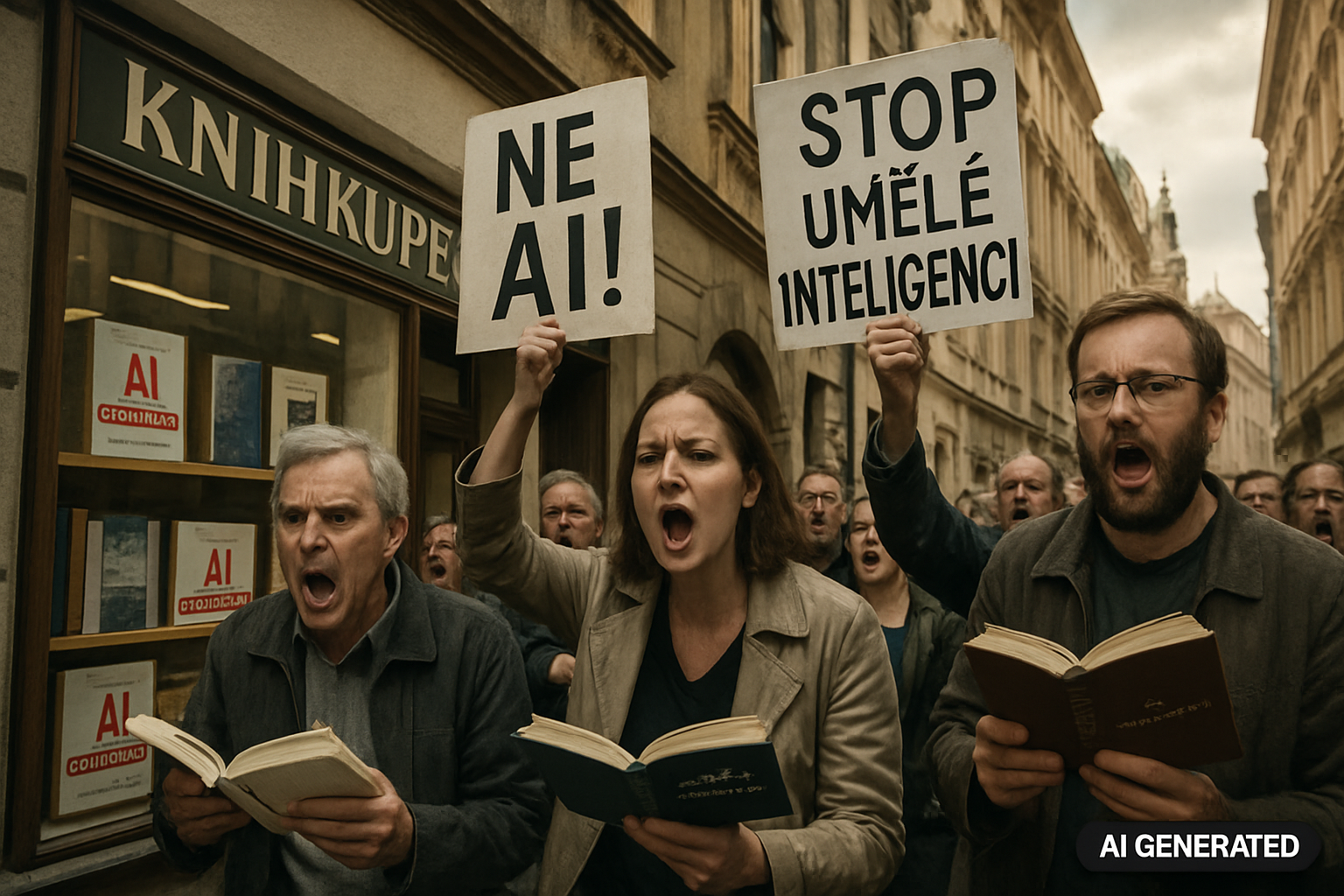
A horror novel titled "Plachá dívka" (Shy Girl) has been swiftly removed from Czech bookstores after its author faced accusations of using artificial intelligence to write the book, sparking a broader debate about authenticity in literature and the role of AI in creative industries.
The controversy erupted when Czech readers began questioning the authenticity of the horror novel published by international publishing house Hachette. Facing mounting speculation and public backlash, the publisher made the unprecedented decision to cancel the book's planned release in the United States and withdraw it from the British market, while also pulling existing copies from Czech bookstores.
Publisher's Swift Response to Public Outrage
Hachette's decision to remove "Shy Girl" from multiple markets represents one of the first major cases of a traditional publisher retreating in response to AI-related accusations. The speed of the publisher's response suggests the company was either unable to verify the book's authenticity or chose to avoid prolonged controversy in an increasingly sensitive market.
The incident occurred amid growing global scrutiny of AI-generated content in creative industries. Czech readers' reaction appears to reflect broader concerns about maintaining literary authenticity at a time when artificial intelligence tools have become sophisticated enough to produce book-length works that can initially pass as human-authored.
Growing Global AI Publishing Concerns
This controversy comes during what experts characterize as a "critical inflection point" in AI development, where artificial intelligence systems are transitioning from experimental tools to essential infrastructure across multiple industries. The publishing world has become a particular battleground for questions about creativity, authenticity, and the role of human authorship.
"The challenge involves harnessing technology responsibly while preserving essentially human storytelling aspects that provide emotional resonance and cultural significance."
— Industry Analysis Report, March 2026
Similar concerns have emerged internationally, with over 4,000 French actors and filmmakers condemning what they termed "systematic plundering" by AI tools in the entertainment industry. The creative sectors worldwide are grappling with how to integrate AI capabilities while maintaining artistic integrity and protecting human livelihoods.
The Technical Challenge of AI Detection
The difficulty in definitively identifying AI-generated text presents ongoing challenges for publishers, readers, and regulatory bodies. Current AI detection systems often struggle to distinguish between sophisticated AI-generated content and human writing, particularly in genre fiction where formulaic structures are common.
The Czech incident highlights the importance of transparency in the publishing process. While neither the author nor publisher initially disclosed any AI involvement, reader suspicions were apparently strong enough to force a market withdrawal, suggesting that audiences are becoming increasingly sophisticated in recognizing patterns associated with artificial intelligence writing.
Regulatory and Industry Response
The incident occurs against a backdrop of intensifying global AI regulation. Spain has implemented the world's first criminal executive liability framework for technology platforms, while France has conducted AI company cybercrime raids. The European Union is pursuing potential billion-dollar penalties for platforms that fail to address harmful content or maintain proper disclosure standards.
Publishing industry experts note that the Czech controversy may accelerate calls for mandatory disclosure requirements when AI tools are used in book creation. Some publishers are already developing internal guidelines for AI use, though industry standards remain inconsistent.
Impact on Literary Markets
The withdrawal of "Shy Girl" from multiple markets represents significant financial losses for both author and publisher, potentially setting a precedent that could make publishers more cautious about AI-adjacent content. The incident may also encourage the development of more sophisticated verification systems for manuscript authenticity.
Czech literary circles have responded with calls for greater transparency in publishing practices and clearer industry standards regarding AI assistance in creative work. The controversy has sparked discussions about whether partial AI assistance should be disclosed even if the primary creative work remains human-authored.
International Publishing Industry Implications
The Hachette decision reflects growing tension between technological capabilities and traditional creative values across international markets. Publishers must now navigate reader expectations for authenticity while potentially benefiting from AI tools that can reduce costs and accelerate production timelines.
Industry analysts suggest that successful publishers will need to develop clear policies balancing AI efficiency gains with transparency requirements. The Czech incident demonstrates that attempting to obscure AI involvement may carry greater reputational and financial risks than honest disclosure.
Future of AI in Literature
The controversy highlights the need for the publishing industry to establish clear ethical guidelines for AI use in creative work. Rather than wholesale rejection or uncritical adoption, successful approaches will likely involve transparent collaboration between human creativity and artificial intelligence capabilities.
The Czech readers' revolt against "Shy Girl" may mark a turning point in public awareness and expectations regarding AI-generated content. Publishers worldwide are now likely to develop more robust verification processes and disclosure policies to prevent similar market disruptions.
As artificial intelligence continues advancing, the publishing industry faces critical decisions about maintaining human creativity and cultural authenticity while potentially benefiting from technological tools. The Czech controversy suggests that readers, rather than publishers or regulators, may ultimately determine the acceptable boundaries of AI involvement in literature.