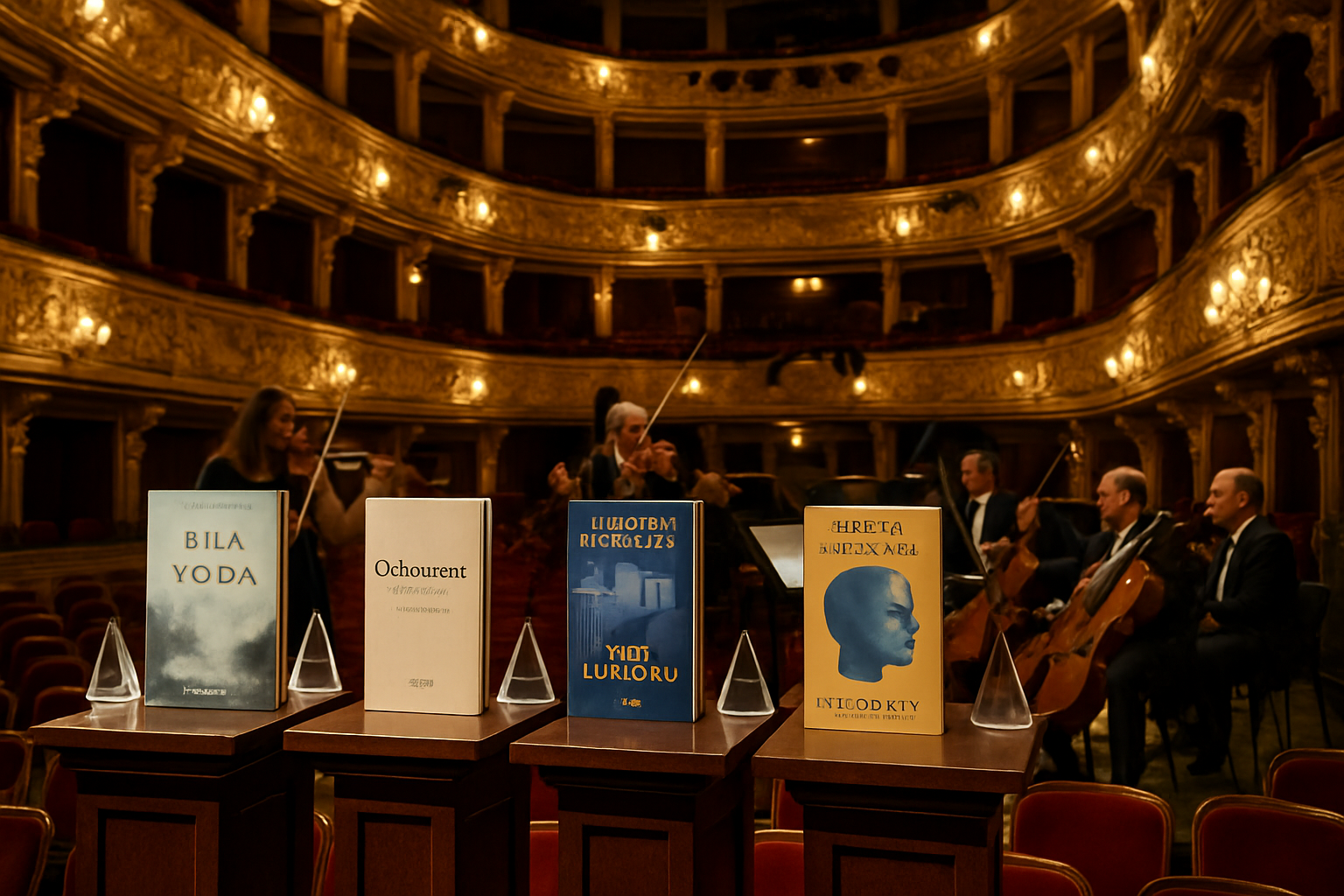
Czech Republic's cultural renaissance reaches new heights as the prestigious Magnesia Litera literary awards unveil their 2026 nominations, while Prague Philharmonia prepares an extraordinary 33rd season combining grand orchestral performances with intimate tributes to musical legends.
The announcement of Magnesia Litera 2026 nominations marks a pivotal moment in Czech literary achievement, with three exceptional works competing for the prose category. Dora Kaprálová's "Mariborská hypnóza" (Maribor Hypnosis), Magdaléna Platzová's "Fáze jedné ženy" (Phases of One Woman), and Ladislav Šerý's "Tajný život institucí" (The Secret Life of Institutions) represent the diverse voices shaping contemporary Czech literature.
Literary Excellence Across Eleven Categories
Pavel Mandys, representing the organizing Litera association, announced that all eleven categories now have their final three nominations confirmed. The comprehensive recognition spans prose, poetry, non-fiction, and specialized literary achievements, demonstrating the breadth of Czech literary creativity in 2025.
The grand ceremony, scheduled for April 18, 2026, at Prague's historic Stavovské Theatre, will crown both individual category winners and announce the coveted Book of the Year 2025. The venue choice reflects the deep connection between Czech literary traditions and the country's theatrical heritage, where countless literary adaptations have found their stage.
"The Magnesia Litera awards continue to celebrate the richness of Czech literature while fostering international recognition of our authors' exceptional talents."
— Pavel Mandys, Litera Association
Prague Philharmonia's Ambitious Season
Simultaneously, Prague Philharmonia announces its 33rd concert season, representing what many consider the orchestra's most ambitious programming to date. The season strategically balances grand orchestral evenings at the prestigious Rudolfinum with innovative chamber music projects and specially curated family concerts, ensuring classical music accessibility across all demographics.
The centerpiece of the season features an extraordinary Wagner gala, promising audiences an immersive experience in the German composer's most celebrated works. This programming choice reflects Prague Philharmonia's commitment to presenting both beloved classics and challenging repertoire that pushes artistic boundaries.
Bělohlávek Memorial and Cultural Legacy
Among the season's most emotionally resonant programming is the special tribute to the late conductor Jiří Bělohlávek, whose influence on Czech orchestral music remains immeasurable. The memorial concerts will showcase works that defined Bělohlávek's interpretive genius, offering audiences an opportunity to celebrate his lasting contribution to Czech musical culture.
The Lobkowicz subscription series reaches its tenth anniversary, representing a decade of exclusive donor programming that has strengthened the relationship between Prague Philharmonia and its most dedicated supporters. This milestone reflects the orchestra's successful cultivation of deep community connections essential for long-term artistic sustainability.

Cultural Renaissance Context
These developments occur within the broader context of what cultural observers term the "February 2026 Cultural Renaissance," a period of unprecedented cultural activity documented across European nations. Czech Republic's contributions demonstrate the country's strategic positioning as a cultural bridge between Central European traditions and international artistic innovation.
The simultaneous announcement of literary awards and orchestral programming reflects a sophisticated understanding of cultural development, where various artistic disciplines support and enhance each other rather than competing for resources or attention.
International Recognition and Local Authenticity
Czech cultural institutions have successfully navigated the challenge of maintaining authentic local expression while achieving international recognition. The Magnesia Litera awards contribute to this balance by celebrating works that explore distinctly Czech themes while addressing universal human experiences that resonate with international readers.
Prague Philharmonia's programming similarly demonstrates this synthesis, presenting Czech composers alongside international repertoire, ensuring audiences experience both national musical heritage and global classical music traditions within unified, coherent seasons.
"The strength of Czech culture lies in its ability to honor tradition while embracing innovation, creating art that speaks to both our national identity and universal human experience."
— Cultural Programming Analyst
Economic and Cultural Impact
The cultural sector's vitality generates significant economic multiplier effects through tourism, educational partnerships, and creative industry employment. The Stavovské Theatre ceremony will attract international media attention, enhancing Czech Republic's reputation as a destination for literary and cultural tourism.
Prague Philharmonia's diverse programming creates year-round cultural engagement, supporting not only musicians and venue staff but also the broader ecosystem of cultural services including hospitality, transportation, and tourism industries that benefit from regular concert attendance.
Future Cultural Development
The coordination between literary awards and orchestral programming suggests a maturing approach to cultural development in Czech Republic, where institutions collaborate to create complementary programming that strengthens the overall cultural landscape rather than competing for limited audience attention.
This model demonstrates how smaller European nations can compete effectively in the global cultural marketplace through authentic programming, strategic coordination, and sustained investment in artistic excellence across multiple disciplines simultaneously.
As April 18 approaches, the literary community anticipates not only the recognition of exceptional individual works but also the celebration of Czech literature's continuing evolution. Meanwhile, Prague Philharmonia's season promises audiences an opportunity to experience both familiar masterworks and innovative programming that pushes the boundaries of traditional concert presentation.
The convergence of these cultural achievements positions Czech Republic at the forefront of European cultural development, demonstrating how thoughtful investment in the arts creates lasting positive impact that honors historical traditions while embracing future artistic possibilities.