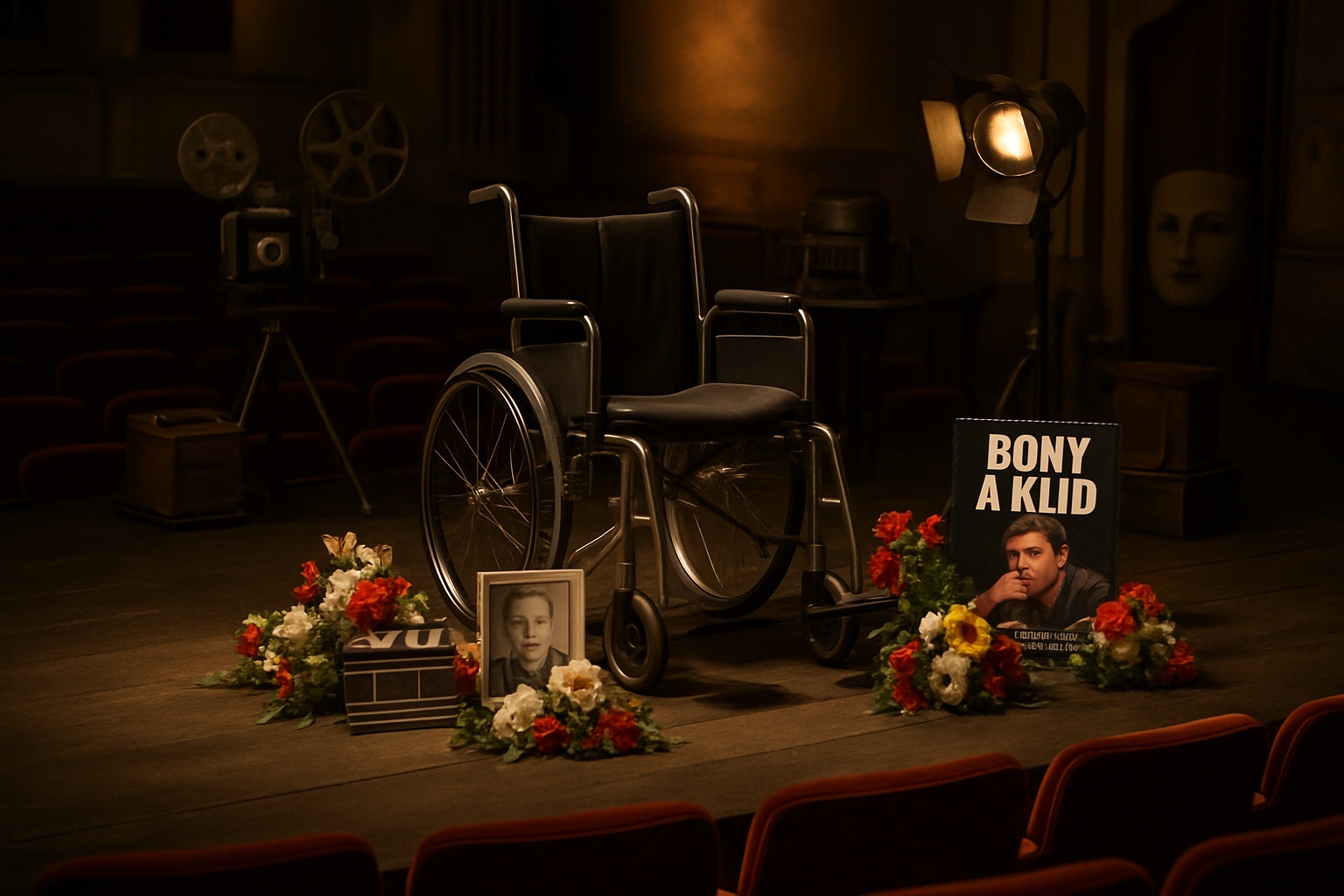
At 60 years old, Jan Potměšil passed away peacefully in his sleep on Thursday evening, April 16, 2026, leaving behind an extraordinary legacy that transcends the boundaries of Czech cinema and theater. His death marks not just the loss of a beloved performer, but the end of a remarkable journey of artistic determination that began in tragedy and transformed into triumph.
The news was confirmed Friday morning by his wife, Radka Potměšilová, who had stood by his side through decades of challenges and achievements. For the past three years, Potměšil had faced serious health complications, yet his spirit remained unbroken until the very end.
The Making of a Cultural Icon
Jan Potměšil's story is one of extraordinary resilience. At age 23, a severe car accident left him permanently confined to a wheelchair, a moment that would have ended many careers before they truly began. But Potměšil refused to surrender to circumstance. Instead, he transformed limitation into liberation, proving that the human spirit—and artistic passion—knows no physical boundaries.
His most celebrated role came in the beloved Czech film "Bony a klid," where his performance resonated across generations of Czech audiences. The film, now considered a cornerstone of Czech cinema, showcased Potměšil's unique ability to bring depth and humanity to every character he portrayed. His wheelchair never defined his performances; rather, it became an invisible part of his craft, testament to his extraordinary professionalism and the transcendent power of genuine artistic expression.
"Herectví se nikdy nevzdal" (He never gave up on acting)
— Czech Media Tribute
This simple phrase, repeated across Czech media tributes, captures the essence of Potměšil's career. In an industry often obsessed with physical appearance and conventional notions of leading men, he carved out a space entirely his own, earning respect through talent, determination, and an unwavering commitment to his craft.
A Broader Cultural Renaissance
Potměšil's passing occurs during what cultural historians are calling the "February 2026 Cultural Renaissance," a period of unprecedented international appreciation for authentic artistic expression. From Prague's thriving theater scene to the global recognition of diverse voices in cinema, 2026 has witnessed a renewed emphasis on cultural heritage preservation and celebration.
The Czech Republic itself stands at the center of this cultural awakening. Prague's Dejvické Theatre, described as "perpetually sold-out" and one of Central Europe's most respected theatrical institutions, exemplifies the balance between honoring tradition and embracing innovation that characterizes contemporary Czech culture. The theater's recent adaptation of classical works demonstrates how Czech artists continue to find fresh relevance in their rich cultural patrimony.
Similarly, Czech cinema has gained international recognition through collaborations and co-productions that maintain distinctly Czech sensibilities while achieving global appeal. The recent success of Czech films at international festivals reflects a cultural confidence that artists like Potměšil helped establish through decades of dedicated work.
The Theater as Sacred Space
For Potměšil, theater was more than profession—it was calling. His work in both film and live performance demonstrated the profound connection between artist and audience that defines the best of Czech cultural tradition. In an era of digital entertainment and fleeting attention spans, his commitment to the craft represented something increasingly precious: authentic human connection through storytelling.
Czech theater, with its roots in the avant-garde movements of the early 20th century and its evolution through the political upheavals of the communist era, provided the perfect foundation for an artist of Potměšil's temperament. The tradition of using performance as a vehicle for deeper truth—political, personal, and universal—found its embodiment in his work.
His colleagues remember him not just as a talented performer, but as a mentor and inspiration. Young actors would seek his advice, drawn by his reputation for professional excellence and personal warmth. He understood that disability in the arts could become a form of representation, showing audiences that human experience encompasses far more than conventional narratives typically acknowledge.
Legacy in the Digital Age
The timing of Potměšil's death coincides with significant changes in how Czech culture is preserved and shared globally. Digital platforms now enable Czech films and performances to reach international audiences in ways unimaginable when he began his career. "Bony a klid" and other classics featuring his work continue to find new viewers through streaming services, ensuring that his performances will inspire future generations.
This digital preservation represents a crucial aspect of contemporary cultural heritage work. As physical theaters face economic pressures and changing audience habits, the ability to document and share performances ensures that artists like Potměšil achieve a form of immortality. His work becomes part of the permanent record of Czech cultural achievement, accessible to scholars, students, and film enthusiasts worldwide.
"Charlie z Růže pro Algernon i Jíra z pohádky. Herec Jan Potměšil se nevzdával"
— Aktuálně.cz Headline
This tribute headline captures the range of his work, from dramatic roles like Charlie in adaptations of "Flowers for Algernon" to lighter character work in fairy tales. The diversity of his portfolio demonstrates how thoroughly he had integrated into Czech cultural life, becoming a familiar and beloved presence across genres and generations.
The International Context
Potměšil's career unfolded against the backdrop of Czech Republic's transformation from communist state to European Union member, paralleling the country's own journey of cultural redefinition. His persistence through personal adversity mirrors the nation's resilience through political upheaval, making his story resonate on multiple levels for Czech audiences.
International recognition of Czech culture has grown significantly in recent years. The success of Czech filmmakers at major festivals, the global appeal of Prague as a filming location, and the increasing export of Czech television productions all reflect a cultural confidence that artists like Potměšil helped establish. His career provided a template for how Czech artists could maintain cultural authenticity while achieving broader recognition.
The current "Cultural Renaissance" of 2026 has seen countries worldwide recognizing culture as essential infrastructure, not optional luxury. Czech Republic's investment in theaters, film preservation, and arts education reflects this understanding. Potměšil's legacy benefits from this renewed commitment to cultural preservation, ensuring his work receives the historical recognition it deserves.
A Personal Revolution
Perhaps most importantly, Jan Potměšil represented a quiet revolution in representation. Long before inclusive casting became an industry talking point, he was simply doing the work—proving through excellence that talent transcends physical limitation. His career challenged assumptions about what actors could accomplish while inspiring countless others facing similar challenges.
His approach to his disability was neither to hide it nor to make it the central focus of his identity as a performer. Instead, he integrated it naturally into his artistic persona, demonstrating a sophisticated understanding of how personal experience enriches rather than limits creative expression. This balance—acknowledging reality while transcending it through art—became his signature contribution to Czech cultural life.
The wheelchair became almost invisible in his performances, not because audiences forgot about it, but because his talent commanded attention so completely. This achievement represents something profound about both his personal strength and the power of authentic artistic expression to transform limitation into transcendence.
Continuing Influence
As Czech culture continues its renaissance in 2026, Potměšil's influence can be seen in the new generation of performers who approach their craft with similar dedication and authenticity. His example encourages artists to view challenges as creative opportunities rather than career obstacles, fostering a culture of resilience that serves Czech arts well in an increasingly competitive global marketplace.
Young Czech actors often cite his example when discussing their own career approaches. His demonstration that consistent excellence, professional reliability, and personal warmth could build a sustainable career provides a valuable model in an industry known for its uncertainties and disappointments.
The respect he commanded from colleagues, critics, and audiences alike reflects values that remain central to Czech cultural identity: craftsmanship, perseverance, and authentic human connection. These qualities, exemplified throughout his career, continue to influence Czech artistic production across all media.
The Final Curtain
Jan Potměšil died as he lived—with dignity, surrounded by love, and having given his absolute best to his chosen art form. His passing represents not an ending, but a transition from active participant to permanent inspiration. His films and performances remain, accessible to current fans and future discoverers alike.
In the context of Czech cultural heritage, his life and work represent the kind of authentic artistic achievement that transcends individual recognition to become part of collective memory. Like the classical Czech composers, writers, and filmmakers who preceded him, Potměšil created work that speaks to universal human experiences while remaining distinctly Czech in its sensibility and spirit.
His story reminds us that cultural heritage is not merely about preserving the past, but about honoring the courage and creativity of artists who refused to accept limitations on their dreams. In an age of increasing digital convenience and algorithmic entertainment, his commitment to the irreplaceable human elements of performance—presence, vulnerability, and genuine emotion—becomes even more precious.
As the Czech Republic continues to navigate its role in contemporary European culture while maintaining its distinctive artistic voice, Jan Potměšil's legacy provides both inspiration and guidance. His career demonstrated that authentic cultural expression, grounded in personal truth and professional excellence, could achieve both local significance and broader recognition.
The wheelchair that might have ended another's dreams became, in his hands, simply another prop in a career dedicated to proving that the human spirit knows no boundaries when expressed through genuine artistic passion. In this truth, his legacy lives on, inspiring future generations of Czech artists to approach their own challenges with similar courage, creativity, and unwavering dedication to their craft.