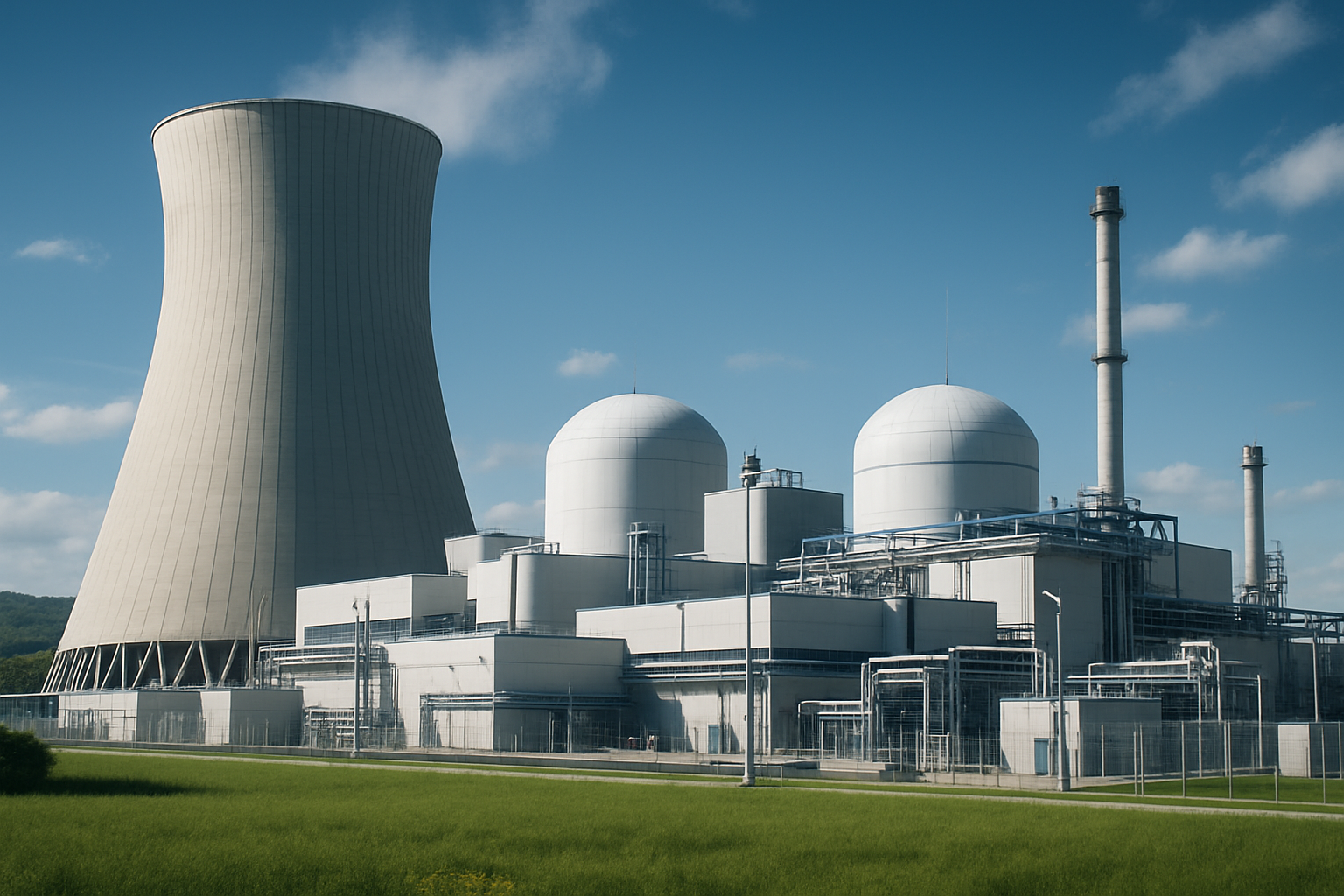
Czech Republic and Sweden are spearheading a European nuclear renaissance, with the Czech Republic planning its first mini nuclear power plant at Temelín and Sweden announcing the "totality of Swedish nuclear program" worth billions of kronor, reflecting a continent-wide strategic pivot toward advanced nuclear technologies as governments prioritize energy security alongside climate goals.
The announcements come as Europe grapples with ongoing energy vulnerabilities exposed during the March 2026 Iran crisis, when oil prices soared past $100 per barrel and the Strait of Hormuz closure disrupted 40% of global oil transit. These events crystallized the urgent need for energy independence and reliable baseload power that nuclear energy uniquely provides.
Czech Republic's Pioneering Mini-Reactor Project
According to reports confirmed by Czech officials, the nation is moving forward with plans to construct its first pilot mini nuclear power plant at the Temelín site. This project represents a significant departure from traditional large-scale nuclear facilities, embracing small modular reactor (SMR) technology that promises enhanced safety features, reduced construction costs, and greater deployment flexibility.
The Temelín mini-reactor project positions the Czech Republic as an early adopter of next-generation nuclear technology in Central Europe. SMRs feature factory manufacturing and modular deployment advantages, allowing for controlled environment construction and on-site assembly that dramatically reduces the complexity and cost overruns that have plagued previous nuclear construction projects.
"The Czech Republic is taking a bold step toward energy independence with this mini-reactor initiative, demonstrating how advanced nuclear technology can complement renewable energy sources."
— Energy Policy Expert, Central European Institute
Sweden's Comprehensive Nuclear Expansion
Swedish Energy Minister Ebba Busch has unveiled an ambitious nuclear expansion program totaling 36 billion kronor for new capacity and an additional 183 billion kronor for radioactive waste management. This represents the most significant nuclear investment in Swedish history and reflects a fundamental policy reversal from the country's previous nuclear phase-out plans.
"We must dare to build big," Busch declared, emphasizing that nuclear power is essential for Sweden's transition to a carbon-neutral economy. The program includes investigations into state roles in nuclear development and new application processes designed to streamline reactor deployment while maintaining rigorous safety standards.
Sweden's nuclear renaissance is driven by the recognition that even with the country's impressive renewable energy portfolio—including 88% renewable electricity in neighboring Estonia and continental Europe's largest battery storage systems—nuclear provides crucial baseload power that addresses intermittency challenges inherent in wind and solar generation.
European Context and Energy Security Imperative
The Czech and Swedish initiatives are part of a broader European nuclear revival that gained momentum following European Commission President Ursula von der Leyen's declaration at the March 2026 World Nuclear Summit in Paris that abandoning nuclear power was a "strategic error." The Commission subsequently announced €200 million in investment guarantees for nuclear projects, marking a decisive shift in EU energy policy.
This nuclear renaissance occurs against the backdrop of Europe's dangerous over-dependence on energy imports from geopolitically volatile regions. The Iran crisis exposed critical vulnerabilities, with European nations facing natural gas price increases of 24% and widespread supply disruptions that highlighted the strategic importance of domestic energy production.
Supply Chain Independence
Nuclear expansion also addresses supply chain vulnerabilities in the renewable energy sector, where China controls 60% of production and 90% of refining for critical materials including lithium, cobalt, and rare earth elements. Memory chip shortages have caused sixfold price increases for smart grid systems, with impacts expected to persist until 2027 as new fabrication facilities come online.
The US-EU-Japan Critical Minerals Partnership, encompassing 55 countries and seven African suppliers, represents an effort to diversify supply chains, but nuclear power provides an immediate pathway to energy independence that doesn't rely on Chinese-controlled supply chains.
Advanced Technology and Safety Features
Both countries are embracing cutting-edge nuclear technologies that address traditional concerns about nuclear power. Small modular reactors feature digital monitoring systems, automated control mechanisms, and passive safety features that can prevent reactor meltdowns without human intervention. These advanced fuel cycles minimize waste production while maximizing efficiency.
The factory manufacturing approach for SMRs contrasts sharply with traditional large nuclear facilities that required extensive on-site construction. Modular design allows for phased construction and commissioning, reducing financial risks while enabling gradual scaling of nuclear capacity based on demand.
Economic and Employment Benefits
The nuclear expansion programs promise substantial economic benefits, including thousands of specialized, high-paying construction jobs and hundreds of permanent operations positions with century-plus operational lifetimes. Economic multiplier effects extend to research and development, advanced manufacturing, and supporting services around nuclear facilities.
Nuclear power also provides stable electricity pricing that reduces volatility compared to fossil fuel alternatives. This price stability benefits industrial competitiveness and provides leverage in international energy markets, particularly as European nations seek to establish themselves as leaders in next-generation nuclear technology with global export potential.
Opposition and Environmental Concerns
Despite growing political support, nuclear expansion faces persistent opposition from environmental groups and some European governments. Austria's environment commissioner has criticized the "dangerous path" of nuclear expansion, while Spain maintains reservations about environmental protection and international legality aspects.
Greenpeace has characterized the nuclear renaissance as a "betrayal of the European Green Deal," arguing that focus should remain on renewable energy and efficiency improvements. Critics point to nuclear waste storage challenges that persist for thousands of years and invoke the catastrophic risks demonstrated by Chernobyl and Fukushima disasters.
Climate Integration and Grid Stability
Proponents argue that nuclear power provides essential carbon-free baseload electricity that complements renewable sources in achieving European climate goals. Unlike weather-dependent wind and solar generation, nuclear offers reliable 24-hour daily operation that addresses grid stability requirements as renewable penetration increases.
The integration of nuclear baseload with renewable generation creates a comprehensive clean energy system that can maintain grid stability while providing resilience against extreme weather events that climate change is making more frequent and severe.
International Competition Context
European nuclear expansion occurs amid intensifying international competition in advanced reactor technologies. The United States approved TerraPower's Wyoming SMR project in March 2026, while Japan restarted the Kashiwazaki-Kariwa facility—the world's largest nuclear plant. This competition adds urgency to European efforts to maintain technological sovereignty and global influence in nuclear energy markets.
Implementation Timeline and Challenges
The Czech and Swedish programs face implementation challenges, including regulatory approval processes, public acceptance campaigns, and technical workforce development. However, the Iran crisis has created political momentum for immediate policy reversals that were unthinkable just months ago.
Success in these pioneering projects will determine the broader trajectory of European energy architecture for decades to come. The nuclear option provides a pathway to achieving both climate commitments and energy security simultaneously while maintaining environmental protection standards and democratic governance principles.
Strategic Implications for European Energy Future
The Czech Republic's mini-reactor project and Sweden's comprehensive nuclear program represent more than national energy policies—they constitute a template for European energy transformation that balances climate goals with security requirements. Their success or failure will influence continental energy architecture and determine whether Europe can achieve strategic autonomy in energy while meeting its ambitious climate targets.
As Europe faces mounting pressure from climate change, geopolitical instability, and supply chain vulnerabilities, the nuclear renaissance led by countries like the Czech Republic and Sweden offers a practical pathway toward a secure, clean, and economically viable energy future. The coming years will test whether this strategic pivot from nuclear skepticism to active embrace can deliver on its promises while maintaining the highest safety and environmental standards.