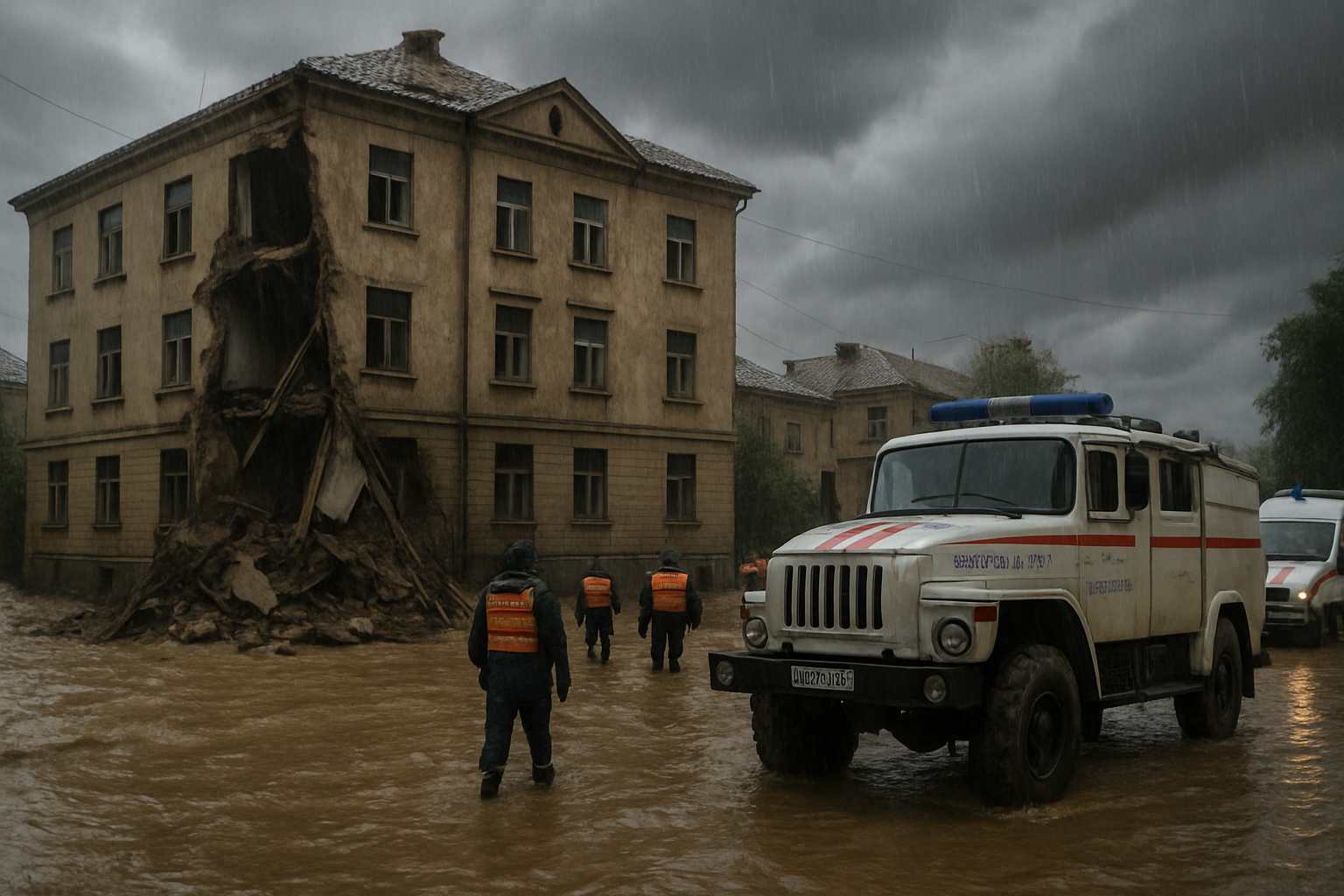
Severe flooding caused by torrential rains in Russia's Dagestan republic has triggered the complete collapse of a three-story residential building in the regional capital Makhachkala, marking the second major flood disaster to strike the region within a week and highlighting growing infrastructure vulnerabilities across the North Caucasus.
The building, located on what sources variously reported as Perova Street or Gazoprovodnaya Street, suffered catastrophic foundation failure when floodwaters undermined its structural integrity, according to RIA Novosti. The complete collapse occurred as the region battles its worst flooding crisis since late March, when previous severe weather left tens of thousands without electricity and damaged over 800 homes.
Emergency Evacuations and Infrastructure Warnings
Makhachkala city administration has cordoned off four additional multi-story residential buildings on Aivazovsky Street, where officials warn of "potential danger" of structural collapse. Emergency services are conducting systematic evacuations of residents from buildings deemed at risk due to compromised foundations and flood damage.
The current flooding emergency represents the second major deluge to hit Dagestan in just over a week. The previous disaster in late March left tens of thousands of residents without electricity, flooded more than 800 homes, disrupted vehicular traffic, and damaged railway infrastructure throughout the region.
Pattern of Severe Weather Strikes Region
The building collapse occurred during a renewed period of intense rainfall on April 4-5, 2026, which authorities describe as creating dangerous conditions across multiple cities including Makhachkala, Derbent, Khasavyurt, and Dagestan. Flood waters have inundated streets throughout these urban centers, overwhelming drainage systems and exposing critical infrastructure weaknesses.
"The situation demonstrates how repeated extreme weather events are testing the limits of our urban infrastructure,"
— Regional Emergency Official
Previous flooding in the region caused widespread disruption to transportation networks, with major roads becoming impassable and rail services suspended. The March floods also highlighted the vulnerability of the region's electrical grid, with power outages affecting tens of thousands of residents for extended periods.
Infrastructure Vulnerability in the North Caucasus
The Dagestan building collapse reflects broader infrastructure challenges facing Russia's North Caucasus regions, where aging Soviet-era construction meets increasingly severe weather patterns. Many residential buildings in the region were constructed during the Soviet period with foundations and drainage systems not designed for the intensity of flooding now experienced.
Emergency services report that the compromised buildings on Aivazovsky Street show similar foundation vulnerabilities to the collapsed structure, requiring immediate precautionary evacuations. The pattern suggests systemic infrastructure weaknesses that could affect numerous buildings constructed during the same era with similar engineering approaches.
Regional Context and Response
Dagestan's geographic position in the North Caucasus makes it particularly vulnerable to severe weather systems moving across the region from the Caspian Sea. The mountainous terrain can channel rainfall into urban areas, creating flash flooding conditions that overwhelm municipal drainage capabilities.
Local authorities have established emergency shelters for evacuated residents and are conducting structural assessments of buildings throughout the flood-affected zones. The regional government has also requested federal assistance to address the mounting infrastructure crisis.
Broader Implications for Russian Infrastructure
The Dagestan incident occurs as Russia faces mounting pressure on its aging infrastructure nationwide. Similar flood-related building failures have been reported in other regions during 2026, highlighting the need for comprehensive infrastructure modernization and climate adaptation measures.
Urban planning experts note that many Russian cities face similar vulnerabilities, with Soviet-era buildings and infrastructure systems struggling to cope with increasingly intense weather events. The repeated flooding in Dagestan within a single week demonstrates how climate patterns are outpacing traditional infrastructure design parameters.
Emergency Response and Recovery Efforts
Emergency services continue monitoring water levels and structural integrity throughout Makhachkala and surrounding areas. The focus has shifted from immediate rescue operations to preventing additional building failures through systematic evacuations and structural assessments.
Regional authorities emphasize that recovery efforts will require significant investment in both immediate repairs and long-term infrastructure resilience. The repeated nature of severe flooding in Dagestan suggests that current drainage and flood protection systems are inadequate for prevailing weather conditions.
As cleanup operations begin, the building collapse in Makhachkala serves as a stark reminder of the intersection between extreme weather and infrastructure vulnerability, challenging authorities to develop more resilient approaches to urban development and disaster preparedness in Russia's climatically sensitive regions.