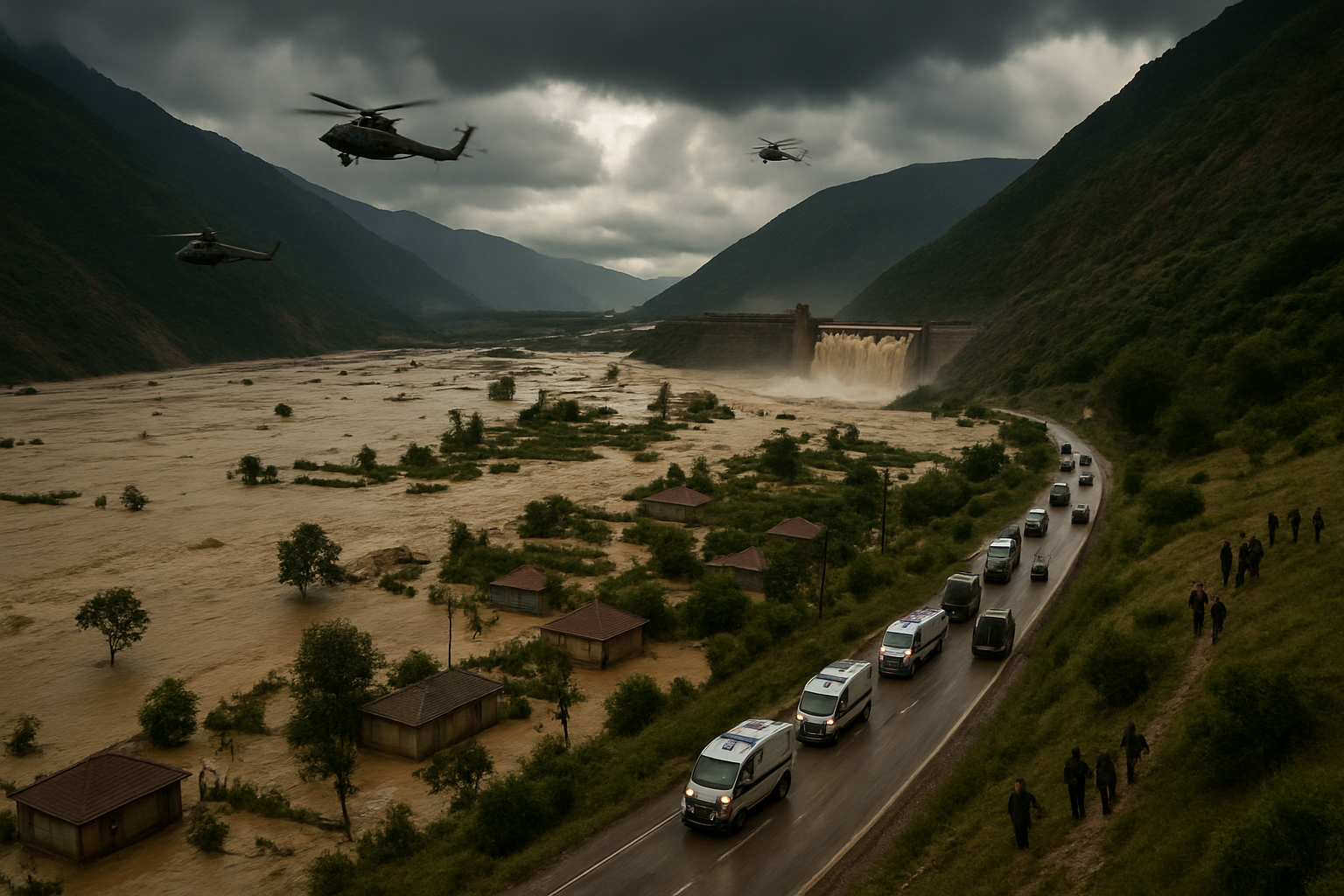
The earthen embankment of the Gedjukha reservoir in Russia's Dagestan Republic has collapsed following severe flooding caused by intense rainfall, according to Russia's Ministry of Emergency Situations, triggering a large-scale evacuation of residents from the affected areas.
The dam failure occurred in the Derbent district of Dagestan, where the earthen structure gave way under pressure from torrential rains that had already overwhelmed the region's drainage systems. Emergency response teams are currently conducting mass evacuations of residents from flooded territories as water levels continue to rise downstream of the failed dam.
Infrastructure Crisis Compounds Flooding Emergency
The Gedjukha dam collapse represents the latest in a series of infrastructure failures that have plagued the North Caucasus region during this period of extreme weather. In nearby Makhachkala, Dagestan's capital, a multi-story residential building has completely collapsed due to severe flooding caused by the same heavy rainfall system, with authorities warning that several other buildings are now at risk of structural failure.
Local officials report that the collapsed building in Makhachkala suffered foundation erosion from the sustained flooding, highlighting the vulnerability of aging Soviet-era infrastructure to extreme weather events that exceed historical design parameters. Four additional multi-story buildings on Aivazovsky Street have been evacuated due to structural dangers posed by flood damage.
Pattern of Regional Weather Emergencies
This flooding crisis marks the second major weather emergency in Dagestan within a single week. The late March flooding event left tens of thousands without electricity, damaged over 800 homes, and severely disrupted transportation and rail infrastructure throughout the region. The current emergency affects multiple cities including Makhachkala, Derbent, and Khasavyurt.
"The flooding situation in Dagestan demonstrates the ongoing challenges faced by aging infrastructure in the face of increasingly severe weather patterns."
— Regional Emergency Response Official
Emergency shelters have been established throughout the affected areas, with federal assistance requested to coordinate the large-scale response. The compound nature of this crisis—combining dam failure with urban flooding and building collapses—underscores the intersection of climate challenges and infrastructure vulnerabilities that have become a broader pattern across Russia during 2026.
Broader Context of Infrastructure Vulnerability
The Dagestan flooding crisis occurs within a broader pattern of infrastructure challenges across Russia and the former Soviet space during this period of unprecedented global climate volatility. The region's aging Soviet-era buildings and dams were designed for historical weather patterns that no longer reflect current climate realities.
This crisis represents a significant test of emergency response capabilities in the North Caucasus region, where mountainous terrain and aging infrastructure create particular vulnerabilities during extreme weather events. The pattern of repeated infrastructure failures during weather emergencies highlights the urgent need for comprehensive modernization and climate adaptation strategies.
Emergency Response and Recovery Efforts
Russia's Ministry of Emergency Situations has deployed comprehensive resources to coordinate the evacuation and rescue operations in the Derbent district and surrounding areas. Emergency response teams are working around the clock to ensure resident safety while assessing the full scope of damage from both the dam failure and related flooding impacts.
The coordinated response involves multiple levels of government, from local emergency services to federal disaster response capabilities, reflecting the serious nature of the crisis. Officials are prioritizing the immediate safety of residents while beginning preliminary assessments of infrastructure damage that will inform longer-term recovery planning.
Climate and Infrastructure Intersection
The Dagestan dam collapse and building failures represent a critical example of how extreme weather events are testing infrastructure systems beyond their designed capacity. The region's experience illustrates the broader challenges facing the North Caucasus and similar mountainous regions where aging infrastructure confronts intensifying weather patterns.
The compound nature of this emergency—involving dam failure, urban flooding, and structural collapses—demonstrates how climate-driven disasters can cascade through multiple systems simultaneously, overwhelming traditional emergency response approaches designed for single-incident scenarios.
As recovery efforts continue, the focus will inevitably turn toward building enhanced resilience for future extreme weather events, with the Dagestan crisis serving as a stark reminder of the urgent need for infrastructure adaptation in an era of increasing climate volatility.