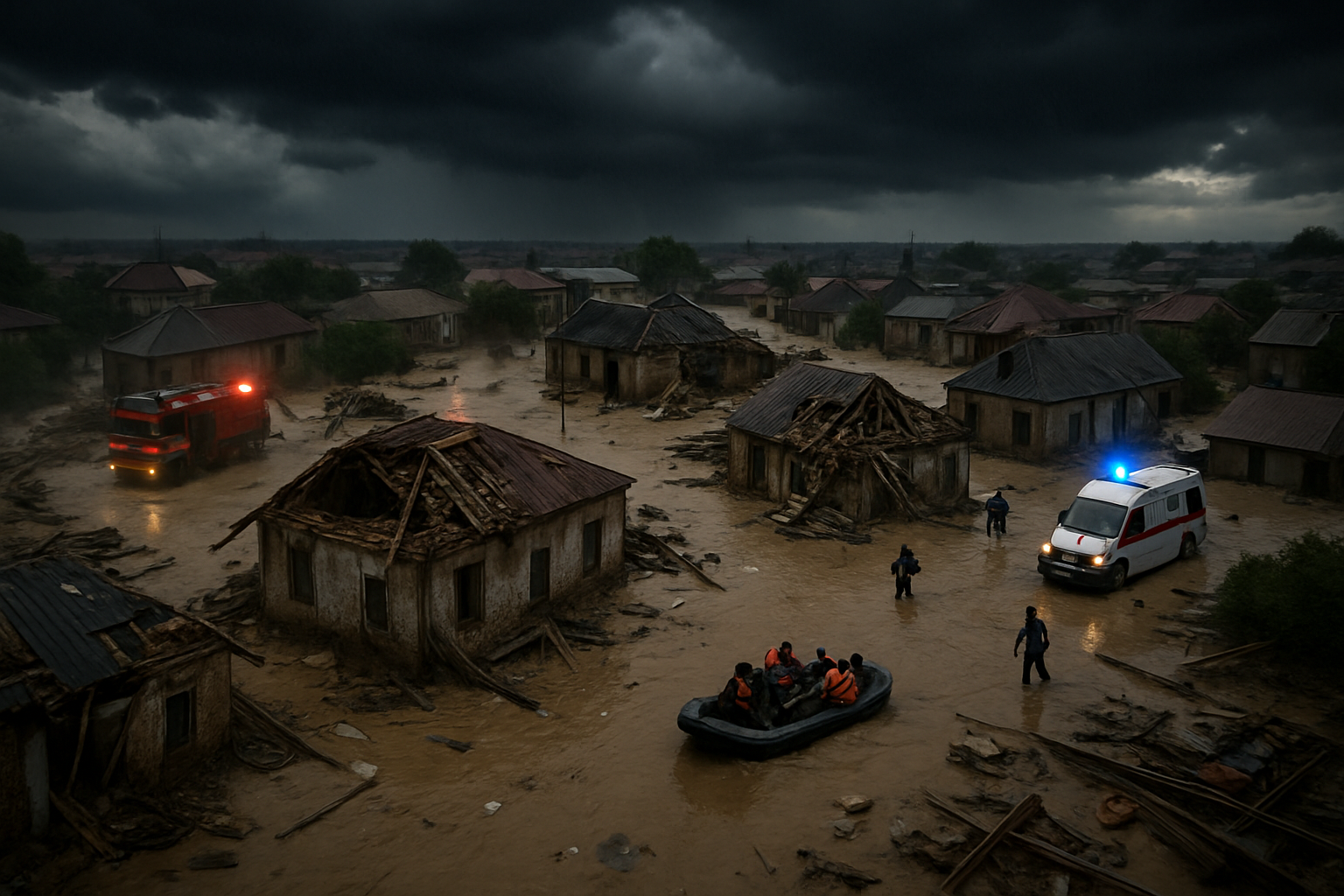
At least four people have died in renewed flooding across Russia's Dagestan republic, as heavy rains triggered dam failures and building collapses in what officials are calling the region's second major flood emergency in just one week, deepening concerns about the vulnerability of Soviet-era infrastructure to extreme weather events.
The most severe flooding has been reported in southern Dagestan, where the Gedzhukh reservoir dam in the Derbent district suffered a catastrophic breach of its earthen embankment. Emergency Minister Nariman Kazimagomedov confirmed that floodwaters swept away vehicles on bridges in Mamedkala, killing at least two people when one car was completely submerged while ten people were crossing.
Six survivors were successfully rescued from the flood zone, but the incident highlights the deadly speed with which the crisis has unfolded across multiple cities including Makhachkala, Derbent, and Khasavyurt.
Infrastructure Failures Compound Crisis
The flooding crisis has been dramatically worsened by multiple infrastructure failures that underscore the aging Soviet-era construction's inability to withstand current extreme weather patterns. In Makhachkala, the republic's capital, a multi-story residential building completely collapsed due to foundation erosion caused by the flooding, with several other buildings on Aivazovsky Street evacuated due to structural damage concerns.
Russian emergency services report that more than 2,000 residential homes and 1,800 private plots have been flooded across the republic, along with 173 sections of roadways. The scale of infrastructure damage represents a compound crisis that goes far beyond typical seasonal flooding.
"The earthen embankment of the Gedzhukh reservoir has been breached, triggering mandatory evacuations coordinated by Russia's Ministry of Emergency Situations."
— Emergency Response Officials
The dam failure at Gedzhukh reservoir has forced authorities to coordinate mass evacuations through emergency communication channels, with rescue operations being managed partly through Telegram messaging due to disrupted traditional communication networks.
Second Major Flood in Seven Days
This catastrophic flooding represents the second major water emergency to strike Dagestan within a single week, following severe flooding in late March that left tens of thousands without power and damaged over 800 homes while disrupting regional transport and rail infrastructure.
The rapid succession of extreme weather events has overwhelmed emergency response systems designed for sequential rather than concurrent disasters. Emergency services are operating at capacity limits while managing rescue operations across multiple cities simultaneously, a scenario that emergency management experts describe as a shift from traditional isolated regional disasters to "compound disasters."
International memory of recent similar crises shows this pattern emerging globally. Hawaii experienced its worst flooding in 20 years in March 2026, requiring evacuation of 5,500 residents when a 120-year-old dam threatened catastrophic failure. Portugal's largest peacetime rescue operation deployed 26,500 personnel during February's Atlantic storm succession, while multiple other nations have faced simultaneous infrastructure crises during what scientists confirm as the 23rd consecutive month of global temperatures exceeding 1.5°C above pre-industrial levels.
Climate Context and Broader Pattern
The Dagestan flooding occurs within a broader global context of accelerating extreme weather that is systematically testing aging infrastructure beyond its design parameters. Climate scientists point to the concerning pattern where infrastructure built for historical weather conditions repeatedly fails when confronted with the intensity of current precipitation events.
Recent memory includes devastating flooding across multiple continents throughout 2026. Brazil's Minas Gerais suffered catastrophic flooding in February killing over 40 people, while Kenya's capital Nairobi saw 42 deaths from flash floods that completely overwhelmed drainage systems. Each crisis has exposed critical vulnerabilities in infrastructure designed for climate conditions that no longer exist.
The North Caucasus region, including Dagestan, faces particular challenges as mountainous terrain and aging Soviet-era infrastructure create conditions where extreme precipitation can quickly overwhelm flood defenses and trigger cascading infrastructure failures.
Emergency Response and Evacuation Operations
Russia's Ministry of Emergency Situations has activated comprehensive response protocols, establishing emergency shelters and coordinating federal assistance. The scope of the response reflects the severity of the crisis, with authorities managing not just flood rescue operations but also building collapse emergencies and mass evacuations simultaneously.
Emergency communication has been particularly challenging, with responders utilizing social media platforms and messaging apps to coordinate rescue efforts when traditional communication infrastructure has been compromised by the flooding and infrastructure damage.
The multi-faceted nature of the emergency—combining flood rescue, building collapse response, dam failure management, and mass evacuation coordination—represents the type of compound disaster that emergency management experts warn is becoming increasingly common as climate change intensifies extreme weather events.
Regional Infrastructure Vulnerability
The crisis in Dagestan exemplifies broader vulnerabilities facing Soviet-era infrastructure across the former USSR. Built during the mid-20th century for climate conditions that have since changed dramatically, much of this infrastructure was not designed to handle the intensity and frequency of extreme weather events now occurring.
Dam failures have become a recurring concern globally, from Hawaii's 120-year-old infrastructure threatening 5,500 residents in March to multiple European dam discharge operations during February's storm succession that killed over 30 people across Portugal and Spain.
The intersection of aging infrastructure and intensified weather patterns creates what experts describe as a "climate-infrastructure mismatch" that requires massive adaptation investments to prevent future catastrophic failures.
Looking Forward: Adaptation Imperative
Emergency management experts emphasize that the Dagestan crisis represents a critical test of Russia's ability to adapt infrastructure for permanent climate volatility rather than treating extreme weather as exceptional events. The rapid succession of major flooding events within a single week demonstrates that traditional emergency response designed for sequential disasters may be inadequate for the concurrent, multi-faceted crises now emerging.
International experience from recent similar emergencies suggests that recovery from such compound infrastructure crises typically requires months to years rather than weeks, with successful outcomes dependent on adopting "build back better" approaches that enhance climate resilience rather than simply restoring previous conditions.
The crisis underscores urgent questions about infrastructure adaptation investment throughout regions with aging Soviet-era construction, as current extreme weather patterns appear likely to intensify rather than diminish in coming years.
As rescue operations continue and damage assessments begin, the Dagestan flooding emergency serves as another stark reminder of the accelerating pace at which climate change is testing society's fundamental infrastructure systems beyond their breaking points.