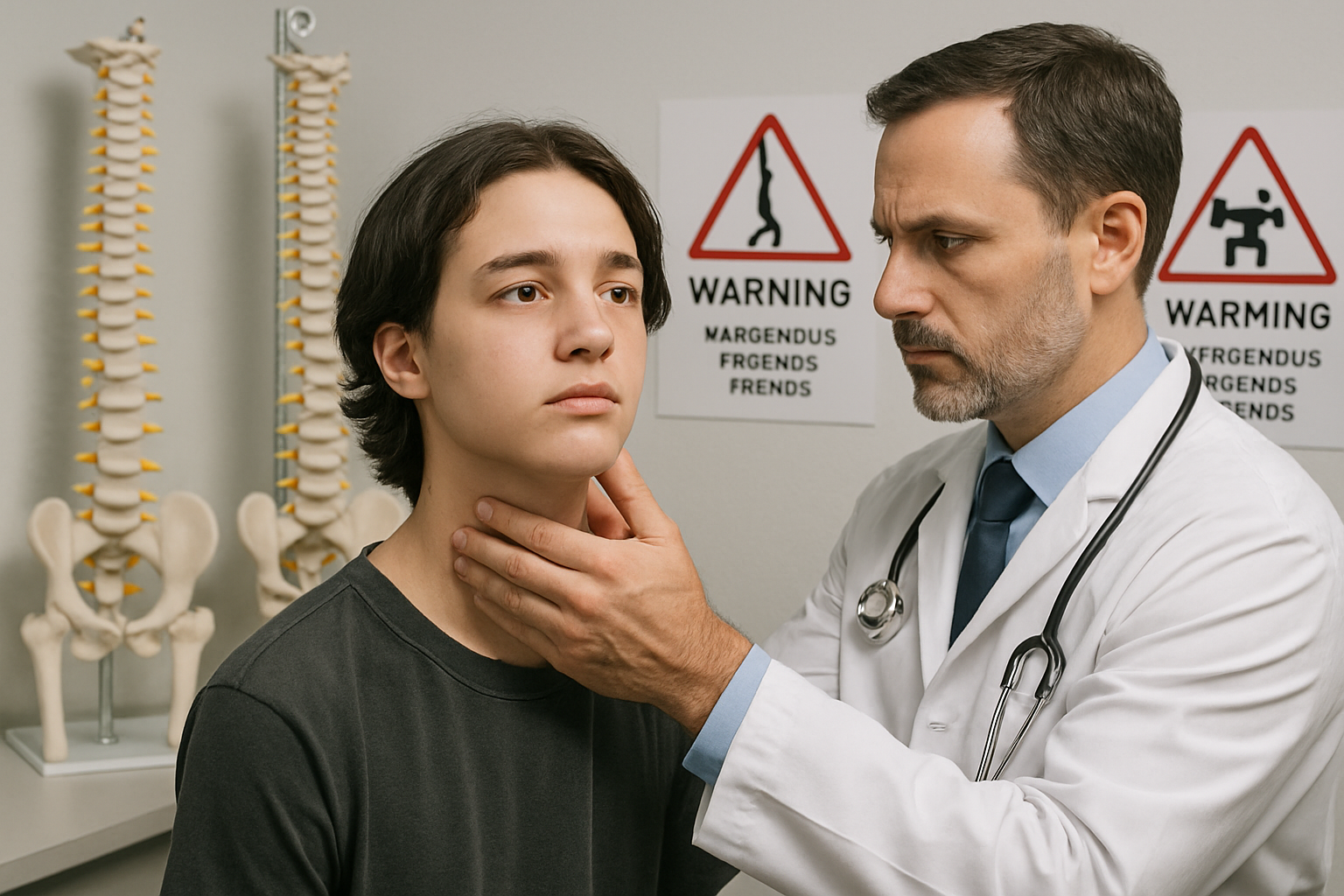
Medical professionals across China are issuing urgent warnings about a dangerous fitness trend that has emerged among young people seeking to relieve neck pain—a practice known as "neck-hanging exercise" that poses severe risks of spinal cord damage and permanent injury.
The alarming trend, which involves individuals hanging by their head from trees to mimic cervical traction therapy used in hospitals, has gained significant traction on social media platforms despite mounting medical concerns. According to the 2024 China Cervical Spine Health White Paper, more than 200 million people in China suffer from cervical spine disorders, with over 40 percent of patients under the age of 30—a statistic that underscores the widespread nature of neck and spine problems driving young people to seek alternative solutions.
The Dangerous Mimicry of Medical Treatment
The neck-hanging exercise represents a particularly concerning example of how young people are attempting to replicate professional medical treatments without proper understanding or supervision. Cervical traction therapy, when performed correctly in clinical settings, involves carefully controlled equipment and trained medical professionals who monitor the procedure to ensure patient safety.
However, the DIY version being practiced by Chinese youth involves hanging from trees or improvised devices, creating uncontrolled forces on the cervical spine that can result in catastrophic injuries. Medical experts emphasize that the neck's complex structure of vertebrae, nerves, and soft tissues requires precise handling—something impossible to achieve through amateur attempts at home.
"The cervical spine is one of the most vulnerable parts of the human body. Any improper manipulation can lead to permanent paralysis or even death."
— Dr. Wang Li, Orthopedic Surgeon, Beijing Hospital
Digital Age Physical Ailments Driving Risky Behaviors
The popularity of this dangerous trend reflects a broader health crisis affecting young Chinese populations. Extended periods of smartphone use, computer work, and sedentary lifestyles have created an epidemic of cervical spine problems among people who would traditionally be considered too young for such conditions.
Research indicates that the average young adult in China spends more than eight hours daily looking down at screens, creating what medical professionals call "text neck"—a condition characterized by forward head posture, rounded shoulders, and compressed cervical vertebrae. This modern lifestyle has accelerated the development of cervical spondylosis, traditionally an age-related condition, among teenagers and young adults.
The desperation for relief from chronic neck pain, combined with limited access to professional medical care and the appeal of quick-fix solutions promoted on social media, has created a perfect storm for dangerous self-treatment methods to flourish.
Medical Community Response and Warnings
Healthcare professionals across China have mobilized to educate the public about the severe risks associated with neck-hanging exercises. Emergency room physicians report seeing an increase in cervical spine injuries among young patients, with several cases directly linked to attempts at home traction therapy.
Dr. Chen Ming, a neurosurgeon at Shanghai's Huashan Hospital, explains that the cervical spine contains critical neural pathways that control basic bodily functions. "Even a minor miscalculation in force or positioning can damage the spinal cord, leading to quadriplegia, respiratory failure, or death. These are not risks worth taking for temporary pain relief."
The Chinese Medical Association has launched an awareness campaign emphasizing that cervical traction therapy requires specific equipment, proper positioning, graduated force application, and constant medical supervision. The organization has also called for social media platforms to remove content promoting dangerous self-treatment methods.
Broader Context of Dangerous Youth Fitness Trends
The neck-hanging exercise trend is part of a disturbing pattern of risky fitness behaviors among young people globally. Social media platforms have previously seen dangerous challenges including extreme workout routines, unregulated supplement use, and DIY medical treatments that have resulted in serious injuries and deaths.
This phenomenon reflects the intersection of several concerning trends: the proliferation of health misinformation on digital platforms, the appeal of quick-fix solutions to complex medical problems, and the influence of viral content that prioritizes sensationalism over safety. Young people, particularly those experiencing legitimate health concerns like chronic neck pain, may be especially vulnerable to these dangerous trends.
Public health experts note that the COVID-19 pandemic has exacerbated these issues by increasing screen time, reducing access to professional healthcare, and creating additional stress and anxiety among young populations. The combination of genuine health problems and limited professional resources has created an environment where dangerous self-treatment methods can appear attractive.
Safe Alternatives and Professional Treatment Options
Medical professionals emphasize that effective treatments for cervical spine problems do exist and should always be pursued through proper medical channels. Safe alternatives to dangerous neck-hanging exercises include:
- Professional physiotherapy with qualified practitioners
- Supervised cervical traction therapy in clinical settings
- Ergonomic workplace and lifestyle modifications
- Gentle stretching exercises designed by medical professionals
- Anti-inflammatory treatments when appropriate
- Posture correction programs and education
Healthcare systems across China are also working to improve access to preventive care and early intervention for cervical spine problems. This includes expanding physiotherapy services, implementing workplace wellness programs, and educating young people about proper ergonomics and screen use habits.
The Role of Social Media and Health Literacy
The viral nature of the neck-hanging exercise trend highlights critical gaps in health literacy and the need for better regulation of health-related content on social media platforms. Young people increasingly turn to online sources for health information, making them vulnerable to misinformation and dangerous trends disguised as wellness advice.
Educational initiatives are being developed to improve young people's ability to critically evaluate health information online and understand when professional medical consultation is necessary. These programs emphasize the importance of consulting qualified healthcare providers before attempting any treatment for medical conditions.
Public Health Implications and Prevention
The emergence of dangerous fitness trends like neck-hanging exercises signals broader public health challenges that extend beyond individual cases of injury. These trends reflect systemic issues including inadequate health education, limited healthcare access, and the powerful influence of social media on health behaviors.
Prevention efforts must address both immediate safety concerns and underlying factors that make young people susceptible to dangerous health trends. This includes improving health literacy education, increasing access to affordable professional healthcare, and implementing stronger content moderation policies on social media platforms.
Healthcare authorities are also working with schools and universities to provide education about cervical spine health, proper ergonomics, and safe exercise practices. These initiatives aim to address the root causes of neck problems while providing young people with legitimate tools for maintaining their health.
International Parallels and Global Concerns
While the neck-hanging exercise trend has gained particular prominence in China, dangerous youth fitness trends are a global phenomenon. Similar risky behaviors have emerged in other countries, often driven by social media influence and the desire for quick solutions to health problems.
International health organizations are collaborating to develop strategies for addressing dangerous viral health trends and improving young people's access to reliable medical information. These efforts include cross-border initiatives to share best practices for health education and social media content moderation.
The global nature of these trends underscores the need for coordinated international responses that can quickly identify and address dangerous health practices before they cause widespread harm.
Moving Forward: A Call for Comprehensive Action
Addressing the dangerous neck-hanging exercise trend and similar risky health behaviors requires a multi-faceted approach involving healthcare providers, educational institutions, technology companies, and policymakers. Immediate priorities include removing dangerous content from social media platforms, providing accessible and accurate health information to young people, and improving access to professional medical care for cervical spine problems.
Long-term solutions must address the underlying factors contributing to cervical spine problems among young people, including sedentary lifestyles, excessive screen time, and poor ergonomics. This requires systemic changes to educational and work environments, as well as broader cultural shifts toward prioritizing physical health and wellness.
The medical community's response to the neck-hanging exercise trend serves as a crucial reminder that health and fitness decisions should always be made in consultation with qualified professionals. As digital platforms continue to influence health behaviors, the importance of reliable medical guidance and critical health literacy becomes ever more essential for protecting young people from dangerous trends that promise quick fixes but deliver serious harm.