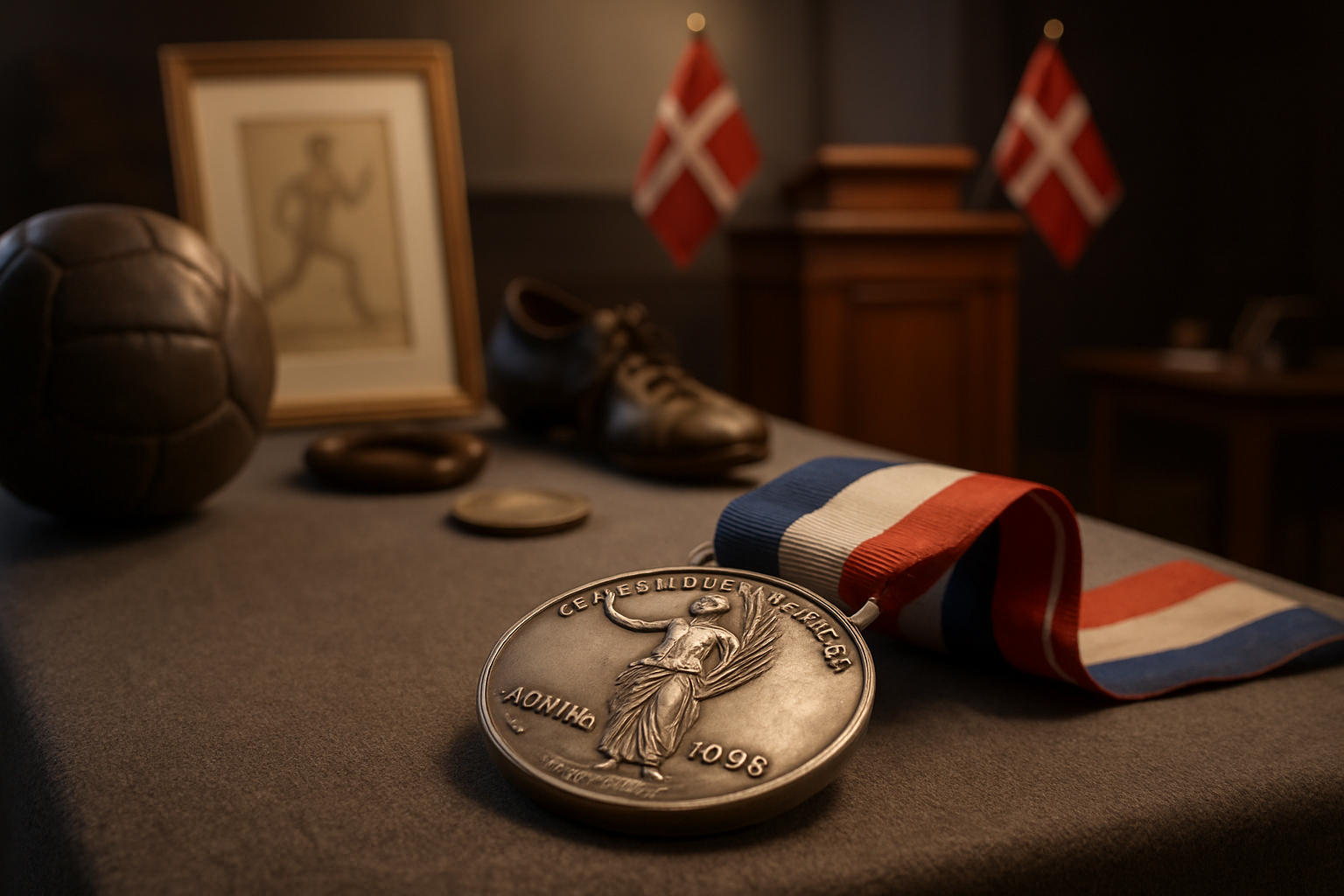
A historic Olympic medal from the inaugural 1896 Athens Games sold for 900,000 Danish kroner at auction on Sunday, marking a significant moment for Olympic memorabilia collectors, while contemporary Danish sports faces challenges with FC Copenhagen's unprecedented drop to relegation playoffs.
The extraordinary auction sale represents one of the most valuable pieces of early Olympic history to change hands in recent years. The medal, originating from the first modern Olympic Games held in Athens 130 years ago, attracted intense international bidding before reaching its final hammer price of 900,000 kroner (approximately €121,000).
The Significance of 1896 Olympic Memorabilia
The 1896 Athens Olympics hold unparalleled historical importance as the foundation of the modern Olympic movement. These Games, organized by Pierre de Coubertin and the newly formed International Olympic Committee, featured 241 athletes from 14 nations competing in 43 events across nine sports. The rarity of authentic memorabilia from these inaugural Games makes any surviving pieces extraordinarily valuable to collectors and sports historians.
The medal sold represents a direct connection to Olympic history's earliest chapter, when the Games were establishing traditions that continue today. Unlike modern Olympic medals, which are produced in large quantities, the 1896 medals were handcrafted pieces that reflect the artisanal approach of the late 19th century.
Danish Football's Contemporary Struggles
While Olympic history commands premium prices at auction, Danish football confronts contemporary challenges that have shocked the sporting community. FC Copenhagen, Denmark's most successful club and regular Champions League participant, has suffered an unprecedented collapse that has relegated them to the playoff zone for the first time in the club's history.
The situation has drawn sharp criticism from prominent figures within Danish football. Mike Tullberg and Daniel Wass, respected voices in the sport, expressed unified concern about Copenhagen's decline, with both agreeing that the club's struggles represent "a disappointment for Danish football" as a whole.
"It's disappointing for Danish football that FC Copenhagen misses the top-6"
— Joint assessment by Mike Tullberg and Daniel Wass
The magnitude of Copenhagen's fall has been described by Norwegian media as "the biggest fiasco in history," with VG and Aftenposten both characterizing the club's situation as an unprecedented disaster. For the first time, Copenhagen must participate in the relegation playoffs, a scenario that seemed unthinkable given their dominance of Danish football over the past two decades.
Historical Context of Danish Olympic Participation
Denmark's Olympic history extends back to the early days of the modern Games, making the 1896 medal auction particularly relevant to Danish sporting heritage. Danish athletes have competed in Olympic competition since the Games' formative years, contributing to the nation's proud sporting tradition that spans more than a century.
The recent Milano-Cortina 2026 Winter Olympics showcased Denmark's continued Olympic commitment, with Danish athletes participating across multiple disciplines. The Games demonstrated the global nature of modern Olympic competition, with Danish competitors joining nearly 3,000 athletes from 92 countries in the most geographically dispersed Winter Olympics in history.
Denmark's presence at Milano-Cortina 2026 included historic moments such as Rasmus Vestergaard Johansen becoming the first Danish skeleton Olympian, representing the country's expansion into new winter sports disciplines. The Games also featured Danish curling teams competing for medals, maintaining Denmark's tradition of Olympic participation across diverse sporting categories.
The Contrast Between Olympic Glory and Football Struggles
The juxtaposition between the celebration of Olympic history through the medal auction and the contemporary struggles of Danish football highlights the cyclical nature of sporting success and failure. While Olympic memorabilia from 1896 commands record prices, reflecting the enduring value of sporting achievement, modern Danish football faces questions about its current trajectory.
FC Copenhagen's relegation to playoff contention represents more than a single club's difficulties—it symbolizes broader challenges within Danish football's competitive structure. The club's fall from Champions League regular to relegation candidate demonstrates how quickly sporting fortunes can change, even for the most established institutions.
Market Value of Olympic Heritage
The 900,000 kroner price achieved for the 1896 Olympic medal reflects the robust market for authentic Olympic memorabilia. Collectors and institutions worldwide recognize the investment value of early Olympic artifacts, particularly those from the foundational Games that established the modern Olympic tradition.
Authentication and provenance play crucial roles in determining the value of such historical pieces. The 1896 medals were produced using specific materials and techniques that experts can verify, ensuring buyers of their authenticity. The medal's journey from the original Games to the auction house represents a carefully documented chain of custody that enhances its credibility and market value.
Future Implications for Danish Sports
As the auction demonstrates continued international appreciation for Olympic history, Danish sports organizations face the challenge of maintaining competitive standards in contemporary competition. The contrast between celebrating past Olympic achievements and addressing current football struggles illustrates the ongoing tension between heritage preservation and present-day performance.
FC Copenhagen's situation may serve as a catalyst for broader reforms within Danish football, potentially leading to structural changes designed to maintain the country's competitive edge. The club's historical success suggests that this current struggle, while unprecedented, may represent a temporary setback rather than permanent decline.
The Olympic medal auction's success, meanwhile, reinforces the enduring appeal of Olympic heritage and suggests continued strong market demand for authentic sporting artifacts. This trend may encourage Danish sporting institutions to better preserve and potentially monetize their own historical collections while focusing on creating new achievements worthy of future commemoration.
The intersection of Olympic history's commercial value and contemporary sporting challenges reflects the complex relationship between sporting heritage and present-day competitive pressures, illustrating how the past and present of Danish sports continue to evolve together.