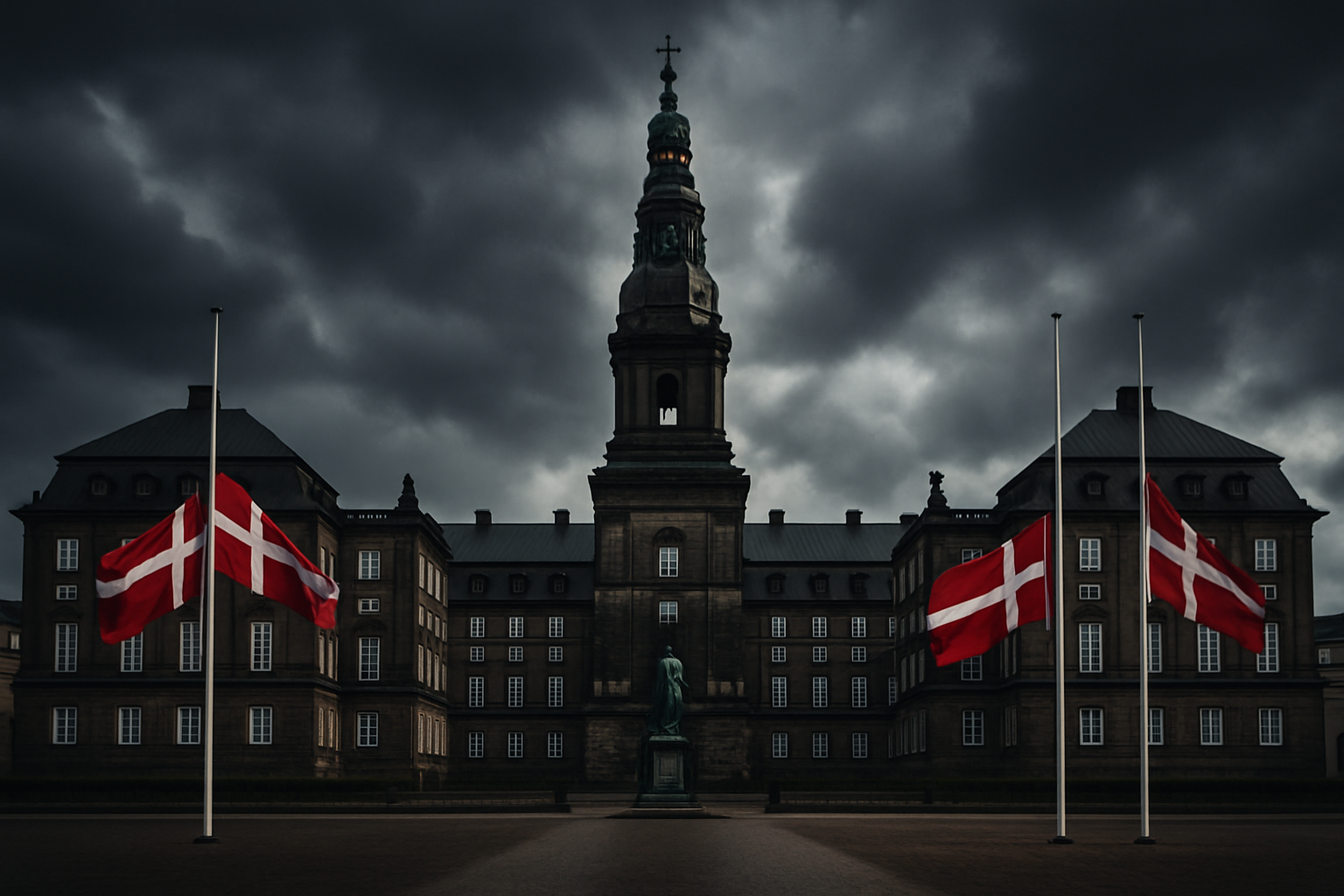
Danish Prime Minister Mette Frederiksen submitted her government's resignation to King Frederik X on March 25, 2026, following her Social Democratic Party's devastating electoral defeat that marked their worst performance in over 120 years of Danish democracy.
The formal resignation ceremony at Christiansborg Palace concluded a tumultuous electoral gamble that began in February when Frederiksen called snap elections, betting that her firm stance against Trump's territorial ambitions over Greenland—dubbed the "Greenland effect"—would secure her a third consecutive term as Prime Minister.
Despite the resignation, Frederiksen has indicated her readiness to continue as Prime Minister if she can secure sufficient parliamentary support, setting up what promises to be Denmark's most complex government formation process in modern history.
Historic Electoral Collapse
The Social Democrats' electoral collapse was nothing short of catastrophic by Danish standards. With only 21.9% of the vote, the party achieved its lowest vote share since 1903, plummeting from the 27.5% they secured in the 2022 elections. The result represents a loss of nearly 6 percentage points in just four years.
French media reports indicate that Frederiksen personally lost approximately 20,000 individual votes, with nearly one in three voters who had personally supported her in 2022 abandoning her candidacy. This personal rebuke underscores the depth of voter dissatisfaction with her leadership.
The electoral mathematics paint a stark picture of Denmark's political fragmentation. With 12 parties clearing the parliamentary threshold, the 179-seat Folketing (Danish Parliament) has become the most fragmented in the country's modern democratic history. Neither the traditional left-wing nor right-wing blocs achieved the 90-seat majority needed to form a stable government.
The Failed "Greenland Gamble"
Frederiksen's decision to call snap elections in February was predicated on capitalizing on international acclaim for her defiant response to President Trump's renewed interest in acquiring Greenland. Her "neither for sale nor purchase" position had earned widespread praise across Europe and strengthened Denmark's international standing.
The crisis had prompted unprecedented international solidarity, with France and Canada simultaneously opening consulates in Greenland's capital Nuuk, and NATO launching its Arctic Sentry mission. King Frederik X made a symbolic three-day visit to Greenland, while EU Commission President Ursula von der Leyen announced comprehensive support packages.
However, this international success failed to translate into domestic political capital. Exit polling revealed that Danish voters prioritized bread-and-butter economic issues—inflation, housing costs, and cost-of-living pressures—over foreign policy achievements. The "rally around the flag" effect that Frederiksen had counted on proved insufficient to overcome these domestic concerns.
Coalition Mathematics and Kingmaker Politics
The electoral fragmentation has thrust Foreign Minister Lars Løkke Rasmussen and his centrist Moderate Party into the role of kingmaker. As the leader of one of the few parties positioned to work with multiple potential coalition partners, Rasmussen now holds the key to Denmark's political future.
The situation is complicated by categorical rejections from key opposition figures. Venstre party leader Troels Lund Poulsen has ruled out any cooperation with Frederiksen, stating that his party will either participate in a "blue center government or remain in opposition."
This hardline stance from traditional center-right parties significantly narrows Frederiksen's options for forming a new government, despite the Social Democrats technically remaining the largest single party in parliament.
Constitutional Process Under New Monarch
The government formation process carries additional historical significance as the first to occur under Denmark's new monarch, King Frederik X, following Queen Margrethe II's abdication in early 2024. Most Danes have never experienced government formation without the familiar "Queen's rounds" of party consultations.
Constitutional experts note that this adds an element of uncertainty to what is already Denmark's most challenging government formation in decades. The new king must navigate unprecedented political fragmentation while establishing his own constitutional role in the process.
International Context and Implications
The electoral outcome occurs against the backdrop of what observers have termed "the most challenging period for continental democracy since World War II." Denmark's political fragmentation mirrors broader European trends, with mainstream parties struggling across the continent and coalition politics becoming increasingly complex.
The timing is particularly sensitive given Denmark's enhanced international profile from the Greenland crisis. European allies and NATO partners are closely watching to see whether Denmark can maintain stable governance while continuing to play its crucial role in Arctic security and sovereignty defense.
Working group meetings between US and Greenlandic representatives continue from their January 28 start date, and the international community needs Denmark to maintain coherent leadership during these ongoing territorial negotiations.
Domestic Priorities Versus International Success
The electoral result highlights a fundamental disconnect between international acclaim and domestic political success. While Frederiksen earned praise for her handling of the Greenland crisis and strengthening of transatlantic relationships, Danish voters remained focused on economic pressures affecting their daily lives.
Inflation, housing affordability, and general cost-of-living concerns dominated voter priorities, demonstrating that even the most successful foreign policy cannot compensate for perceived domestic policy failures. This lesson may resonate beyond Denmark's borders as other European leaders face similar challenges balancing international responsibilities with domestic expectations.
Path Forward
Despite her party's historic defeat, Frederiksen has declared herself "ready to assume" the Prime Minister role again if she can construct a viable governing coalition. This will require extensive negotiations with parties across the political spectrum, potentially including compromises on key policy positions.
The alternative scenarios include a center-right coalition led by Venstre or other opposition parties, though these face their own mathematical challenges given the parliament's fragmentation. Some political observers have not ruled out the possibility of a grand coalition arrangement or even new elections if government formation proves impossible.
The coming days and weeks will test Denmark's democratic institutions and political culture as they navigate this unprecedented situation. The resolution will not only determine Denmark's government but also provide a template for how established democracies can handle increasing political fragmentation while maintaining effective governance.
As Denmark begins this complex political process, the international community watches with particular interest, given the country's outsized role in current geopolitical challenges and its potential to serve as a model for democratic resilience in an era of increasing political complexity.