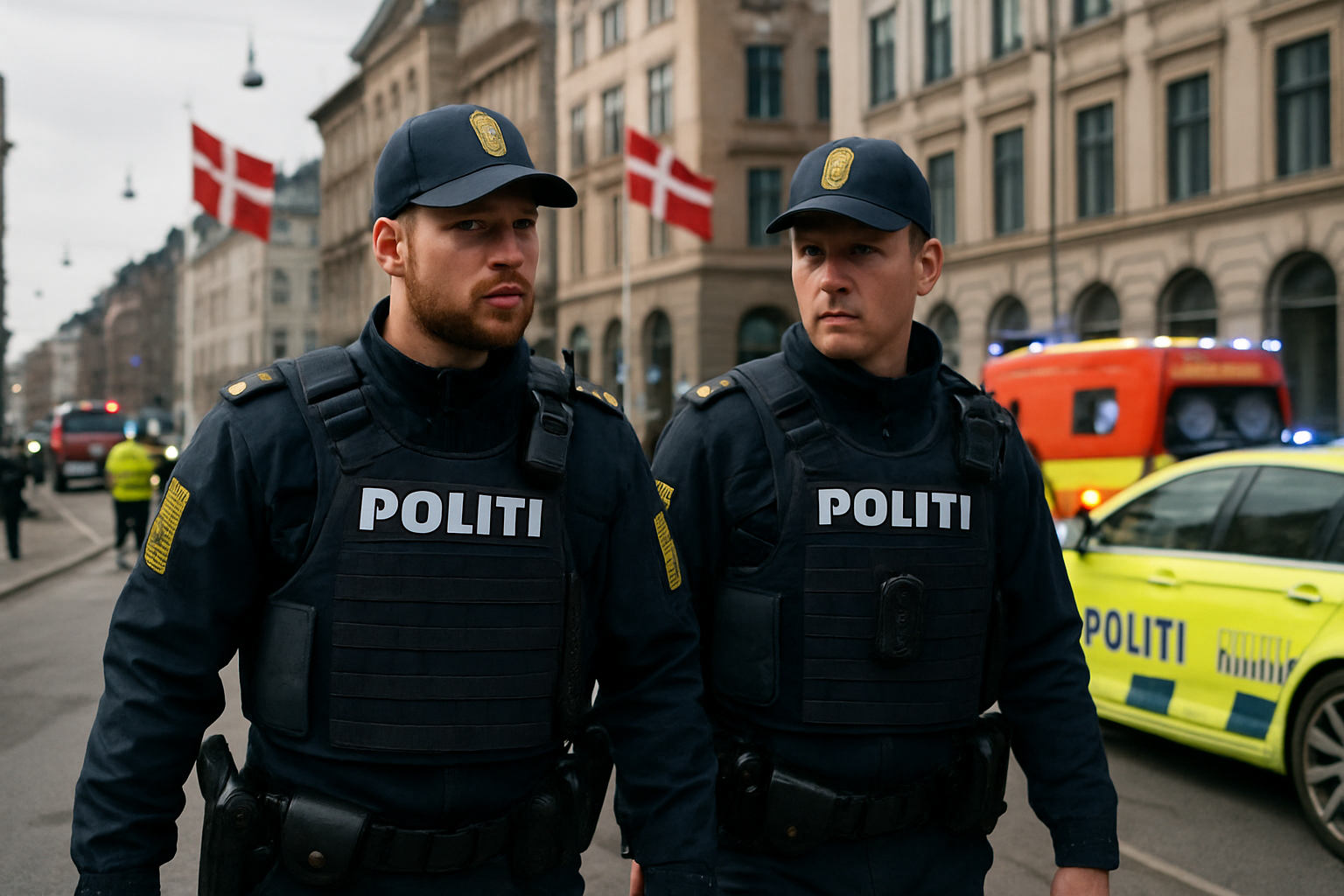
Denmark is confronting an unprecedented wave of security challenges that threaten to undermine its reputation as one of Europe's safest nations, with incidents ranging from sauna club fires to knife attacks and teenage involvement in organized crime activities.
Recent developments across Denmark reveal a concerning pattern of escalating violence and criminal activity that has prompted law enforcement agencies to reassess their approaches to public safety. The incidents, occurring within a span of hours on April 4, 2026, highlight the complex security landscape facing Danish authorities.
Fire Emergency Response in Copenhagen
Copenhagen police and fire services responded to a significant blaze at a sauna club in the capital, marking the latest in a series of incidents affecting entertainment venues. According to multiple reports, the fire broke out Saturday morning, requiring extensive emergency response coordination between police and firefighters. Fortunately, no injuries were reported in the incident, though the fire caused substantial property damage to the facility.
The sauna club fire represents more than an isolated incident, fitting into a broader pattern of security concerns affecting Danish entertainment and hospitality venues. Emergency responders have noted increased incidents requiring multi-agency coordination, stretching resources and highlighting vulnerabilities in public safety infrastructure.
Violent Crime Escalation
In a separate but equally concerning development, Copenhagen police are investigating a knife attack that left a 23-year-old man injured. The incident, which occurred in the early hours of Saturday morning, underscores the rising trend of violent street crime that has begun affecting Denmark's urban centers.
Danish authorities have documented a significant increase in knife-related violence over recent months, challenging traditional perceptions of Nordic safety. The attack on the young man represents the latest in a concerning series of blade-related incidents that have prompted calls for enhanced security measures and stricter weapons enforcement.
"The pattern we're seeing challenges everything we thought we knew about Danish public safety. We're dealing with new forms of violence that require adaptive responses."
— Senior Danish Police Official
Youth Involvement in Serious Crime
Perhaps most troubling is the arrest of two teenagers in connection with a shooting incident in Kastrup. The case highlights a deeply concerning trend of youth recruitment into serious criminal activities, including firearms-related violence that was once virtually unknown in Danish society.
The teenagers, who cannot be named due to their age, were remanded in custody following the shooting incident. Their involvement reflects broader European trends documented by security agencies, where criminal organizations increasingly recruit minors for high-risk operations while maintaining leadership separation across borders.
This phenomenon exploits legal juvenile protections while exposing young people to serious criminal liability. Danish authorities have noted similarities with patterns observed in neighboring Sweden and Norway, where youth involvement in organized crime has become a significant security concern.
Organized Crime Networks
The Danish security challenges extend beyond individual incidents to include sophisticated international criminal networks operating within the country. Recent investigations have revealed connections between local criminal activities and broader European organized crime operations.
Intelligence sources indicate that Denmark has become increasingly attractive to international criminal networks due to its strategic location, robust financial systems, and traditionally low security presence. The country's position as a gateway between Scandinavia and continental Europe makes it valuable for various illegal activities, from drug trafficking to financial crimes.
Historical Context and Escalation
Denmark's current security challenges represent a dramatic departure from its historical reputation as one of Europe's most peaceful nations. The country has traditionally enjoyed low crime rates, high social cohesion, and effective institutions capable of maintaining public order through community-based approaches.
However, recent months have seen a notable escalation in both the frequency and severity of criminal incidents. The pattern includes not only individual violent crimes but also more sophisticated operations suggesting organized criminal involvement. This evolution mirrors broader European trends where traditional boundaries between local crime and international networks have become increasingly blurred.
Law Enforcement Response
Danish police have responded to these challenges by implementing enhanced coordination protocols and increasing specialized unit deployment. The multi-agency response to the sauna club fire demonstrates improved emergency coordination capabilities, while investigations into the knife attack and teenage arrests show commitment to pursuing serious criminal cases.
Authorities have also increased intelligence sharing with European partners, recognizing that many current challenges have transnational dimensions requiring coordinated responses. This includes participation in broader Nordic and EU security initiatives aimed at combating cross-border criminal activities.
The Danish approach emphasizes maintaining democratic principles while enhancing security effectiveness. This balance reflects broader European efforts to adapt law enforcement to contemporary challenges without compromising fundamental civil liberties.
International Criminal Sophistication
Security experts note that criminal organizations operating in Denmark demonstrate increasing sophistication, employing advanced surveillance systems, encrypted communications, and compartmentalized international structures. These capabilities often exceed traditional law enforcement resources, requiring sustained international cooperation and technological advancement.
The recruitment of Danish youth into criminal activities reflects these organizations' adaptation to local conditions while maintaining global operational reach. This pattern has been observed across Europe, where criminal networks exploit jurisdictional boundaries and legal protections while operating with state-like capabilities.
Community Impact and Response
The escalating security challenges have begun affecting Danish communities in ways unprecedented in recent decades. Public confidence in safety has declined in certain urban areas, while businesses in entertainment and hospitality sectors report increased security concerns.
Community leaders emphasize the importance of addressing underlying factors contributing to youth recruitment into criminal activities. This includes ensuring adequate educational opportunities, economic prospects, and social support systems that provide alternatives to criminal involvement.
Local authorities are implementing comprehensive approaches combining enhanced enforcement with community engagement, educational programs, and early intervention strategies. The goal is to address immediate security concerns while building long-term resilience against criminal recruitment and community destabilization.
European Context
Denmark's security challenges occur within a broader European context of increasing criminal sophistication and cross-border operations. Countries including Sweden, Norway, and the Netherlands have reported similar patterns of youth involvement in serious crime, international network operations, and challenges to traditional law enforcement approaches.
The European response has emphasized enhanced cooperation through Europol protocols, bilateral agreements, and regional partnerships enabling intelligence sharing and coordinated operational timing. However, criminal exploitation of jurisdictional boundaries remains a persistent challenge requiring sustained political commitment and resource allocation.
Future Implications
The current wave of security challenges facing Denmark represents a critical test of the country's institutional capacity to maintain public safety while preserving democratic values. Success will depend on effective adaptation of law enforcement approaches, sustained international cooperation, and comprehensive strategies addressing underlying recruitment conditions.
The outcomes will influence not only Denmark's domestic security but also serve as a template for other European nations facing similar challenges. The balance between security enhancement and civil liberties preservation will be closely monitored by international observers and democratic institutions worldwide.
As Denmark continues to address these unprecedented security challenges, the focus remains on developing innovative solutions that protect public safety while maintaining the democratic principles and social cohesion that have long defined Danish society. The coming months will be crucial in determining whether these efforts can successfully contain the escalating threats while preserving the nation's fundamental character.