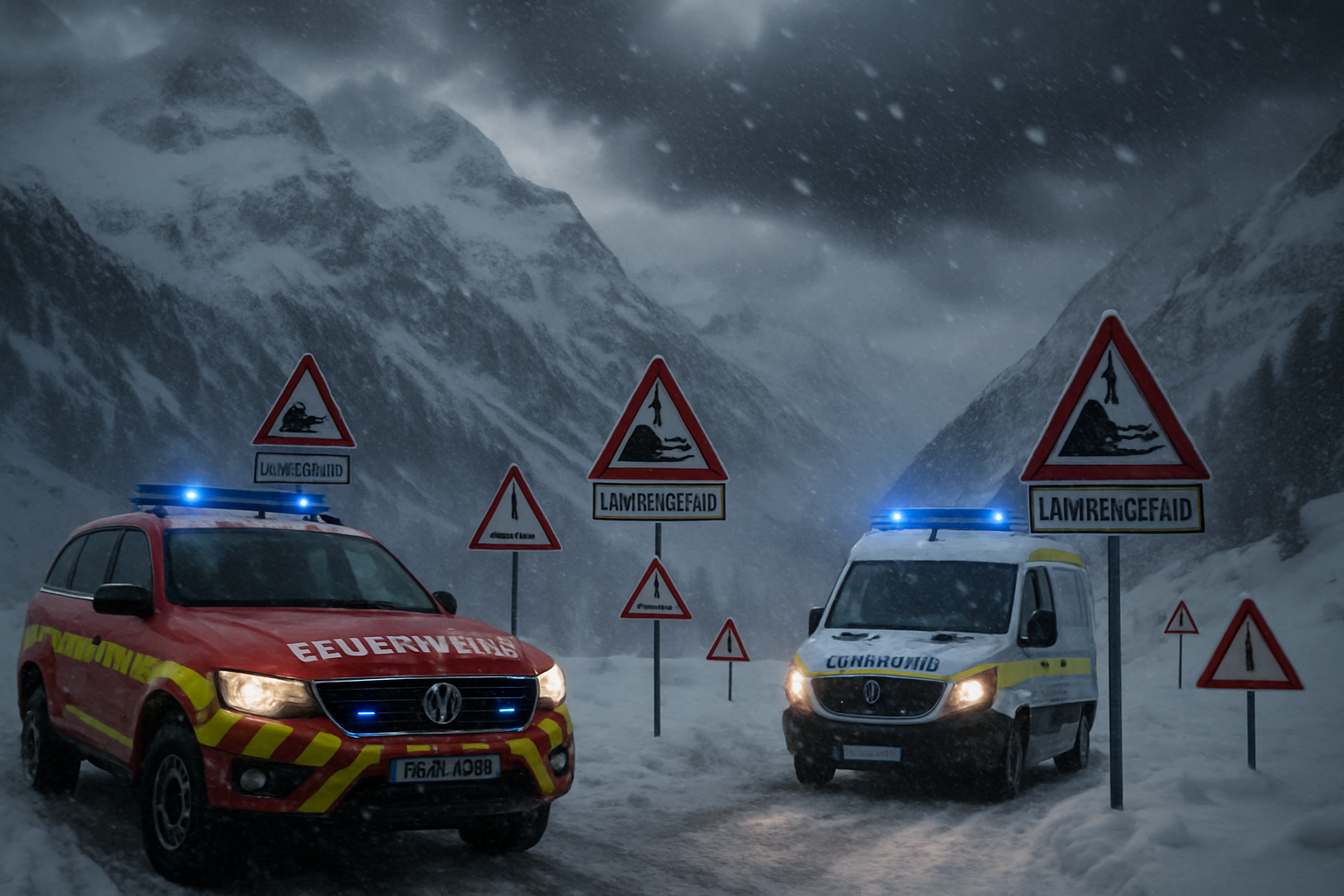
A devastating winter storm swept across Europe on Friday, February 20, 2026, claiming at least five lives in Austria and bringing transportation systems across multiple countries to a virtual standstill, as the continent faces yet another chapter in what meteorologists are calling the most severe February weather crisis in living memory.
The latest fatalities occurred in Austria's mountainous regions, where four people died in avalanche incidents in Tirol and one person was killed in Vorarlberg, according to Austrian emergency services. The deaths bring the total European winter weather fatalities to over 35 people since the beginning of February, as a succession of Atlantic storms continues to pummel the continent.
Austria Bears Deadly Brunt of Alpine Conditions
Austrian authorities reported that Friday's snowfall created treacherous conditions across the country's alpine regions. The situation was so severe that Vienna Airport was forced to suspend operations for hours due to hazardous weather conditions, stranding thousands of passengers and highlighting the storm's impact on critical infrastructure.
Emergency responders faced enormous challenges as snowy and icy road conditions left trucks stranded on highways throughout Austria, creating dangerous bottlenecks on major transportation arteries. An estimated 13,000 firefighters were deployed across the country to respond to weather-related emergencies, representing one of the largest peacetime mobilizations in Austrian history.
The power grid also buckled under the extreme conditions, with numerous electrical outages reported across the country as heavy snow and ice brought down power lines and damaged transmission equipment.
Continental Transport Crisis Deepens
The storm's impact extended far beyond Austria's borders, creating a transportation nightmare across Northern and Central Europe. German weather services expanded ice warnings from northeastern regions to western and southern areas, compounding an already critical situation.
Sweden issued its highest-level orange weather warnings for the Skåne province, with authorities urging residents to remain at home as dangerous conditions made travel extremely hazardous. Multiple municipalities canceled school transportation services, and the E4 highway experienced numerous accidents near Markaryd.
In Denmark, emergency protocols were activated with all city buses in Aarhus canceled and schools closed nationwide. Police advised against any unnecessary travel, describing conditions as "extremely treacherous" and implementing emergency measures that haven't been seen in decades.
Historical Context of Crisis
Friday's deadly weather represents the latest escalation in what has become Europe's most challenging February weather crisis since records began. The current emergency builds upon a devastating succession of Atlantic storms—Kristin, Leonardo, Marta, Nils, and now Pedro—that have claimed over 30 lives across Portugal, Spain, and France throughout the month.
Portugal has maintained the largest peacetime rescue operation in its national history, deploying 26,500 personnel including 1,975 military personnel and 30 naval vessels to respond to more than 1,800 weather incidents since February 1. The European Union's Civil Protection Mechanism has been activated, with Sweden and Denmark providing a €246 million assistance package—the largest coordinated European weather response on record.
"This succession of extreme weather events is unprecedented in our operational history," said a spokesperson for the EU Civil Protection Mechanism. "We are seeing infrastructure and emergency services pushed beyond their design limits across multiple member states simultaneously."
— EU Civil Protection Official
Climate Volatility in Historic Context
The February 2026 weather crisis occurs against the backdrop of January 2026 being confirmed as the hottest month in recorded global history—marking the 18th consecutive month that temperatures exceeded 1.5°C above pre-industrial levels. This paradox illustrates the complex nature of climate change, where global warming can override natural cooling patterns while enabling extreme regional weather events through disrupted atmospheric circulation patterns.
Scientific experts note that the polar vortex disruption caused by warming Arctic regions has become a recurring factor in these extreme weather patterns, allowing frigid air masses to plunge southward into regions unprepared for such conditions while simultaneously enabling powerful storm systems to develop over warmer Atlantic waters.
Infrastructure Under Siege
The cumulative impact of February's weather succession has exposed critical vulnerabilities in European infrastructure systems designed for historical rather than current climate conditions. Transportation networks, power grids, and communication systems are operating far beyond their design parameters, with recovery timelines now measured in months rather than weeks.
Emergency services across the continent report reaching operational capacity limits, with traditional regional aid mechanisms strained by the simultaneous nature of the multi-national disasters. The crisis has forced a fundamental reconsideration of how European countries coordinate emergency responses and support each other during large-scale weather events.
Economic and Social Impact Mounting
The economic toll continues to mount across affected regions, with billions of euros in damages to agriculture, tourism, and infrastructure sectors. Agricultural operations across the Iberian Peninsula and Alpine regions face significant losses, while the crucial winter tourism season has been severely disrupted by dangerous conditions and transportation failures.
Mental health services report increased demand as communities struggle with repeated extreme weather trauma, and thousands of families have been forced from their homes due to flooding, avalanche risks, and power outages.
International Cooperation in Crisis Response
The scale and simultaneous nature of the weather emergencies has necessitated unprecedented levels of international cooperation. The activation of EU Civil Protection mechanisms represents the most significant coordinated European emergency response since the system's establishment.
Enhanced cooperation between mountain rescue services across Italy, Austria, France, and Switzerland has become essential as avalanche incidents strain individual national capacities. The sharing of specialized equipment, expertise, and personnel has proven critical in managing the crisis.
Looking Ahead: Adaptation Imperatives
European Scientific Advisory Council on Climate Change has warned that current conditions represent a preview of what could become routine weather patterns by the 2030s without significant climate adaptation investments. The crisis has highlighted the urgent need for infrastructure designed to withstand future rather than historical climate conditions.
Policy makers face the choice between reactive crisis management and transformative adaptation approaches. The "build back better" philosophy emphasizing climate resilience is gaining support as communities recognize that traditional reconstruction methods may be inadequate for increasing weather volatility.
"We are at a watershed moment for European climate preparedness," said Otmar Edenhofer, Chairman of the European Scientific Advisory Council on Climate Change. "The choice between reactive crisis management and transformative infrastructure adaptation becomes more urgent with each extreme weather event."
— Otmar Edenhofer, Climate Policy Expert
Ongoing Emergency Response
As rescue operations continue across the affected regions, authorities maintain high alert levels and advise against unnecessary travel. Weather services warn that additional Atlantic storm systems are developing, with the crisis potentially persisting for weeks.
The current emergency has demonstrated both the vulnerability of modern European society to extreme weather and the resilience of democratic institutions under pressure. Despite the disruptions, essential services and governance systems have continued to function, providing a template for managing climate-related emergencies while maintaining social stability.
Recovery efforts are expected to continue well into the spring, with the full extent of infrastructure damage still being assessed. The February 2026 weather crisis will likely be remembered as a pivotal moment that forced Europe to confront the reality of permanent climate volatility and the need for comprehensive adaptation strategies.