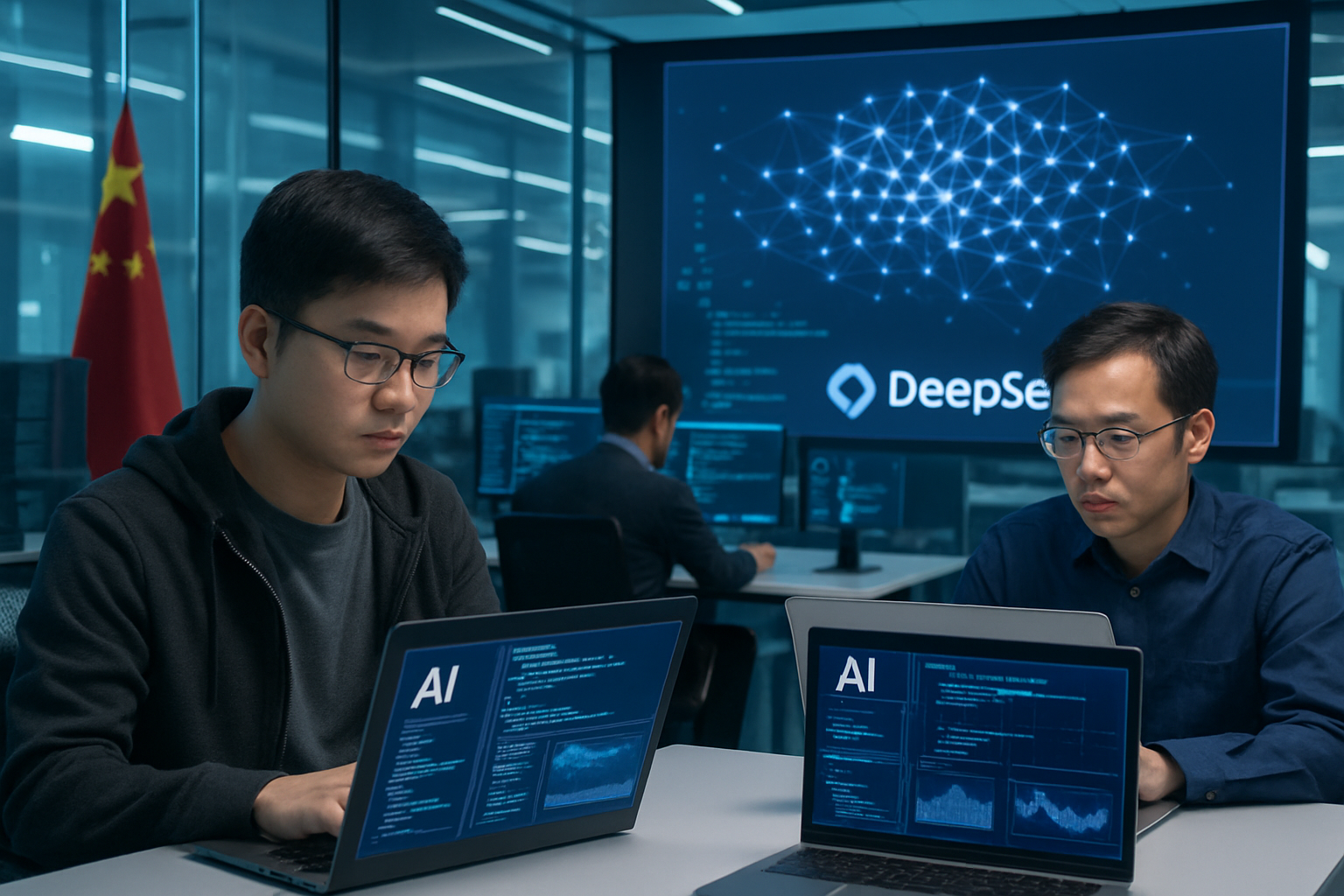
Chinese AI startup DeepSeek has released its highly anticipated V4 model, delivering a seismic shock to the global technology industry and intensifying what analysts term the "SaaSpocalypse" - the systematic destruction of traditional software business models.
The Hangzhou-based company unveiled the preliminary version of its V4 model on Friday, April 24, 2026, positioning itself as a formidable challenger to American AI giants including OpenAI, Anthropic, and Google. The announcement comes exactly one year after DeepSeek's previous R1 model triggered unprecedented market disruption, and marks a critical escalation in the global AI race.
A Year of Unprecedented Growth
DeepSeek's rise represents one of the most dramatic shifts in technological leadership in recent history. Over the past year, the company has evolved from a relatively unknown Chinese startup to a major disruptor of the AI landscape, with its models capturing global market leadership for the first time and ending what had been sustained American dominance in the sector.
"The company affirms its intention to rival American giants such as OpenAI, Anthropic and Google, one year after having disrupted the sector with its R1 model," according to CNN reporting on the announcement.
— CNN Report, April 24, 2026
The timing of the V4 release is particularly significant, occurring during what industry experts have identified as an "April 2026 Civilizational Choice Point" - a critical juncture that will determine whether AI serves human flourishing or becomes a tool of exploitation and control.
Market Disruption and the "SaaSpocalypse"
DeepSeek's breakthrough has been a primary catalyst for the ongoing "SaaSpocalypse," a phenomenon that has eliminated hundreds of billions of dollars in traditional software market capitalization. Unlike previous technological shifts where AI complemented existing software solutions, DeepSeek's models demonstrate direct replacement capabilities that threaten the fundamental business models of established software companies.
The market impact has been swift and severe. Indian IT giants including Infosys, Wipro, and HCL Tech have seen 6% declines, while the broader Nifty IT index plummeted 19% as core business services face unprecedented AI competition. German analysts have described the situation as an "apocalypse for software houses," with traditional providers experiencing 20% stock declines across the sector.
Microsoft's Mustafa Suleyman has predicted that AI will replace the majority of office workers within two years, with lawyers and auditors facing displacement within 18 months. These predictions are gaining credibility as companies like DeepSeek demonstrate increasingly sophisticated capabilities.
Technological Sovereignty and Geopolitical Implications
DeepSeek's success represents more than technological achievement; it symbolizes China's pursuit of technological sovereignty amid ongoing tensions with Western powers. The company has reportedly trained its advanced models using restricted Nvidia Blackwell chips despite U.S. export controls, demonstrating sophisticated circumvention capabilities through operations at its Inner Mongolia data center.
Nvidia CEO Jensen Huang previously warned that Chinese AI optimization on Huawei chips would be a "horrible outcome" for U.S. technological supremacy. His concerns reflect broader anxiety about the development of a completely indigenous Chinese AI technology stack that could achieve total independence from foreign dependencies.
Infrastructure Challenges and Innovation
The AI revolution is occurring against the backdrop of a severe global semiconductor crisis, with memory chip prices surging sixfold due to supply constraints affecting Samsung, SK Hynix, and Micron. These shortages are expected to persist until 2027 when new fabrication facilities come online.
Paradoxically, these constraints have spurred innovation in memory-efficient algorithms and sustainable deployment strategies. Companies are being forced to develop more thoughtful implementations that maximize capabilities while minimizing hardware requirements, potentially democratizing AI access for smaller organizations and developing nations.
Despite infrastructure challenges, major technology companies continue massive investments. Alphabet has committed $185 billion to AI infrastructure in 2026 - the largest single-year corporate technology investment in history - while Amazon's AI development plans exceed $1 trillion over the next decade.
Regulatory Response and International Coordination
The rapid pace of AI development has triggered unprecedented regulatory responses worldwide. Spain has implemented the world's first criminal executive liability framework for technology platforms, creating imprisonment risks for executives. France has conducted cybercrime raids on AI companies, while the European Union investigates Digital Services Act violations with potential billion-dollar penalties.
The United Nations has established an Independent Scientific Panel with 40 experts under Secretary-General António Guterres - the first fully independent global AI assessment body. This represents the most sophisticated attempt at global technology governance since the commercialization of the internet.
Environmental and Social Considerations
The AI boom's environmental impact is becoming increasingly apparent. The World Bank projects that AI will require 4.2-6.6 billion cubic meters of water annually by 2027 for data center cooling - equivalent to four to six times Denmark's annual water withdrawal. This massive demand is driving investment in renewable energy and more efficient computing architectures.
Social implications are equally significant. While AI development accelerates, successful integration models are emerging that prioritize human welfare. Canadian universities have implemented AI teaching assistants that maintain critical thinking standards, Malaysia operates the world's first AI-integrated Islamic school, and Singapore's WonderBot 2.0 demonstrates effective heritage education applications.
The Multipolar AI Landscape
DeepSeek's success exemplifies the emergence of a multipolar AI landscape that prevents single-entity dominance while enabling culturally sensitive development approaches. This distributed capability structure includes Chinese technological sovereignty efforts, European regulatory frameworks focusing on democratic oversight, American corporate investments, and Global South participation in AI governance.
The competition extends beyond commercial success to fundamental questions about democratic governance, technological sovereignty, and international cooperation in managing AI's transformative potential.
Employment Transformation
The release of DeepSeek V4 accelerates ongoing employment transformation across multiple sectors. Regional variations in response strategies are emerging, with Western companies often implementing traditional layoffs followed by selective AI hiring, while Asian corporations pursue comprehensive worker transition programs that emphasize reskilling rather than displacement.
The most successful implementations treat AI as sophisticated amplification tools that enhance human capabilities rather than wholesale replacement mechanisms. Organizations that maintain sustained commitment to human development, stakeholder engagement, and cultural sensitivity are demonstrating superior outcomes.
Looking Forward: Critical Decision Points
As 2026 progresses, the decisions made regarding AI development, deployment, and governance will establish human-AI relationship patterns for decades to come. The window for proactive, coordinated action is narrowing rapidly as technological capabilities advance faster than governance frameworks.
Success in this transition requires unprecedented coordination between governments, companies, institutions, and civil society. The challenge is balancing innovation acceleration with safety governance, commercial interests with human welfare, and national competitiveness with international cooperation.
The most promising path forward involves sophisticated human-AI collaboration that amplifies human capabilities while preserving creativity, cultural understanding, and ethical reasoning that define human potential. DeepSeek's V4 release serves as both a testament to technological achievement and a reminder of the critical choices that lie ahead in shaping AI's role in human civilization.