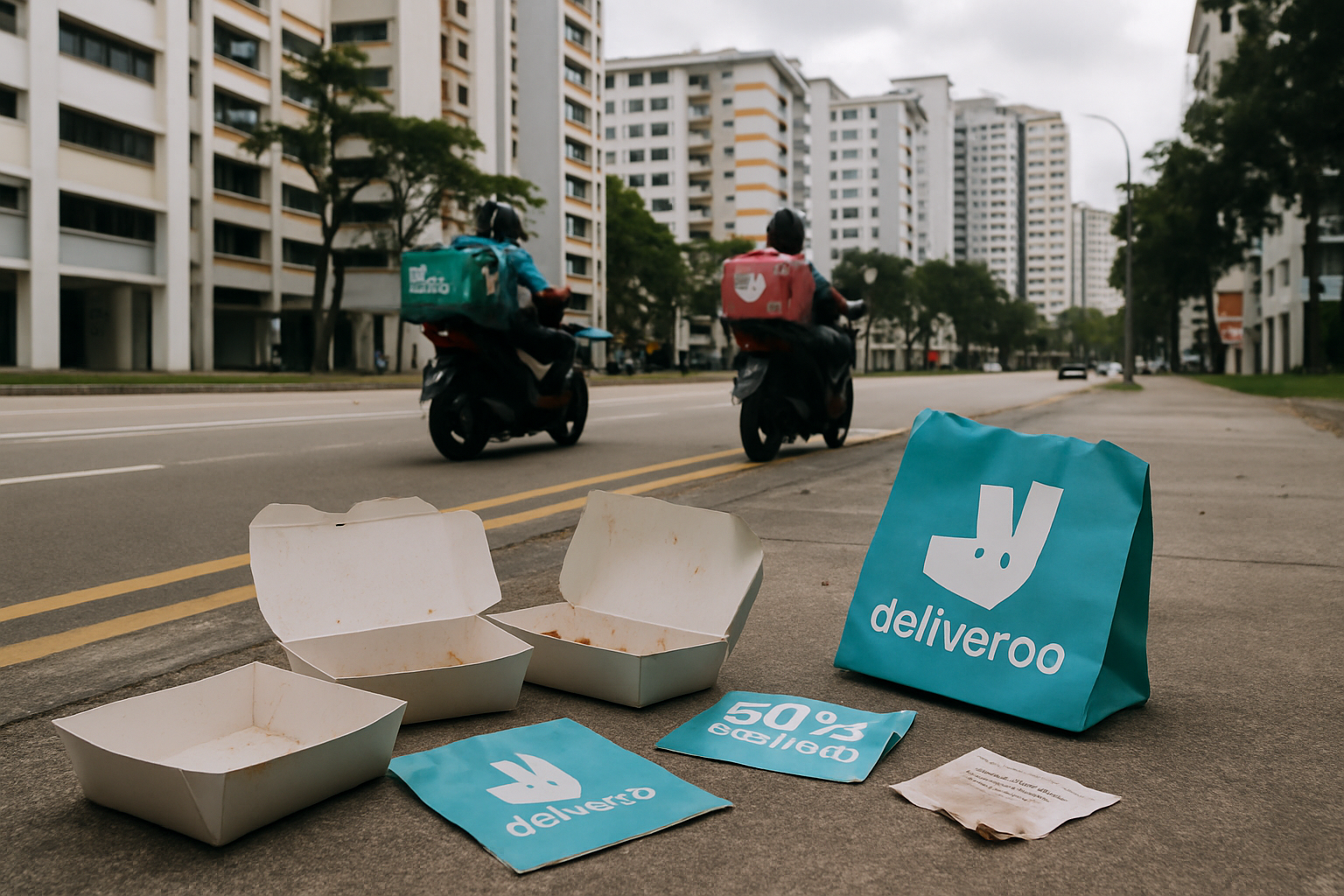
Deliveroo's strategic withdrawal from Singapore marks a significant consolidation in the city-state's food delivery market, potentially leading to higher fees and reduced competition as Grab and Foodpanda emerge as the sole major platforms serving consumers.
The British food delivery giant's exit, confirmed in February 2026, represents a broader pattern of market rationalization across Southeast Asia's highly competitive food delivery sector. Industry experts warn that the reduction from three major players to two could fundamentally alter pricing dynamics and service offerings for both consumers and restaurant partners.
The Economics of Exit
Sales director Sabir Ansari's experience illustrates the competitive pressures that ultimately drove Deliveroo's departure. During the height of the Covid-19 pandemic, Ansari relied on Deliveroo almost daily for burgers and pasta delivered to his Singapore home. However, over time, the 31-year-old found it increasingly difficult to justify the service's costs as rival platforms Grab and Foodpanda offered more diverse food options and aggressive promotional campaigns that made "delivery fees way cheaper."
"It was a no-brainer," Ansari explained, articulating the consumer calculation that became increasingly problematic for Deliveroo's market position in Singapore.
This shift in consumer behavior reflects the intense price competition that has characterized Singapore's food delivery market since the pandemic-driven boom. While Deliveroo maintained a premium service positioning, local consumers gravitated toward platforms offering broader restaurant networks and more aggressive discount structures.
Market Consolidation Concerns
With Grab and Foodpanda now emerging as the two remaining major food delivery platforms, industry analysts express significant concerns about the potential for reduced competition to impact both pricing and service quality. The duopoly structure could fundamentally reshape the market dynamics that previously benefited consumers through competitive pricing and innovation.
"With Grab and Foodpanda as the two major food delivery platforms remaining, experts say merchants and riders may eventually see higher commissions and weakened bargaining power."
— Industry Analysis, Channel News Asia
The consolidation raises particular concerns for restaurant partners who may face increased commission rates as the remaining platforms exercise greater market power. Small and medium-sized food establishments, which became increasingly dependent on delivery platforms during the pandemic, could find themselves with limited alternatives and reduced negotiating leverage.
Impact on Delivery Workers
The market consolidation also presents challenges for delivery riders, who may experience reduced competition for their services. With fewer platforms competing for delivery personnel, gig economy workers could face pressure on compensation and working conditions as platforms no longer need to compete as aggressively for talent.
Industry experts suggest that the reduced competition could lead to standardization of delivery fees and commission structures, potentially eliminating the competitive dynamics that previously drove platform innovation and service improvements.
Regional Context and Global Trends
Deliveroo's Singapore exit occurs within a broader context of food delivery market rationalization across Southeast Asia and globally. The initial pandemic-driven expansion of food delivery services has given way to a more mature market where profitability and sustainable business models take precedence over rapid growth and market share acquisition.
This trend reflects the challenging economics of food delivery platforms, which face high operational costs, intense competition, and pressure to maintain both competitive pricing for consumers and attractive commissions for restaurant partners. The withdrawal suggests that even established international players may struggle to achieve profitability in highly competitive local markets.
Singapore's Unique Market Dynamics
Singapore's compact geography and high population density make it an attractive market for food delivery services, but these same characteristics intensify competition. The city-state's tech-savvy population and high smartphone penetration create conditions for rapid platform adoption, but also enable consumers to easily switch between competing services based on pricing and promotions.
The market's maturity means that differentiation based solely on technology or user interface becomes increasingly difficult, forcing platforms to compete primarily on price, restaurant selection, and promotional offerings.
Future Market Structure
The consolidation to a two-player market raises important questions about long-term competition and innovation in Singapore's food delivery sector. While Grab brings the advantage of platform integration across transportation and financial services, Foodpanda focuses specifically on food delivery optimization.
This duopoly structure could lead to market segmentation, with each platform potentially targeting different consumer demographics or service offerings. However, it also raises concerns about the potential for tacit coordination on pricing and service standards.
Regulatory Implications
Singapore's competition authorities may need to monitor the consolidated market structure to ensure that reduced competition does not result in anti-competitive behavior or excessive pricing power. The withdrawal of a major international player like Deliveroo could prompt regulatory review of market concentration in the food delivery sector.
The situation also highlights broader questions about platform regulation and the balance between allowing market forces to determine optimal industry structure while protecting consumer interests and maintaining competitive markets.
Consumer and Industry Adaptation
For consumers like Sabir Ansari, the market consolidation may initially appear beneficial, as remaining platforms may need to maintain competitive offerings to retain market share. However, the long-term effects of reduced competition could include higher prices, reduced promotional offerings, and slower innovation in service delivery.
Restaurant partners face the most immediate impact from the consolidation, as they must adapt their digital strategies to focus on the two remaining major platforms. This concentration may require renegotiation of commission structures and promotional arrangements with reduced bargaining power.
The market exit also demonstrates the volatility of platform-dependent business models, particularly for smaller restaurants that may have built significant portions of their revenue around specific delivery partnerships.
Looking Forward
Deliveroo's withdrawal from Singapore represents more than just a corporate strategy shift; it signals a fundamental transformation in the food delivery market from rapid expansion to sustainable competition. The move toward market consolidation may become a template for other Southeast Asian markets experiencing similar competitive pressures.
The success of the remaining duopoly in maintaining competitive services and pricing will serve as a crucial test case for food delivery market structure across the region. As the industry matures, the balance between operational efficiency and competitive dynamics will determine whether consolidated markets can continue to serve consumer interests effectively.
For Singapore, the withdrawal of an international platform also raises questions about the city-state's ability to maintain diverse and competitive digital service markets as global platforms make strategic decisions about market participation and profitability.