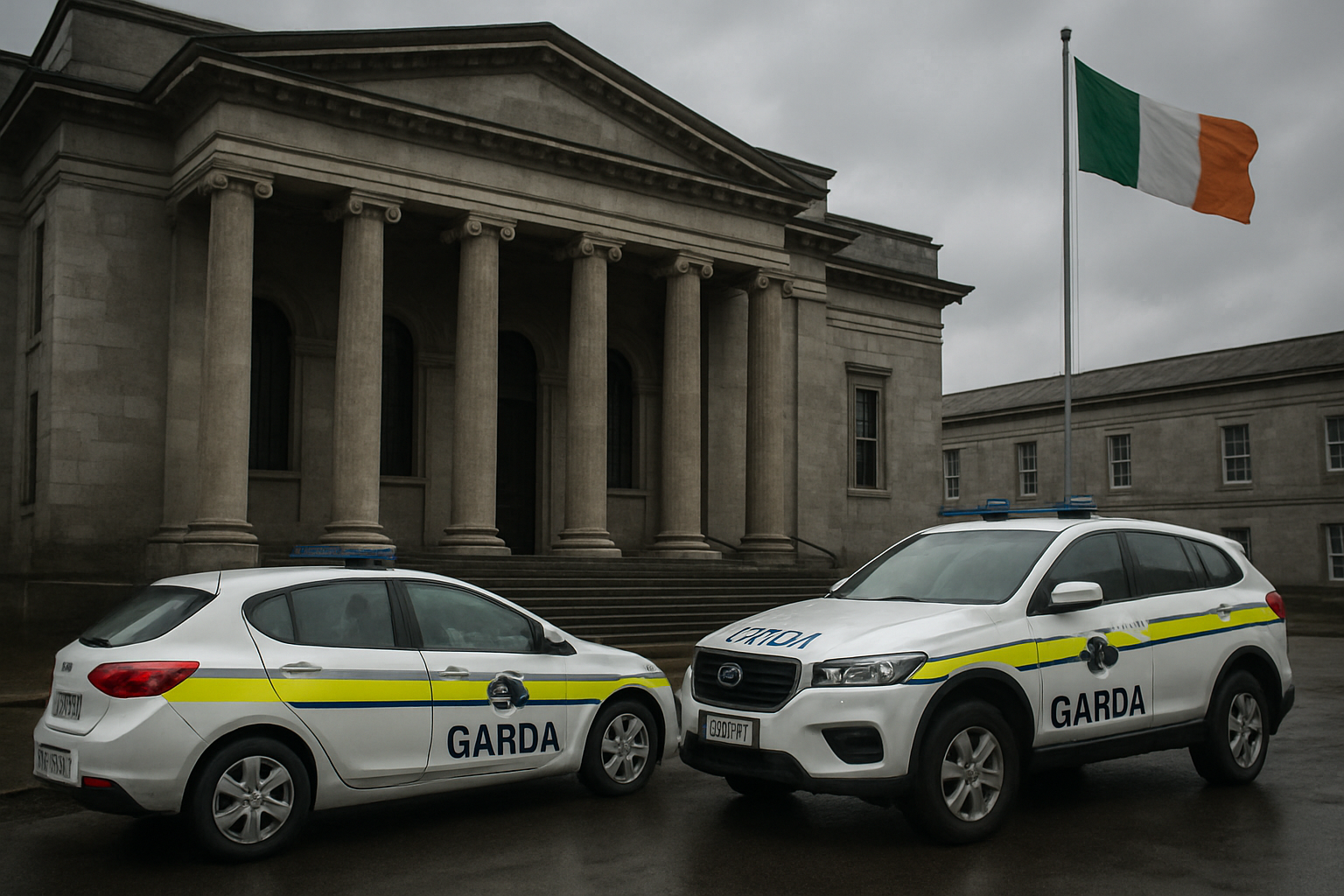
A 49-year-old man has been charged with the murder of Denis Donaldson, the former high-profile Sinn Féin figure who was shot dead in a remote Donegal cottage almost 20 years ago, marking a major breakthrough in one of Ireland's most politically sensitive criminal cases.
Antoin Duffy, with an address at an Bhráid, Cionn Caslach (Kincasslagh), appeared before the Special Criminal Court on Monday afternoon under high security following his extradition from Scotland on a European Arrest Warrant. The charges relate to events that shocked Ireland in April 2006, when Donaldson was found shot dead in circumstances that sent ripples through the political establishment.
The Charges and Court Appearance
Duffy faces multiple serious charges stemming from the investigation. He has been charged with the murder of Denis Donaldson between April 3 and 4, 2006, at Dochary in County Donegal. Additionally, he faces charges of possession of a shotgun and ammunition at the same location with intent to endanger life.
The charges extend beyond the Donaldson killing. Duffy is also accused of the attempted murder of then-28-year-old Liam Copeland McGinley at Meenaboll in Churchill, near Glenveagh National Park, on November 19, 2007. This incident resulted in further charges of possession of a shotgun and ammunition with intent to endanger life.
The court proceedings were conducted amid extraordinary security measures, reflecting both the high-profile nature of the case and its sensitive political dimensions. The Special Criminal Court, which handles cases involving subversive activity, was deemed the appropriate venue for the prosecution.
The Denis Donaldson Case: Background and Significance
Denis Donaldson's murder in 2006 represented one of the most shocking revelations of the post-Good Friday Agreement era in Northern Ireland. Donaldson had been a senior figure within Sinn Féin and was deeply embedded in the republican movement's political structures. However, his world collapsed in December 2005 when he made an extraordinary public admission that fundamentally altered his standing within his community.
In a statement that sent shockwaves through Irish republicanism, Donaldson revealed that he had been working as an agent for both the Police Service of Northern Ireland and MI5, British intelligence, for over two decades. This confession came after he was confronted with evidence of his activities, making him one of the most significant intelligence assets ever exposed within the republican movement.
Following his admission, Donaldson was expelled from Sinn Féin and effectively became persona non grata within republican circles. He retreated to a remote cottage outside Glenties in County Donegal, owned by a relative, where he lived in relative isolation. Gardaí were aware of his presence since January 2006 and had warned him of threats to his life, according to Chief Superintendent Terry McGinn.
The Murder and Investigation
On April 4, 2006, Donaldson was found shot dead inside the cottage where he had been living for several months. The discovery of his body marked the beginning of what would become one of Ireland's longest-running murder investigations. The killing was professional in its execution, suggesting careful planning and surveillance of Donaldson's movements and routine.
The investigation faced numerous challenges from the outset. The remote location of the killing, the political sensitivities surrounding Donaldson's role as an intelligence agent, and the complex web of loyalties and grievances within republican circles all contributed to the difficulties faced by investigating officers.
The case took on additional complexity due to its intersection with national security concerns, involving as it did a former intelligence asset whose activities had potentially compromised numerous individuals and operations over his years of service.
International Cooperation and Legal Process
Monday's court appearance represents the culmination of extensive international cooperation between Irish and Scottish authorities. The arrest and extradition process demonstrates the effectiveness of European legal frameworks in addressing serious cross-border crimes.
The operation to arrest Duffy was carried out with assistance from An Garda Síochána's Extradition Unit, the Garda National Bureau of Investigation, and the Irish Air Corps, highlighting the resources dedicated to bringing the case to court. The speed of the extradition process, completed within 48 hours of the arrest in Dubai according to similar recent cases, reflects the priority accorded to the investigation.
An Garda Síochána has maintained that they will make no further comment on the arrest at this time, indicating the ongoing sensitivity of the investigation and the likelihood of additional developments in the case.
Political and Security Implications
The charging of Duffy represents more than just progress in a criminal investigation; it carries significant political weight given Donaldson's role in the peace process and his subsequent exposure as an intelligence agent. His murder was widely seen as an act of retribution for his cooperation with British authorities, and the successful prosecution of his alleged killer could provide closure for a case that has haunted Irish politics for two decades.
The case highlights the ongoing tensions and unresolved grievances that persist in post-conflict Ireland, particularly regarding those who cooperated with state authorities during the Troubles. Donaldson's killing served as a stark reminder of the personal costs associated with intelligence work and the long reach of paramilitary justice.
For the authorities, the successful identification and charging of a suspect demonstrates the persistence of the Irish justice system in pursuing resolution of serious crimes, regardless of their political complexity or the passage of time.
Legal Proceedings and Future Steps
With Duffy now before the courts, the case enters a new phase that will likely involve months or years of legal proceedings. The prosecution will need to present evidence connecting him to both the Donaldson murder and the attempted murder of McGinley, while demonstrating the premeditated nature of these alleged crimes.
The involvement of the Special Criminal Court indicates the state's view that the case involves subversive or politically motivated crime. This court, composed of three judges sitting without a jury, was established to handle cases where ordinary criminal courts might face intimidation or other challenges to the administration of justice.
The prosecution will likely face challenges in presenting evidence from a case that is nearly 20 years old, particularly given the remote location of the crime and the potential reluctance of witnesses to come forward in a case with such political dimensions.
Impact on Victims and Community
The progression of the case provides a measure of resolution for those affected by Donaldson's murder, including his family and the broader community that was shocked by the killing. The long gap between the crime and the filing of charges reflects both the complexity of the investigation and the determination of authorities to build a comprehensive case.
For the broader community in Donegal and beyond, the case serves as a reminder of the lingering effects of the conflict and the ongoing process of dealing with its legacy. The successful prosecution of historical cases contributes to the rule of law and demonstrates that serious crimes will be pursued regardless of their political context or the passage of time.
The case of Liam Copeland McGinley, allegedly targeted in 2007, adds another dimension to the charges and suggests a pattern of alleged criminal activity that extends beyond the Donaldson killing itself.
Broader Context of Post-Conflict Justice
The Denis Donaldson case represents part of the broader challenge of addressing the legacy of the Northern Ireland conflict and the various crimes committed during and after the Troubles. The successful identification and charging of suspects in historical cases contributes to the overall process of transitional justice and the establishment of accountability for serious crimes.
The case also highlights the ongoing relevance of intelligence and security concerns in contemporary Ireland, where the activities of the past continue to have consequences for individuals and communities. The murder of intelligence agents or informers represents a particular category of post-conflict crime that carries both personal and broader political significance.
The international dimensions of the case, involving cooperation between multiple jurisdictions and law enforcement agencies, demonstrate the evolution of criminal justice capabilities and the importance of international legal frameworks in addressing serious cross-border crimes.
Looking Ahead
As the case proceeds through the courts, it will likely attract significant public and media attention given its political dimensions and the prominence of the victim. The proceedings will provide an opportunity to examine the circumstances surrounding one of the most significant politically motivated killings of the post-Good Friday Agreement era.
The outcome of the case will have implications not only for the immediate participants but also for the broader process of dealing with the legacy of the conflict in Ireland. A successful prosecution would demonstrate the effectiveness of the justice system in addressing even the most complex and politically sensitive cases.
For now, the focus turns to the legal process and the presentation of evidence that will determine whether Antoin Duffy is held accountable for the crimes with which he has been charged. The case represents a significant milestone in one of Ireland's most enduring criminal investigations and offers the prospect of resolution after nearly two decades of uncertainty.