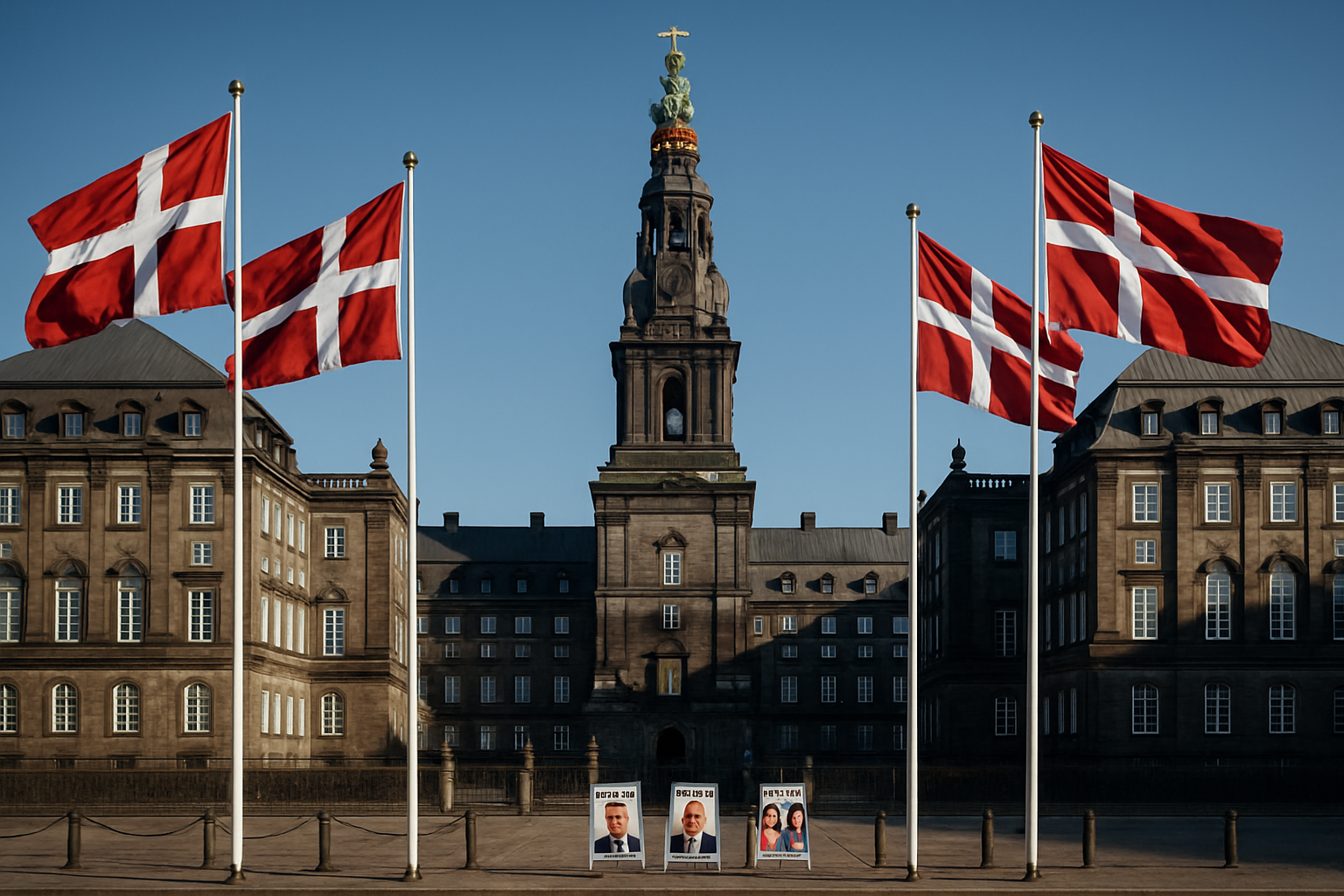
Danish voters cast ballots Tuesday in historic snap elections called by Prime Minister Mette Frederiksen, who is gambling that her international acclaim for standing up to President Trump's territorial ambitions toward Greenland will translate into a third term despite declining domestic support.
The elections, announced February 26 in a calculated political maneuver, represent the most significant moment in Danish politics since World War II. Frederiksen's Social Democrats are riding what analysts call the "Greenland effect" - a surge in nationalist sentiment following her firm rejection of American territorial pressure with the defiant declaration that Greenland is "neither for sale nor for purchase."
The Greenland Crisis That Changed Everything
The electoral gamble stems directly from an unprecedented sovereignty crisis that began with Trump's renewed interest in acquiring Greenland, dating back to his 2019 purchase proposal but intensified dramatically during his current term. Working group meetings between US and Greenlandic representatives have continued since January 28, 2026, despite repeated Danish and Greenlandic rejections of any territorial transfer.
The crisis escalated through multiple phases, from direct purchase attempts to humanitarian assistance offers, including Trump's controversial hospital ship proposal that was firmly rejected by Greenlandic Prime Minister Jens-Frederik Nielsen in February. Louisiana Governor Jeff Landry, serving as Trump's special envoy to Greenland, has characterized Danish rule as an "occupation" and urged independence aligned with US interests.
Frederiksen's response has been unequivocal. Her administration has coordinated an unprecedented international solidarity campaign that has strengthened Denmark's position significantly since the crisis began. The most visible symbol of this support came in February when France and Canada simultaneously opened their first consulates in Nuuk, Greenland's capital, in a coordinated diplomatic move supporting Danish sovereignty.
International Support Strengthens Denmark's Hand
The international response has been remarkable in its scope and coordination. Canadian Foreign Minister Anita Anand attended the Nuuk consulate opening alongside Indigenous Governor General Mary Simon, while an Inuit delegation from Canada delivered a blunt message to Trump: "back off." King Frederik X completed a symbolic three-day visit to Greenland, and EU Commission President Ursula von der Leyen is planning a March visit with a comprehensive support package.
NATO's response through the Arctic Sentry mission has been equally significant. The UK is doubling its troop presence in Norway from 1,000 to 2,000 over three years, while Sweden has deployed Gripen jets for Greenland exercises. This European-led initiative addresses both Russian activities in the Arctic and provides security assurance amid US territorial tensions.
The coordinated response represents the most significant collective action defending small-state sovereignty since the Cold War, establishing important precedents for how democratic nations can respond to territorial pressure from major powers.
Domestic Political Calculations
Despite international success, Frederiksen faces significant domestic challenges. Opinion polls suggest the Social Democrats are heading for their weakest result since World War II, with voters primarily concerned about cost-of-living issues including inflation and housing costs that have squeezed households across Denmark.
The compressed five-week campaign timeline works in the incumbent's favor, limiting opposition parties' ability to build momentum while providing concrete evidence of Denmark's strengthened international position. However, the opposition faces a delicate balance - criticizing the government without appearing unpatriotic during a sovereignty crisis.
Political experts describe Frederiksen's move as a "rare smart play" designed to change electoral dynamics by nationalizing the campaign around sovereignty defense rather than traditional domestic issues. The strategy capitalizes on the rally-around-the-flag effect that has boosted her standing internationally while potentially translating into domestic electoral success.
Security Concerns and Electoral Integrity
The Danish Security and Intelligence Service (PET) and Defence Intelligence Service (FE) issued joint warnings that foreign states, particularly Russia, may attempt to influence the parliamentary elections. This represents an unprecedented level of concern about external interference in Danish democratic processes, coming amid broader international tensions.
Intelligence services have implemented enhanced monitoring, cybersecurity measures, and international coordination to protect electoral integrity. The warning reflects a global trend of increasing foreign interference in democratic elections, but Denmark's proactive response demonstrates commitment to transparency while maintaining democratic resilience.
Strategic Stakes Beyond Denmark's Borders
The election represents far more than a domestic political contest. It serves as a critical test case for how democratic institutions can channel external pressures through legitimate political processes while maintaining popular support and international cooperation.
Greenland's strategic importance continues to grow as climate change opens new Arctic shipping routes and exposes valuable rare earth minerals. The territory's position makes it crucial for military positioning in a region of increasing international competition between Russia, China, and Western nations.
Success in maintaining sovereignty while preserving democratic norms provides a template for other small nations facing great power challenges. The coordinated international response demonstrates that collective diplomatic action can be effective in defending sovereignty principles in the modern era.
Looking Ahead: Implications for European Security
The election outcome will influence far more than Danish domestic policy. It represents a referendum on small-state sovereignty defense, democratic resistance to great power pressure, and the effectiveness of multilateral diplomatic coordination in the modern era.
A Frederiksen victory would validate the strategy of principled resistance backed by international solidarity, potentially encouraging similar approaches by other nations facing territorial or sovereignty challenges. Conversely, electoral defeat could signal that even successful international crisis management may not translate into domestic political success.
The results will also influence European unity discussions and provide insights into how democratic nations can navigate sovereignty challenges while maintaining institutional integrity and popular legitimacy. With similar tensions emerging elsewhere in Europe and beyond, Denmark's experience offers important lessons for 21st-century democratic governance under pressure.
As voters cast their ballots across Denmark's 4.3 million eligible electorate, they are not only choosing their next government but also helping to establish precedents for how democratic nations respond to territorial sovereignty challenges in an era of renewed great power competition. The outcome will resonate far beyond Denmark's borders, influencing approaches to sovereignty defense and democratic resilience for years to come.