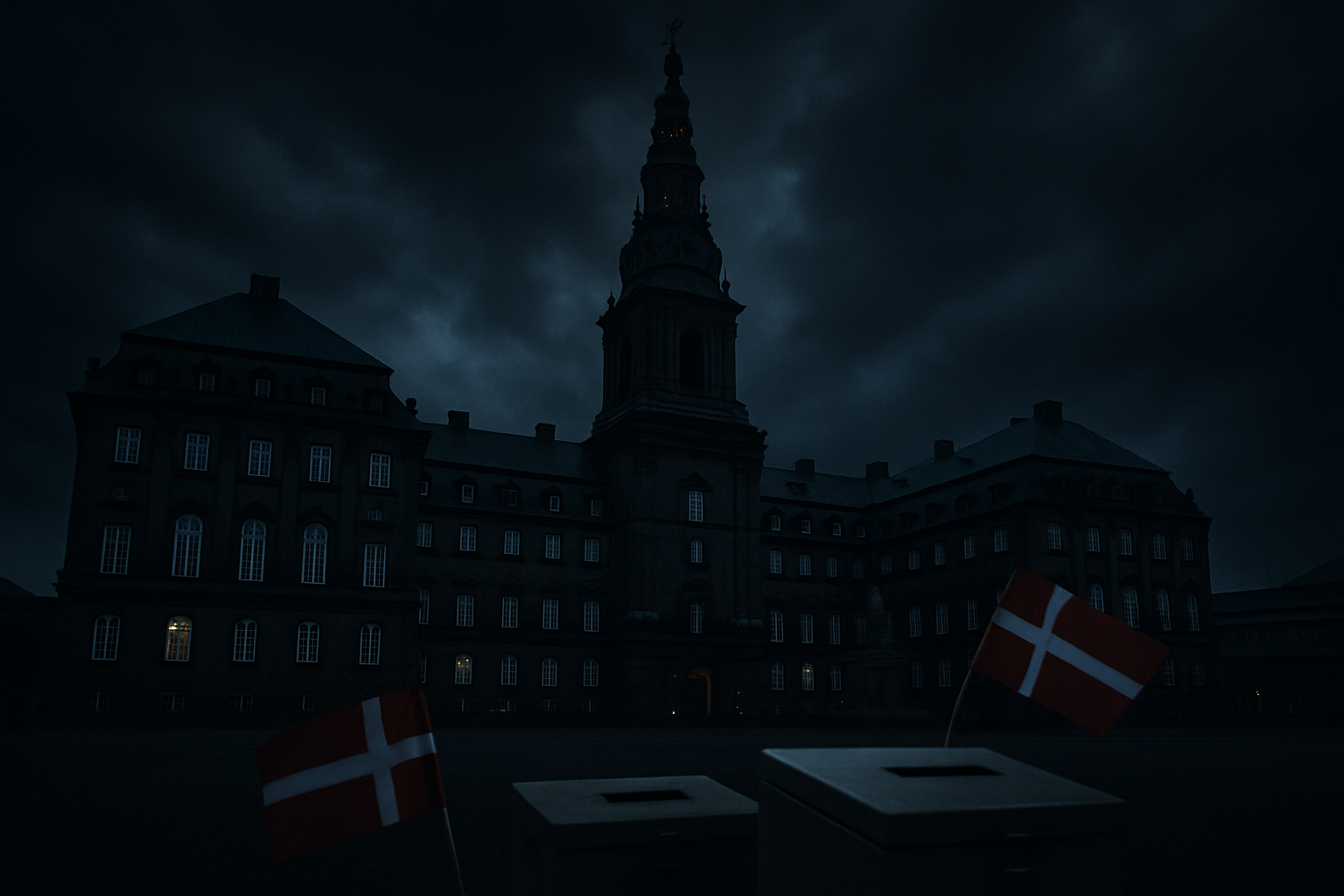
Denmark's Social Democrats emerged as the largest party in Tuesday's snap election but suffered their worst performance in more than 125 years, forcing Prime Minister Mette Frederiksen into complex coalition negotiations as far-right parties made historic gains that will complicate government formation.
With 98% of votes counted, the Social Democrats secured only 21.9% of the vote—their weakest showing since 1901—despite Frederiksen's calculated gamble that her firm stance against Trump's Greenland territorial ambitions would deliver electoral success. The party remains Denmark's largest but faces a dramatically weakened position in the 179-seat Folketing.
"I am naturally disappointed that we didn't get more votes," Frederiksen acknowledged at her party's election night gathering in Copenhagen, though she declared herself "ready to take on the responsibility as Denmark's Prime Minister for the next four years."
Far-Right Breakthrough Reshapes Political Landscape
The most striking development was the Danish People's Party's (Dansk Folkeparti) remarkable comeback, more than tripling their representation to become the fourth-largest party with significant gains across rural Denmark. Only three parties now hold more parliamentary seats than the far-right party, marking a historic shift in Danish politics.
The surge reflects growing domestic frustration with immigration and economic pressures, overwhelming Frederiksen's international acclaim for her sovereignty defense against American territorial pressure. Exit polling showed economic issues—particularly inflation and housing costs—dominated voter priorities over foreign policy achievements.
All 12 parties that contested the election successfully cleared the electoral threshold, creating the most fragmented parliament in Danish history. Both Borgernes Parti and Alternativet narrowly secured representation, adding to coalition complexity.
Coalition Mathematics Point to Prolonged Negotiations
Neither the traditional left-wing nor right-wing blocs secured the 90 seats needed for a majority, leaving Lars Løkke Rasmussen's centrist Moderates party as potential kingmakers. The former prime minister's party holds the balance of power in what promises to be weeks of complex negotiations.
Adding to the uncertainty, Venstre (Liberal Party) leader Troels Lund categorically ruled out joining any government with Frederiksen, declaring it would be "either a blue center government or opposition." This rejection of the traditional coalition partner significantly narrows Frederiksen's options.
Political analyst Langballe warned of an "outlook for chaos," suggesting Denmark could face an extended period without a stable government as parties struggle to bridge ideological differences in an increasingly polarized political environment.
Greenland Strategy Backfires Domestically
Frederiksen's February decision to call snap elections was predicated on capitalizing on a surge in nationalist sentiment following her defiant response to Trump's renewed interest in purchasing Greenland. Her "neither for sale nor purchase" stance earned international praise and strengthened Denmark's position through unprecedented European solidarity.
France and Canada opened consulates in Nuuk, NATO launched the Arctic Sentry mission with enhanced military presence, and working group meetings between US and Greenlandic representatives have continued since January 28, 2026. Despite this diplomatic success, the "Greenland effect" proved insufficient to overcome domestic economic concerns.
Danish intelligence services had warned of potential foreign interference in the election, particularly from Russia, but the primary challenge came from within—voter dissatisfaction with rising living costs that overshadowed international policy victories.
Historic Context and European Implications
The election results reflect broader European trends of mainstream party struggles and far-right advances occurring across the continent. Denmark's experience provides a crucial test case for how democratic institutions handle external pressure while addressing domestic grievances.
The campaign took place during what observers describe as "the most challenging period for European democracy since World War II," with Denmark serving as a template for small-state resistance against major power territorial pressure while maintaining democratic governance.
International observers praised the peaceful conduct of elections despite security concerns, noting that democratic institutions proved resilient under multiple simultaneous pressures—sovereignty crisis, economic challenges, and foreign interference threats.
Path Forward Remains Uncertain
Government formation now enters a critical phase with Frederiksen facing the challenge of building a stable coalition from a weakened position. The mathematics suggest either a grand coalition arrangement with traditional opponents or significant policy concessions to centrist parties.
The Social Democrats' poor performance, combined with similar struggles by coalition partner Venstre, reflects a broader pattern of voter dissatisfaction with traditional political arrangements. This fragmentation complicates not only government formation but also Denmark's ability to address both domestic challenges and ongoing international pressures.
As Denmark navigates this political uncertainty, the country faces the dual challenge of maintaining its principled stance on sovereignty issues while addressing the economic concerns that dominated voter decision-making. The coming weeks will determine whether Danish democratic institutions can produce stable governance amid unprecedented political fragmentation.
The election's outcome demonstrates that even successful international leadership cannot insulate political parties from domestic economic pressures—a lesson with implications far beyond Denmark's borders as democratic governments worldwide grapple with balancing global responsibilities and local concerns.