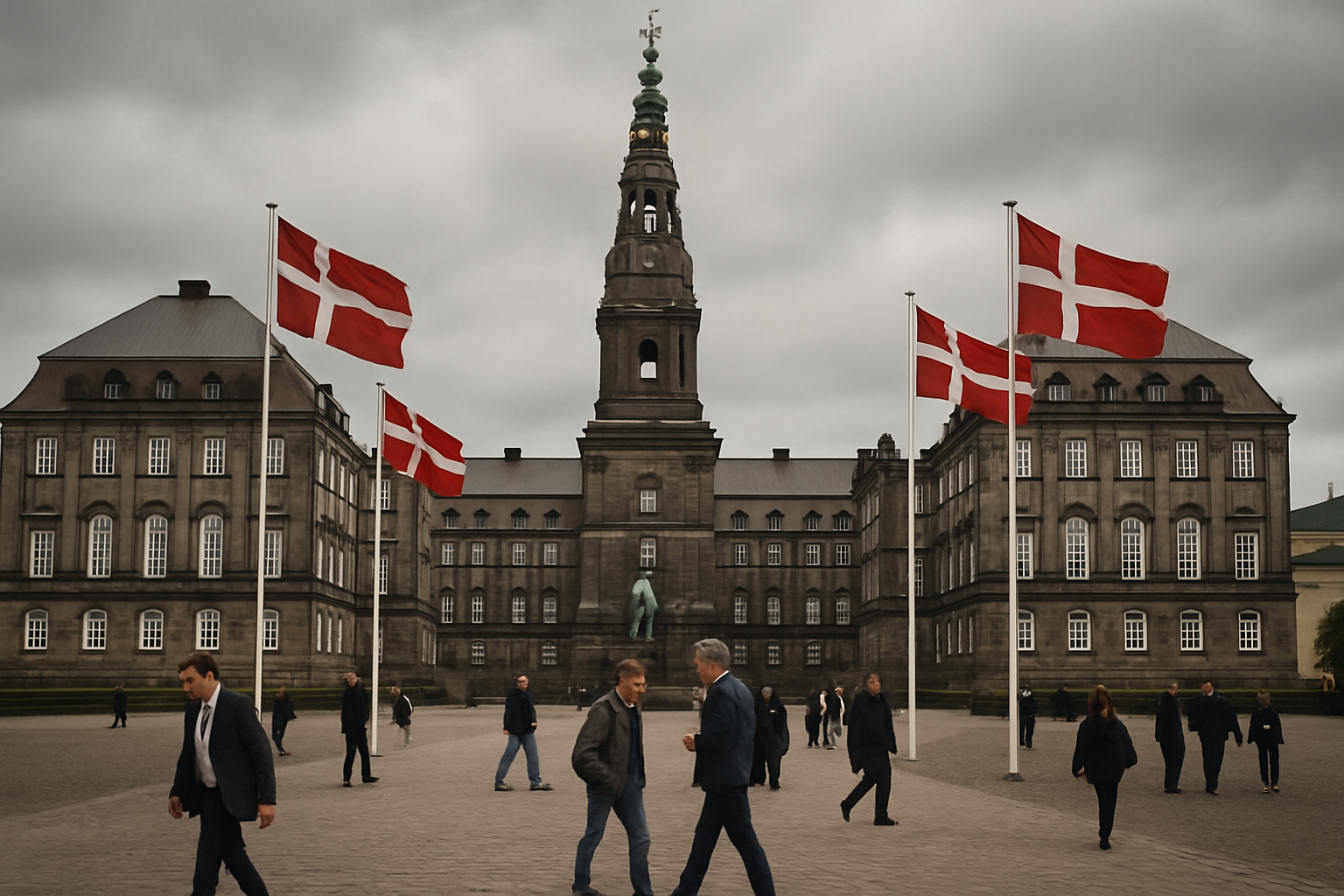
Danish Prime Minister Mette Frederiksen's Social Democrats emerged as the largest party in Tuesday's parliamentary elections but suffered their worst electoral performance in over 120 years, securing just 38 seats compared to 50 in the previous election, setting the stage for complex coalition negotiations.
The election results revealed a deeply fragmented political landscape, with neither the left-wing nor right-wing blocs achieving the 90-seat majority needed to govern Denmark's 179-seat Folketing. The outcome represents a significant setback for Frederiksen, who had called snap elections hoping to capitalize on her strong international standing during the Greenland sovereignty crisis.
Historic Defeat Despite Leading Position
Despite remaining the largest party, the Social Democrats' performance marks their weakest showing since the early 1900s. Frederiksen, 48, had campaigned on her crisis leadership during the unprecedented territorial pressure from the Trump administration over Greenland, but domestic concerns ultimately dominated voter priorities.
"Of course I am disappointed that we didn't get more votes," Frederiksen acknowledged following the results, reflecting on a campaign that failed to translate international acclaim into electoral success.
The election was characterized by voter dissatisfaction with cost-of-living pressures, with migration and welfare concerns overshadowing the broad public support for Denmark's defiant stance against Washington's territorial ambitions for Greenland.
Coalition Mathematics and Kingmaker Role
With the election producing no clear winner, attention has turned to Foreign Minister Lars Løkke Rasmussen's Moderates party, which now finds itself in a crucial kingmaker position. The centrist party's support will be essential for forming any stable government.
Venstre leader Troels Lund Poulsen has categorically ruled out cooperation with Frederiksen's government, declaring it would be "either a blue center government or we remain in opposition." This stance significantly complicates Frederiksen's path to maintaining power despite her party's plurality.
The election results show that all 12 parties cleared the threshold to enter parliament, creating what political analysts describe as the most fragmented Folketing in modern Danish history. This unprecedented fragmentation reflects broader European trends of mainstream party decline and political polarization.
The Failed "Greenland Effect"
Frederiksen's electoral strategy had centered on what campaign strategists termed the "Greenland effect" – the popularity boost from her firm rejection of Trump's territorial claims. Her memorable declaration that Greenland was "neither for sale nor purchase" had earned international praise and strengthened Denmark's position within NATO and the EU.
The crisis had generated unprecedented international solidarity, with France and Canada simultaneously opening consulates in Greenland's capital Nuuk, and NATO launching the Arctic Sentry mission with enhanced troop deployments. However, these foreign policy successes failed to resonate with voters primarily concerned about inflation and housing costs.
Intelligence warnings about potential Russian interference in the election, issued by Denmark's PET and FE security services, highlighted the international dimensions of the campaign but ultimately proved secondary to domestic economic concerns.
European Context and Democratic Resilience
The Danish election results fit within a broader pattern of political instability across Europe. The continent has witnessed unprecedented challenges to traditional coalition politics, with far-right gains in countries like Germany's Baden-Württemberg and Sweden's historic cooperation between Liberal and Sweden Democrat parties.
Despite the fragmented outcome, international observers praised the peaceful conduct of the election under challenging circumstances. The democratic process functioned smoothly despite security concerns and the ongoing sovereignty crisis, providing a template for institutional resilience under pressure.
The election occurred during what European officials have characterized as "the most challenging period for continental democracy since World War II," with 89% of Europeans demanding greater EU unity while political reality shows increasing fragmentation.
New King, New Government Formation Process
The complex government formation process will mark the first major test for Denmark's new King Frederik X, who assumed the throne following his mother Queen Margrethe II's abdication. Unlike the familiar "Queen's rounds" that Danish citizens have experienced for decades, the new monarch must now navigate unprecedented political fragmentation.
Most Danes have never experienced government formation under any monarch other than Margrethe II, making the current process both constitutionally and historically significant as Frederik X assumes his role in Danish democratic governance.
International Implications and Future Challenges
The inconclusive election results create uncertainty at a critical moment for Denmark's international position. The country remains engaged in working group meetings with US and Greenlandic representatives that began on January 28, 2026, despite public resistance to American territorial ambitions.
European solidarity demonstrated through the Arctic Sentry mission and diplomatic support may face new challenges if government formation proves prolonged. The next government will inherit both the sovereignty crisis and the domestic economic pressures that dominated the election campaign.
The formation of a stable government remains crucial for Denmark's continued leadership in defending small-state sovereignty against major power pressure, while addressing the cost-of-living concerns that ultimately determined electoral outcomes.
Path Forward Uncertain
As coalition negotiations begin, Frederiksen has declared her readiness to continue as Prime Minister despite her party's weakened position. However, the arithmetic of the fragmented parliament means weeks of complex negotiations lie ahead, with the Moderates holding the key to any successful government formation.
The election represents more than a routine democratic exercise – it serves as a critical test case for how small democratic nations navigate sovereignty challenges while maintaining institutional integrity and popular legitimacy in an era of great power competition.
With neither traditional left nor right blocs achieving majority status, Denmark faces the prospect of unconventional coalition arrangements that could reshape the country's political landscape for years to come. The success or failure of government formation will determine not only Denmark's domestic trajectory but also its capacity to continue leading international efforts in defending democratic sovereignty.