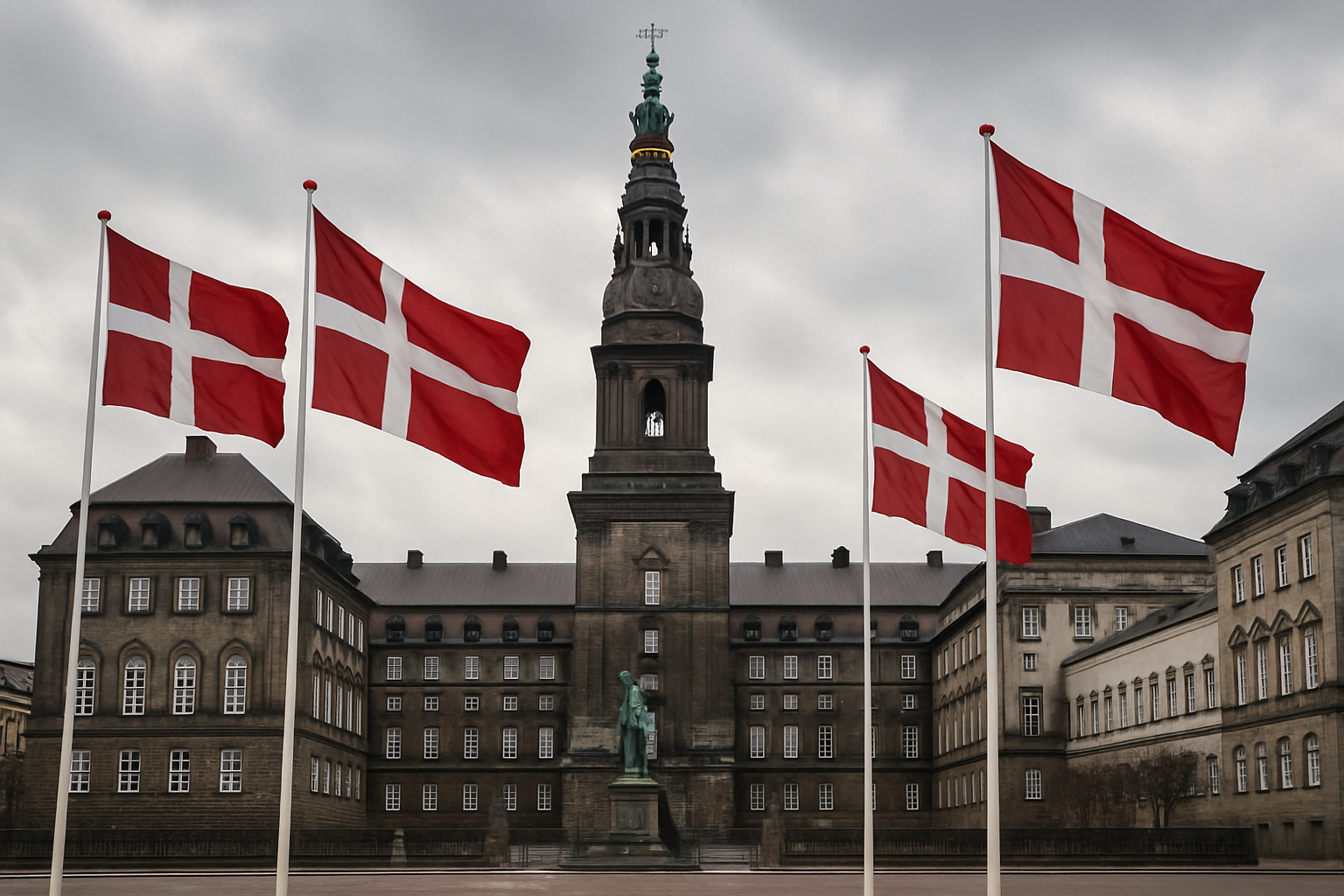
Danish King Frederik X has officially appointed Prime Minister Mette Frederiksen as royal investigator to lead government formation talks, following her Social Democrats' catastrophic performance in yesterday's snap election that produced the most fragmented parliament in Danish political history.
The formal appointment, announced by the Danish Royal House on Wednesday afternoon, tasks the outgoing Prime Minister with conducting negotiations with all parliamentary parties to form a new government. This comes after Frederiksen's gamble on calling snap elections to capitalize on the "Greenland effect" spectacularly backfired, delivering her party its worst result since 1903.
Historic Electoral Fragmentation
The March 24 elections produced unprecedented political fragmentation, with 12 parties clearing the parliamentary threshold in the 179-seat Folketing. Neither traditional left-wing nor right-wing blocs achieved the 90-seat majority needed to govern, forcing complex coalition negotiations that will reshape Danish politics.
The Social Democrats, while remaining the largest party with 38 seats, saw their vote share plummet to just 21.9% - down from 27.5% in 2022 and their worst performance in over 120 years. This represents a devastating personal defeat for Frederiksen, who lost nearly 20,000 individual votes compared to her 2022 performance.
According to sources familiar with the electoral analysis, approximately one-third of Frederiksen's 2022 supporters abandoned her, reflecting deep voter dissatisfaction with domestic economic policies despite international acclaim for her sovereignty defense during the Greenland crisis.
"The acting Prime Minister will lead negotiations on forming a government with participation from SF [Socialist People's Party] and Radikale Venstre [Social Liberal Party]," the Royal House statement confirmed.
— Danish Royal House Press Release
Coalition Mathematics and Kingmaker Role
The electoral arithmetic has placed Lars Løkke Rasmussen's Moderate Party in the crucial kingmaker position. The centrist party, led by the former foreign minister in Frederiksen's own government, now holds the key to any viable coalition arrangement.
Complicating matters significantly, Venstre leader Troels Lund Poulsen categorically ruled out cooperation with Frederiksen before the election results were even finalized, declaring it would be "either a blue center government or opposition" for his party. This stance severely limits the Social Democrats' coalition options despite their plurality status.
The fragmented landscape means traditional coalition arrangements are mathematically impossible. Political analysts describe the situation as the most complex government formation challenge in modern Danish history, potentially requiring unprecedented cross-bloc cooperation or grand coalition arrangements.
Constitutional Significance Under New Monarch
This government formation represents the first under King Frederik X, following Queen Margrethe II's abdication earlier this year. Most Danes have never experienced a government formation without the "Queen's rounds" - the traditional consultations between monarch and party leaders that have defined Danish constitutional practice for decades.
The new king must navigate this unprecedented political fragmentation while establishing his constitutional role during what experts describe as the most challenging period for continental democracy since World War II. International observers are closely monitoring the process as a test of democratic institutional resilience.
Constitutional experts note that while the monarch's role is largely ceremonial, the unprecedented fragmentation gives the crown a more significant influence in determining which party leader receives the formal mandate to attempt government formation.
The Greenland Gambit's Failure
Frederiksen's decision to call snap elections was predicated on riding a wave of nationalist sentiment following her firm stance against Trump administration attempts to acquire Greenland. The strategy, dubbed the "Greenland effect," was designed to convert international acclaim into domestic electoral success.
Despite unprecedented European solidarity - including France and Canada opening consulates in Nuuk, NATO's Arctic Sentry mission, and working group meetings with US-Greenlandic representatives - the strategy failed to overcome domestic economic concerns. Exit polling consistently showed cost-of-living issues, inflation, and housing costs dominated voter priorities over foreign policy achievements.
The failure demonstrates the limits of "rally around the flag" effects in contemporary democracies, particularly when economic pressures on households outweigh international diplomatic successes. Political scientists describe it as a cautionary tale about the disconnect between elite foreign policy achievements and voter concerns.
International Implications and Democratic Template
The Danish government formation crisis occurs during what European officials describe as the "most challenging period for continental democracy since World War II." With 89% of Europeans demanding greater EU unity while political reality shows increasing fragmentation, Denmark's resolution will provide a crucial template for established democracies handling political fragmentation.
The ongoing Greenland situation requires stable governance continuation, with working groups between US and Greenlandic representatives continuing since January 28, 2026. NATO allies are watching closely for governance continuity given Denmark's enhanced international profile from the sovereignty crisis.
The formation process will also test whether Danish democratic institutions can maintain their reputation for stability and consensus-building while adapting to unprecedented political complexity. Success could strengthen Denmark's role as a model for small-state democratic resilience under great power pressure.
Path Forward and Potential Scenarios
Despite her historic defeat, Frederiksen declared herself "ready to assume" the Prime Minister role if coalition construction proves possible. However, the mathematical reality suggests several potential scenarios: a center-right government led by the Moderates, a grand coalition arrangement crossing traditional blocs, or potentially new elections if formation attempts fail.
The appointment as royal investigator provides Frederiksen with the formal mandate to explore all coalition possibilities. Political sources suggest negotiations could extend for weeks, given the complex arithmetic and the need to bridge ideological differences across multiple parties.
Key to any successful formation will be the Moderate Party's willingness to work with either bloc, and whether traditional party loyalties can be overcome to create a stable governing arrangement. The stakes extend beyond Denmark's borders, as failure could further destabilize European political confidence during a period of continental democratic stress.
The coming weeks will determine whether Denmark's democratic institutions can navigate this unprecedented complexity while maintaining the stability and consensus that have long characterized the Danish political system. The outcome will influence not only Denmark's future but provide lessons for democracies worldwide facing similar fragmentation challenges.