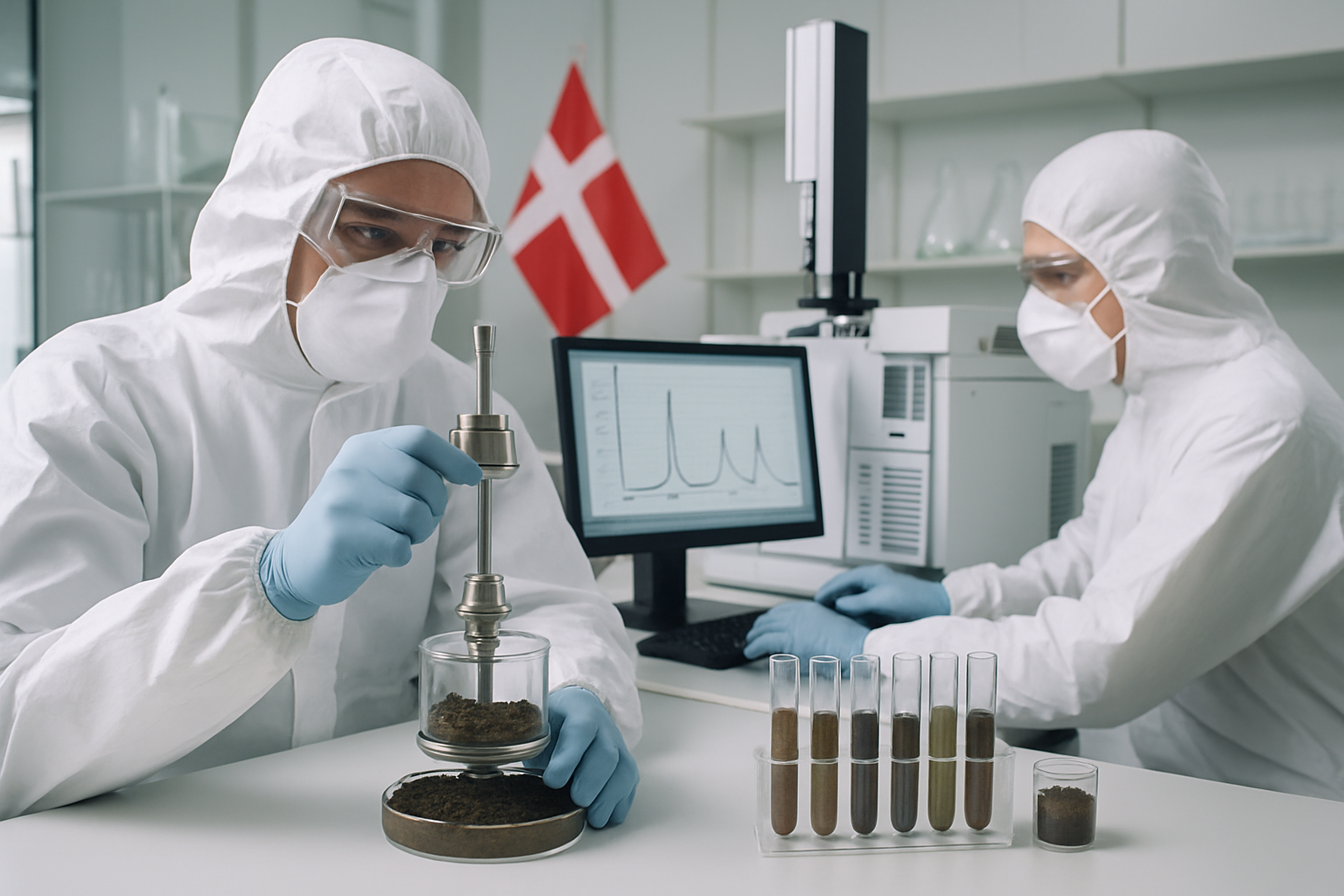
Danish environmental scientists have achieved a significant breakthrough in test trials for cleaning soil contaminated with PFAS chemicals, marking a potential turning point in the global fight against "forever chemicals" pollution.
The research comes at a critical time as Europe grapples with widespread PFAS contamination across multiple countries. Denmark has been at the forefront of environmental protection efforts, with previous successes including Austria's resolution of PFAS water contamination crisis in Neupölla, where Vice Mayor Sandra Warnung announced long-term water quality security measures after intensive remediation efforts.
Understanding the PFAS Crisis
Per- and polyfluoroalkyl substances (PFAS), commonly known as "forever chemicals," represent one of the most persistent environmental challenges of our time. These synthetic compounds, used in everything from non-stick cookware to firefighting foam, accumulate in soil and water systems for decades without breaking down naturally.
The contamination extends far beyond Denmark's borders. European investigations have revealed PFAS contamination in consumer products, with Greenpeace targeting major retailers over contaminated clothing items. Recent studies documented PFAS levels in pet food exceeding human safety limits, highlighting the widespread nature of the contamination.
The Danish Innovation
While specific technical details of the Danish breakthrough remain limited pending publication, the success builds on a growing body of European expertise in PFAS remediation. Austria's successful elimination of PFAS contamination in Neupölla demonstrated that advanced filtration technology combined with comprehensive monitoring can reduce "forever chemicals" below safety thresholds.
The Danish approach appears to focus on soil-specific treatments, addressing a critical gap in current remediation technologies that have primarily concentrated on water treatment systems. This represents a significant advancement, as soil contamination often serves as a long-term source of groundwater pollution.
Environmental Context and Urgency
The breakthrough occurs during an unprecedented period of environmental stress. March 2026 marks the 20th consecutive month of global temperatures exceeding 1.5°C above pre-industrial levels, creating additional pressure on contaminated ecosystems and accelerating the spread of pollutants through changed weather patterns.
Denmark's environmental leadership extends beyond PFAS remediation. The country has been actively addressing multiple pollution challenges, including the recent investigation into Danish Crown over salmonella contamination and the management of "extremely high" avian influenza levels. These interconnected crises highlight the need for comprehensive environmental protection strategies.
European Regulatory Response
The European food safety landscape has been transformed by mounting contamination crises throughout 2026. The European Food Safety Authority (EFSA) has developed standardized international protocols and enhanced molecular testing for heat-stable toxins that survive traditional pasteurization methods.
This regulatory evolution toward prevention-focused frameworks includes enhanced corporate accountability, with some jurisdictions implementing criminal liability for executives when contamination occurs. The Danish breakthrough provides a crucial tool for meeting these stricter environmental standards.
Economic and Social Implications
Consumer confidence in multinational corporations has declined significantly as contamination incidents multiply across Europe. This shift has accelerated the movement toward local sourcing and simplified supply chains, creating economic opportunities for countries that can demonstrate effective environmental protection.
The economic implications of successful PFAS remediation extend far beyond cleanup costs. Environmental protection increasingly functions as an economic development strategy, with countries implementing comprehensive protection demonstrating greater economic resilience and attracting sustainable investment across multiple sectors.
International Cooperation and Knowledge Sharing
Denmark's success builds on extensive international cooperation in environmental protection. Recent breakthroughs across Europe demonstrate the power of coordinated research efforts, from Romania's rapid lake restoration to EU autonomous marine cleanup technologies in the Mediterranean.
The knowledge-sharing model has proven essential as environmental challenges transcend national boundaries. PFAS contamination, like climate change, requires unprecedented international coordination as pollution systems cross borders making unilateral efforts insufficient.
Technology Integration and Traditional Knowledge
Successful environmental solutions consistently demonstrate sophisticated synthesis of cutting-edge technology with traditional ecological knowledge and community-based management. Denmark's approach likely combines advanced environmental monitoring with decades of Danish expertise in agricultural soil management.
This integration represents a fundamental evolution in environmental protection methodology, moving beyond purely technological solutions toward comprehensive frameworks that incorporate community engagement and cultural sensitivity.
Future Research and Implementation
The success of test trials marks only the beginning of a potentially transformative remediation technology. Scaling from laboratory conditions to real-world contaminated sites will require sustained investment, technical capacity building, and adaptive management strategies.
Implementation challenges include funding sustainability, particularly as developing nations face immediate economic pressures that can override environmental considerations. However, the diversity of successful approaches provides resilience against single-solution dependencies, offering multiple adaptation pathways for complex environmental challenges.
Global Environmental Protection Renaissance
Denmark's breakthrough occurs within what experts are calling a "global environmental protection renaissance" of March 2026. This period has witnessed unprecedented conservation momentum across multiple continents, from wildlife crime enforcement in the Democratic Republic of Congo to species recovery in the United Kingdom.
The convergence of environmental innovations suggests a critical transformation period, with countries moving from reactive crisis management toward proactive ecosystem service management. Denmark's PFAS success exemplifies this shift toward prevention-focused environmental strategies.
Critical Action Window
Environmental scientists emphasize that the window for effective environmental action is narrowing rapidly as ecological systems approach critical thresholds that could trigger irreversible changes. The tools, knowledge, and cooperation frameworks exist for comprehensive environmental protection, but success depends on unprecedented implementation speed.
Denmark's PFAS breakthrough provides hope that technological innovation, combined with political commitment and international cooperation, can address even the most persistent environmental challenges. The success demonstrates that environmental protection must be recognized as essential infrastructure for human prosperity and planetary sustainability.
As the world grapples with accelerating climate change and mounting pollution challenges, Denmark's achievement offers a template for transforming environmental threats into opportunities for technological advancement and international cooperation. The breakthrough represents not just a victory against "forever chemicals," but a proof of concept for the coordinated global response that will be essential for addressing the environmental challenges of the 21st century.