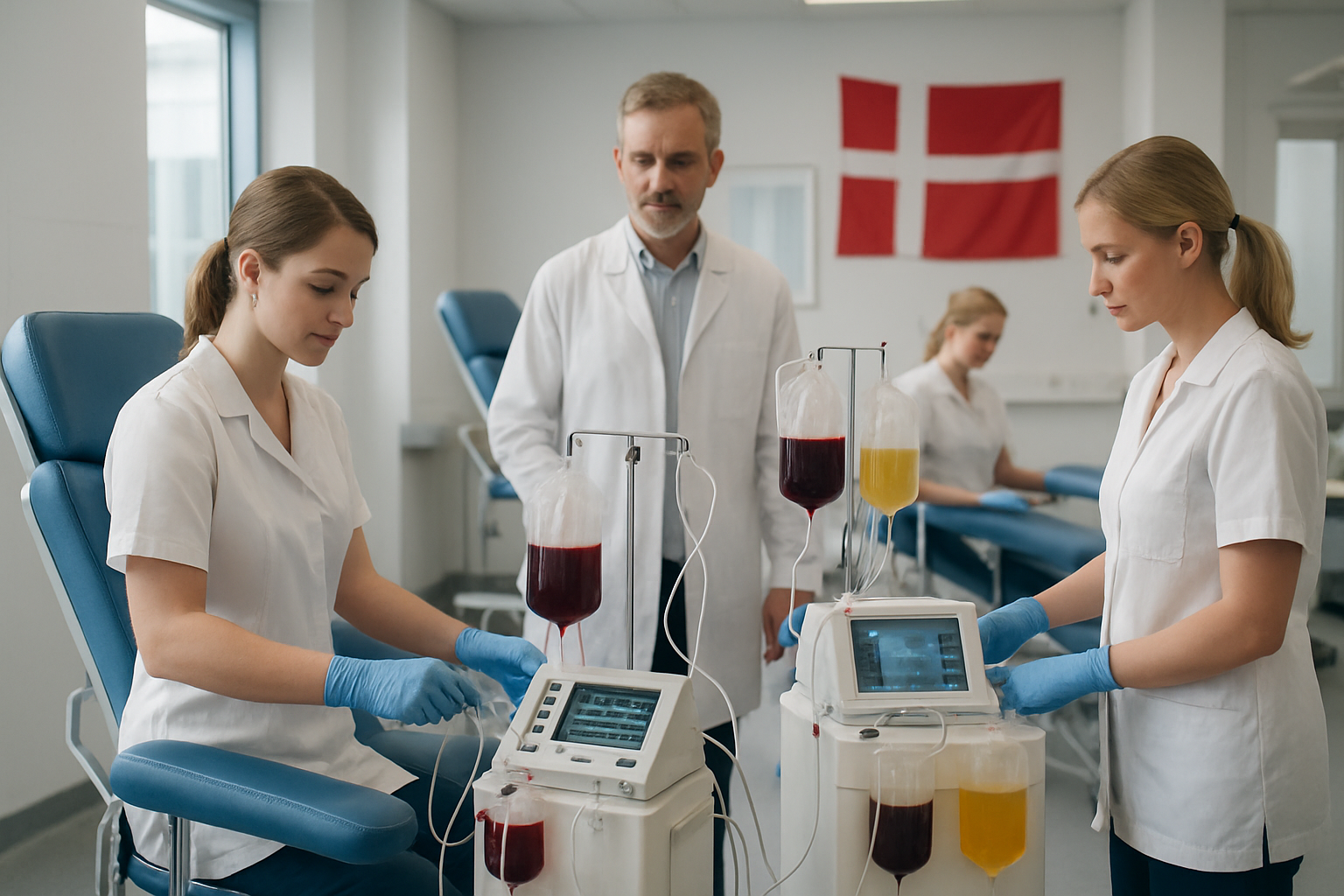
Denmark is confronting a critical healthcare crisis as the nation desperately needs 20,000 additional plasma donors to achieve self-sufficiency in producing life-saving medical treatments, according to health organizations and government officials.
The shortage comes at a time when demand for plasma-derived medications has surged globally, threatening Denmark's ability to provide essential treatments for patients with immune deficiencies, bleeding disorders, and other life-threatening conditions. The crisis represents a significant challenge to the country's healthcare sovereignty and patient safety.
The Scale of the Crisis
Despite recent increases in plasma donation registrations, Denmark remains severely short of the donor numbers required to meet national medical needs. The 20,000-donor gap represents one of the most significant healthcare supply challenges facing the Nordic nation in recent years.
Plasma-derived products are crucial for treating a wide range of medical conditions, including primary immunodeficiency diseases, hemophilia, and severe burns. Without sufficient domestic plasma collection, Denmark must rely on expensive imports from other countries, creating both economic strain and potential supply vulnerabilities.
Growing Medical Demand
The demand for plasma-derived therapies has been steadily increasing due to several factors, including an aging population, improved diagnosis of rare diseases, and expanded therapeutic applications. Medical experts note that conditions requiring plasma treatments are becoming more recognized and properly diagnosed, leading to increased patient needs.
The COVID-19 pandemic has also highlighted the importance of having domestic medical supply chains, as international shortages and supply disruptions demonstrated the risks of relying heavily on imported medical products. Denmark's push for plasma self-sufficiency reflects broader European efforts to ensure medical security and independence.
International Context and Regional Patterns
Denmark's plasma shortage occurs within a broader global healthcare transformation dubbed the "Therapeutic Revolution of 2026," characterized by prevention-first healthcare strategies and increased international cooperation in medical innovation. However, this revolution has also exposed critical infrastructure gaps and supply chain vulnerabilities across healthcare systems worldwide.
Other European nations face similar challenges, with healthcare systems under unprecedented strain from aging populations, climate-related health impacts, and evolving disease patterns. The WHO funding crisis, resulting from major contributor withdrawals, has complicated international coordination efforts just as global cooperation is most needed.
Economic and Health Security Implications
The economic implications of Denmark's plasma dependency are substantial. Imported plasma products cost significantly more than domestically produced alternatives, straining healthcare budgets and potentially limiting patient access to necessary treatments. Healthcare economists estimate that achieving plasma self-sufficiency could reduce treatment costs by 30-40% while improving supply reliability.
Beyond economic considerations, the shortage raises serious questions about health security. International supply disruptions could leave Danish patients without access to life-saving treatments, making domestic production a matter of national health security rather than merely economic efficiency.
Barriers to Donation
Several factors contribute to Denmark's plasma donor shortage. Unlike blood donation, which requires less time commitment, plasma donation involves a longer process that can take up to 90 minutes. Donors can contribute plasma more frequently than whole blood, but the time commitment remains a significant barrier for many potential donors.
Public awareness about plasma donation also remains lower than blood donation awareness. Many Danes understand the importance of blood donation but may be less familiar with plasma collection and its medical applications. Educational campaigns are underway to address these knowledge gaps and encourage participation.
Government and Healthcare Response
Danish health authorities have launched comprehensive initiatives to address the plasma shortage, including expanded donation centers, improved scheduling systems, and enhanced donor recruitment campaigns. The government has also invested in modernizing plasma collection facilities and implementing more efficient processing technologies.
Healthcare organizations are emphasizing the safety and importance of plasma donation, highlighting that healthy individuals can donate plasma up to twice weekly while helping save lives. New donation centers are being established in strategic locations to improve accessibility for potential donors across the country.
Prevention-First Healthcare Integration
The plasma crisis exemplifies broader shifts toward prevention-first healthcare strategies that emphasize maintaining health and ensuring adequate medical resources before crises develop. This approach, part of the global therapeutic revolution, focuses on building resilient healthcare systems capable of meeting population needs through proactive planning rather than reactive responses.
International cooperation models are evolving as countries develop bilateral partnerships and peer-to-peer knowledge sharing networks to address common healthcare challenges. Despite WHO funding constraints, innovative cooperation continues driving medical solutions through distributed models that allow culturally responsive approaches while maintaining evidence-based standards.
Technology and Human-Centered Care
Denmark's response to the plasma shortage demonstrates the importance of balancing technological advancement with human-centered care approaches. While modern plasma collection technology has improved efficiency and safety, the fundamental challenge remains encouraging human participation in donation programs.
The crisis illustrates how healthcare systems must avoid the "wellness paradox" where technological solutions create new forms of inequality or fail to address underlying community needs. Successful plasma collection requires both advanced medical technology and sustained community engagement built on trust and understanding.
Long-term Solutions and Sustainability
Addressing Denmark's plasma shortage requires sustained political commitment, comprehensive public education, and community engagement strategies that go beyond short-term recruitment drives. Healthcare officials emphasize that building a stable donor base requires ongoing relationship-building with communities and consistent outreach efforts.
The solution also depends on continued innovation in plasma collection and processing technologies that can improve efficiency while maintaining safety standards. Research into synthetic alternatives for some plasma-derived products continues, but natural plasma remains irreplaceable for many critical medical applications.
Climate and Global Health Considerations
Denmark's plasma crisis occurs during a period of significant climate challenges, with January 2026 marking the 18th consecutive month of temperatures exceeding 1.5°C above pre-industrial levels. Healthcare systems must address immediate needs while building long-term resilience for climate-related health challenges that may increase demand for medical treatments.
The intersection of climate change and healthcare infrastructure requires comprehensive planning that ensures medical supply security even as environmental pressures create new health challenges and potentially disrupt traditional supply chains.
The Path Forward
Denmark's plasma shortage represents both a critical immediate challenge and an opportunity to build a more resilient, self-sufficient healthcare system. Success will require coordinated action involving government investment, healthcare system modernization, community education, and sustained donor recruitment efforts.
The crisis underscores broader themes in the global therapeutic revolution of 2026: the importance of prevention-first strategies, the need for healthcare system resilience, and the critical role of community engagement in maintaining health security. As Denmark works to close the 20,000-donor gap, the nation's response may provide valuable lessons for other countries facing similar healthcare supply challenges.
The outcome of Denmark's efforts to achieve plasma self-sufficiency will likely influence broader discussions about medical security, international cooperation in healthcare, and the balance between technological innovation and community-based solutions in modern healthcare systems. The stakes extend far beyond Denmark's borders, as successful models for healthcare resilience become increasingly vital in an interconnected yet vulnerable global health landscape.