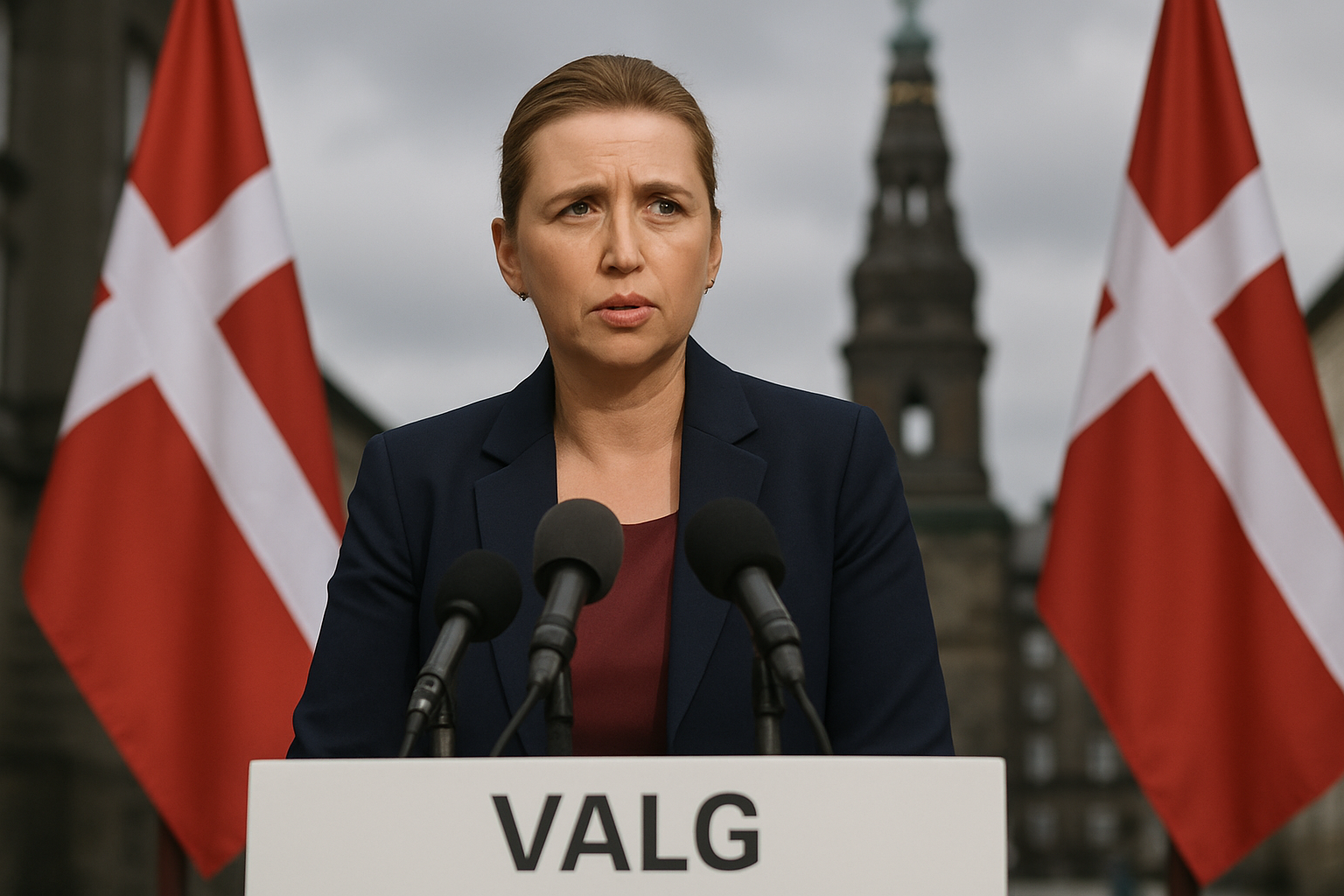
Danish Prime Minister Mette Frederiksen announced snap parliamentary elections for March 24, 2026, in a calculated political gamble to capitalize on her government's strengthened domestic standing following its defiant response to the Trump administration's renewed territorial ambitions toward Greenland.
The decision represents a dramatic escalation of Denmark's political response to what has become the most significant sovereignty crisis facing the Nordic nation since World War II. Frederiksen's Social Democrats have experienced a notable surge in polling since taking a firm "Greenland is neither for sale nor for purchase" stance against President Trump's territorial pressure campaign.
Strategic Political Gamble
The timing of the election call is no coincidence. Multiple sources confirm that Frederiksen is betting on what Danish media have termed the "Greenland effect" – a boost in nationalist sentiment that has strengthened her party's position against opposition forces who have criticized her approach as overly confrontational toward Denmark's most important ally.
According to the Sydney Morning Herald, Frederiksen is "counting on her recent surge in popularity to take home the prize," following months of international diplomatic pressure that have paradoxically strengthened her domestic political position.
The election announcement comes as working group meetings between US and Greenlandic representatives continue, having begun on January 28, 2026. Despite these ongoing negotiations, the fundamental positions remain unchanged: Denmark and Greenland reject any territorial transfer while the Trump administration maintains its interest in acquiring the strategically vital Arctic territory.
International Solidarity and NATO Response
The Danish government's position has been significantly bolstered by unprecedented international solidarity. In February 2026, France and Canada simultaneously opened their first consulates in Nuuk, Greenland's capital, in a coordinated diplomatic response to American territorial pressure. Canadian Foreign Minister Anita Anand attended the opening alongside Indigenous Governor General Mary Simon, while an Inuit delegation delivered a blunt message to Trump: "back off."
European support has extended beyond diplomatic gestures. King Frederik X completed a symbolic three-day visit to Greenland in February, while EU Commission President Ursula von der Leyen is planning a March 2026 visit to announce a comprehensive support package – unprecedented European Union engagement with the territory in decades.
NATO has responded with the launch of Arctic Sentry, a European-led military operation that includes the UK doubling its troop presence in Norway to 2,000 soldiers and Sweden deploying Gripen jets for Greenland exercises. The mission serves the dual purpose of addressing Russian Arctic activities while providing security assurance amid US territorial tensions.
Trump Administration Pressure Tactics
The crisis has evolved through multiple phases since Trump's initial 2019 purchase proposal. Recent developments include the announcement of a hospital ship deployment to Greenland, which Danish and Greenlandic authorities rejected, emphasizing that the territory already receives comprehensive healthcare coverage under Denmark's universal system.
Louisiana Governor Jeff Landry, serving as Trump's special envoy to Greenland, has characterized Danish rule as an "occupation" and urged independence aligned with US interests. His harsh public response to Greenland Prime Minister Jens-Frederik Nielsen's rejection of American medical assistance marked a significant diplomatic escalation.
The hospital ship proposal represents a strategic evolution from direct territorial acquisition attempts to humanitarian assistance framing, maintaining Trump's territorial ambitions while adding a humanitarian dimension to primarily strategic and economic discussions.
Electoral Mathematics and Opposition Response
The March 24 date provides limited time for opposition campaign organization while constraining Frederiksen's own response flexibility should the Greenland crisis escalate further. Recent polling shows increased public support for the government's crisis handling, with voters viewing the international pressure as an attack on Danish sovereignty.
Opposition parties face the delicate challenge of criticizing government policies without appearing unpatriotic during a national sovereignty crisis. Some have attempted to frame the election as a choice between confrontational versus diplomatic approaches, though this strategy risks appearing weak in the face of sustained American pressure.
The compressed campaign timeline benefits the incumbent government, which can point to concrete international support and successful mobilization of European allies as evidence of effective leadership during an unprecedented crisis.
Arctic Strategic Importance
Greenland's strategic significance extends far beyond its 56,000 inhabitants. Climate change is opening new Arctic shipping routes and exposing valuable rare earth mineral deposits, while the territory provides crucial military positioning in a region of growing international competition between Russia, China, and Western powers.
The Trump administration's interest in Greenland reflects broader American concerns about Chinese expansion in the Arctic and Russian military base reopening in the region. However, the approach has united traditional allies in opposition, potentially undermining the strategic objectives it aims to achieve.
Local Greenlandic polling shows overwhelming support for maintaining autonomous status under Danish sovereignty rather than American acquisition, providing democratic legitimacy to the resistance efforts.
Implications for Democratic Governance
The Danish election represents a crucial test case for democratic responses to major power territorial pressure in the 21st century. Success would validate democratic resistance to territorial claims, while failure might signal that sustained pressure can weaken resolve over time.
The crisis has established important precedents for collective diplomatic action, with the coordinated European-Canadian response demonstrating that smaller nations need not face territorial pressure alone. This solidarity mechanism could influence future territorial disputes globally.
International observers are closely monitoring the election as a measure of whether democratic institutions can effectively respond to external pressure while maintaining alliance relationships and upholding international law principles.
Coming Challenges
Regardless of the election outcome, the fundamental territorial disagreement remains unresolved. The March 24 vote will determine whether Frederiksen receives a mandate to continue her firm resistance or whether Danish voters prefer a more accommodating approach toward their most important ally.
The broader stakes extend beyond Danish borders to fundamental questions about territorial sovereignty, democratic governance under pressure, and international law credibility in the modern world. The election result will provide a template for how democratic nations can respond to territorial sovereignty challenges from major powers.
As working group meetings continue and international pressure persists, the Danish people will decide not only their government's composition but also their nation's approach to one of the most significant sovereignty challenges in modern European history. The March 24 outcome will reverberate far beyond Copenhagen, influencing global discussions about territorial integrity, democratic resilience, and the balance of power in an increasingly contested world.