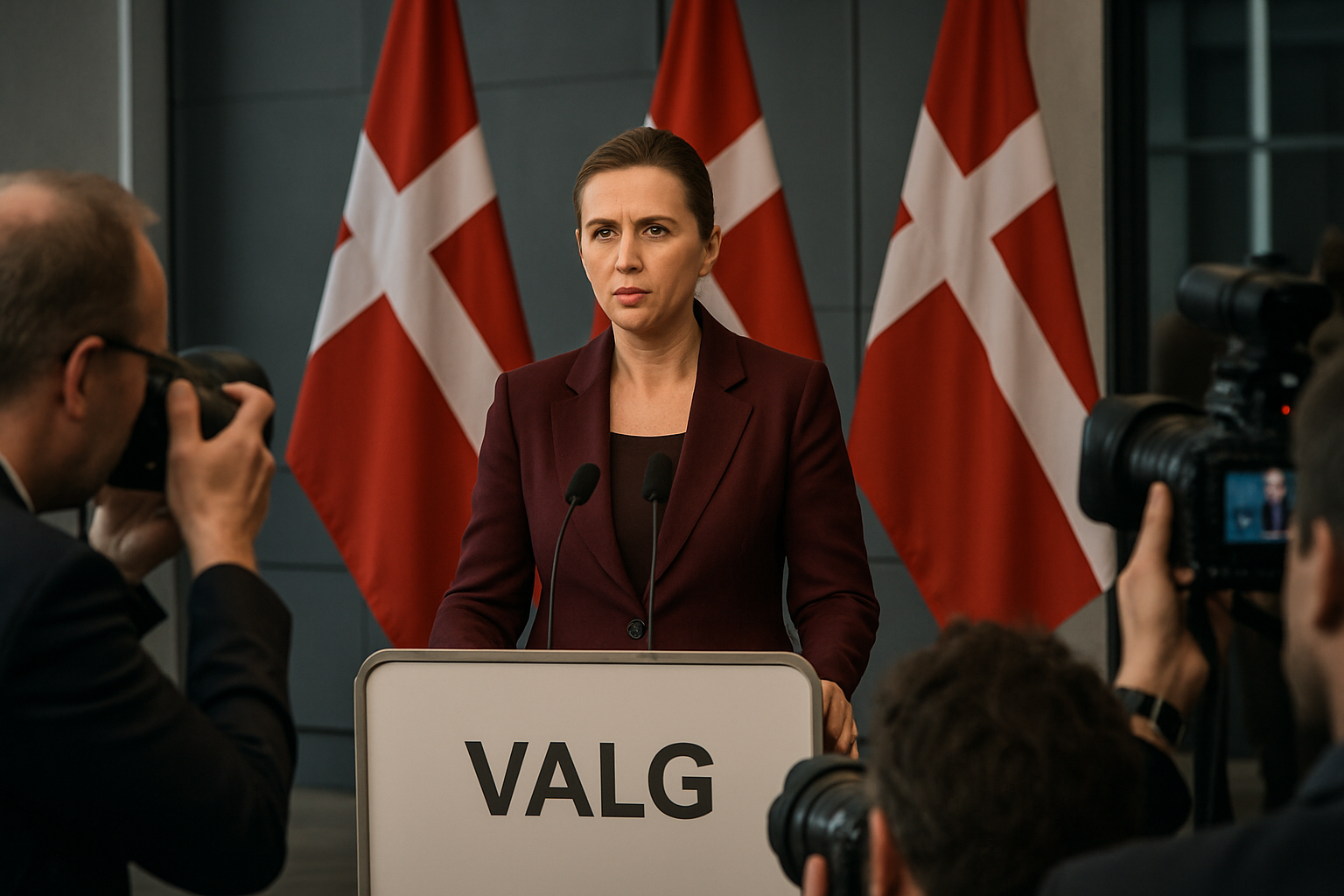
Danish Prime Minister Mette Frederiksen announced snap parliamentary elections for March 24, 2026, betting that her rising popularity from standing firm against President Trump's territorial ambitions toward Greenland will secure another term in office amid escalating diplomatic tensions with the United States.
The move comes as the Trump administration has revived claims over the Arctic territory since early January, sparking a diplomatic crisis that has paradoxically strengthened Frederiksen's domestic standing. The rupture in relations has reinforced her image as a disciplined and steady leader during periods of international pressure, with polls showing increased public support for her Social Democratic government.
Greenland Crisis Becomes Electoral Strategy
According to international media reports, Frederiksen's decision to call early elections represents a calculated political gamble to capitalize on the diplomatic standoff. The Danish Prime Minister has maintained an unwavering position that "Greenland is neither for sale nor for purchase," a stance that has resonated strongly with Danish voters who view Trump's territorial claims as an attack on national sovereignty.
The crisis began intensifying in January when Trump established working group meetings with Greenlandic representatives, despite repeated Danish rejections of any territorial transfer. The situation escalated further when the US president announced plans to deploy a hospital ship to Greenland, which Danish officials dismissed as a misleading humanitarian gesture masking territorial ambitions.
"Even though we are holding elections, the conflict around Greenland is still present. We must remain united in our defense of sovereignty."
— Mette Frederiksen, Danish Prime Minister
International Coalition Against US Pressure
The Greenland crisis has triggered an unprecedented diplomatic response from European allies and Canada, who have coordinated their efforts to support Danish sovereignty. France and Canada simultaneously opened their first consulates in Nuuk, Greenland's capital, in February 2026, representing a direct diplomatic challenge to American territorial pressure.
Canadian Foreign Minister Anita Anand attended the consulate opening with Indigenous Governor General Mary Simon, while an Inuit delegation from Canada delivered a blunt message to Trump: "back off." This coordinated international response has provided Frederiksen with powerful visual symbols of solidarity that she can leverage during the campaign.
NATO has also launched the Arctic Sentry military operation, with the UK doubling its troop presence in Norway to 2,000 soldiers and Sweden deploying Gripen jets for exercises in Greenland. The mission serves dual purposes: deterring Russian activities in the Arctic while providing security assurance amid US territorial tensions.
Trump's Escalating Territorial Campaign
The Trump administration's approach to Greenland has evolved from direct purchase proposals to humanitarian assistance framing, but the underlying territorial ambitions remain unchanged. Louisiana Governor Jeff Landry, serving as Trump's special envoy to Greenland, has characterized Danish rule as an "occupation" and urged independence aligned with US interests.
Recent developments include Trump's hospital ship announcement, made during a White House dinner with Republican governors. The proposal, accompanied by AI-generated images on Truth Social showing a ship sailing toward Arctic landscapes, was quickly rejected by Greenland's leadership as unnecessary given the territory's universal healthcare coverage under Denmark's system.

Strategic Arctic Stakes
Greenland's strategic importance extends far beyond its 56,000 inhabitants. The territory controls crucial Arctic shipping routes that climate change is making increasingly accessible, while containing vast reserves of rare earth minerals essential for modern technology. The island also provides critical military positioning in a region of growing international competition between Russia, China, and Western powers.
Danish Foreign Minister Lars Løkke Rasmussen has acknowledged that Denmark is in a "better position" than during the initial crisis weeks but emphasized "we are not out of the crisis, and we do not have a solution yet." This cautious optimism has been interpreted as evidence that working group meetings continue despite public resistance.
Nuclear Governance Context
The Greenland crisis unfolds against a broader backdrop of deteriorating US-Russia relations and nuclear governance concerns. The New START treaty expired on February 5, 2026, marking the first time in over 50 years without bilateral nuclear constraints between the superpowers. This context adds urgency to maintaining stable relationships among democratic allies.
Electoral Calculations and Risks
Frederiksen's electoral strategy carries significant risks alongside potential rewards. While polls show increased support for her handling of the Greenland crisis, calling snap elections always creates uncertainty. The March 24 date provides limited time for opposition parties to organize effective campaigns, but also constrains Frederiksen's ability to respond to changing circumstances.
The Danish constitution requires parliamentary elections at least every four years but allows prime ministers to call them more frequently. Frederiksen's decision follows a pattern of using external pressure to strengthen domestic political position, similar to strategies employed during previous international crises.
Opposition parties are likely to frame the election as a referendum on Frederiksen's confrontational approach toward the United States, arguing that diplomatic solutions should take precedence over electoral calculations. However, public sentiment appears to strongly support maintaining sovereignty against external pressure.
International Implications
The March 24 election will be closely watched internationally as a test case for how smaller nations can maintain sovereignty against major power pressure in the 21st century. Success for Frederiksen would reinforce the principle that democratic solidarity can effectively counter unilateral territorial claims.
European Union officials have privately expressed support for the coordinated consulate response, viewing it as a precedent for collective action against territorial aggression. The crisis has also strengthened transatlantic bonds among traditional allies while straining US relationships with NATO partners.
King Frederik X's symbolic three-day visit to Greenland in February, combined with EU Commission President Ursula von der Leyen's planned March visit with a support package, demonstrates the depth of European commitment to Danish sovereignty. These high-profile gestures provide Frederiksen with powerful campaign imagery.
Looking Ahead
The outcome of Denmark's March 24 election will have implications extending far beyond Danish domestic politics. A Frederiksen victory would validate the strategy of democratic resistance to territorial pressure, potentially encouraging similar approaches by other nations facing major power ambitions.
Conversely, electoral defeat could signal to the Trump administration that sustained pressure eventually weakens democratic resolve, potentially encouraging similar territorial campaigns elsewhere. The Arctic region's strategic importance ensures that the Greenland dispute will continue regardless of electoral outcomes.
As Frederiksen campaigns on her record of defending sovereignty, the international community watches to see whether small-state resistance can prevail against great power pressure in an era of renewed territorial competition. The stakes extend beyond Denmark's borders to fundamental questions about sovereignty, democracy, and international law in the modern world.