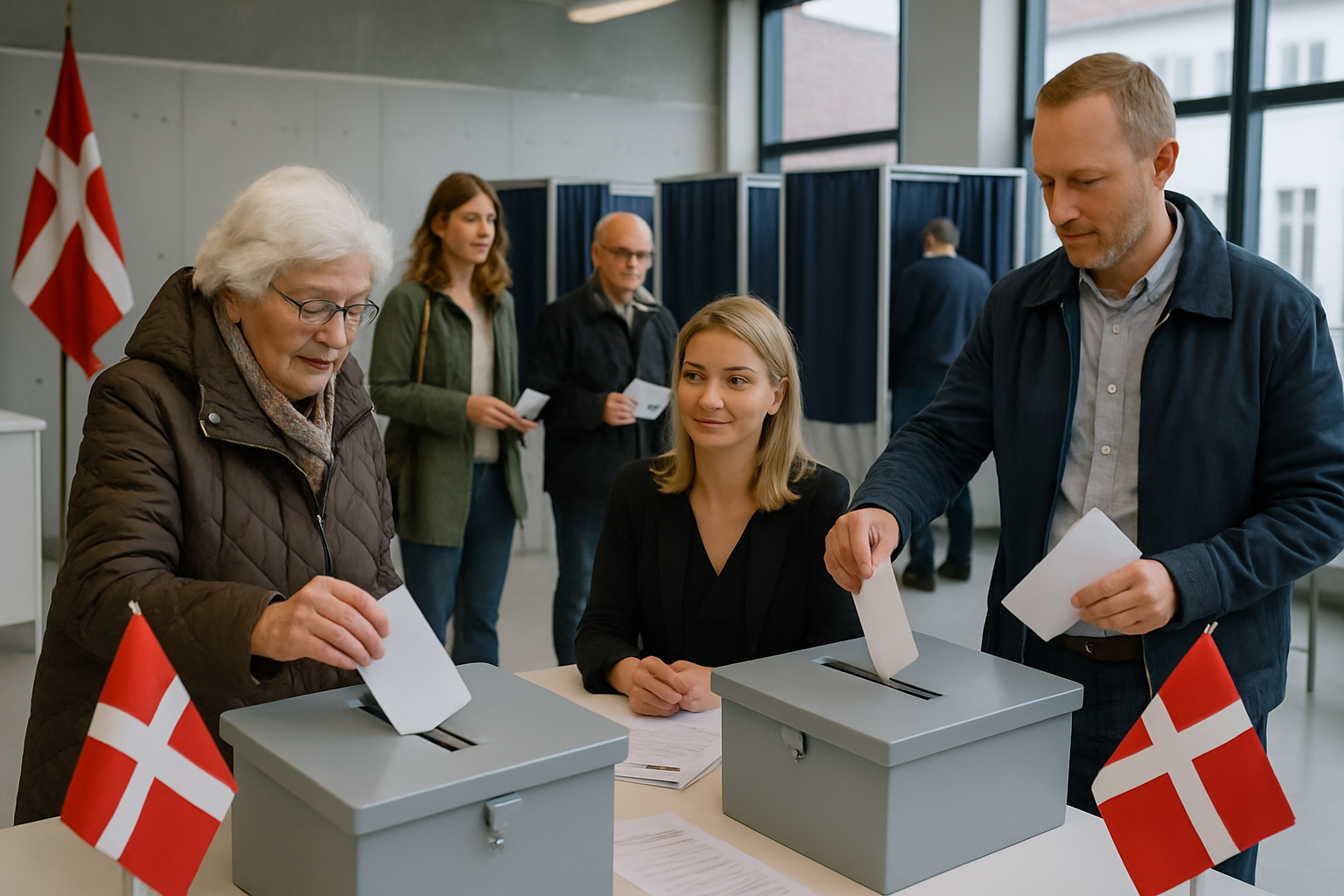
Denmark's 4.3 million eligible voters headed to polling stations Tuesday in snap parliamentary elections that could hand Prime Minister Mette Frederiksen a historic third term, with her gamble on nationalist sentiment over Trump's Greenland territorial ambitions overshadowing domestic cost-of-living concerns that have weakened her traditional Social Democratic base.
The elections, called just five weeks ago, represent one of the most consequential votes in modern Danish history - not merely for domestic policy, but as a referendum on small-state sovereignty in an era of renewed great power competition. Frederiksen's calculated political risk centers on her defiant "neither for sale nor purchase" stance against President Trump's territorial designs on Greenland, a position that has earned international acclaim while creating complex domestic political dynamics.
The Greenland Effect: International Crisis as Electoral Strategy
Frederiksen's decision to call snap elections emerged directly from what analysts term the "Greenland effect" - a surge in nationalist sentiment following her firm rejection of Trump's proposals to acquire the Arctic territory. The crisis began intensifying in January 2026 when working group meetings between US and Greenlandic representatives commenced despite Danish objections, culminating in Frederiksen's February 26 announcement of March 24 elections.
The prime minister's international standing soared as European allies rallied to Denmark's defense. France and Canada opened their first consulates in Nuuk in February 2026, while NATO's Arctic Sentry mission saw the UK double its Norway troop deployment to 2,000 and Sweden deploy Gripen jets for Greenland exercises. This unprecedented show of solidarity provided concrete evidence for Frederiksen's argument that Denmark's resistance was both principled and effective.
"We have shown the world that small nations can stand up to great power pressure when they have the courage of their convictions and the support of their allies,"
— Mette Frederiksen, addressing supporters in Copenhagen
However, this international success creates a domestic political paradox. Opinion polls suggest the Social Democrats are heading for their weakest result since before World War II, with many Danish voters blaming Frederiksen for failing to address rising inflation and housing costs that have squeezed household budgets. The challenge for the prime minister lies in translating her image as the leader who "tamed Trump" into a compelling domestic agenda.
Opposition Navigates Patriotic Dilemma
Opposition parties face an extraordinarily delicate balance in criticizing Frederiksen's government without appearing unpatriotic during a sovereignty crisis. The compressed five-week campaign timeline - deliberately chosen to limit opposition preparation time - has benefited the incumbent, who can point to concrete international support as evidence of successful leadership.
Some opposition figures have attempted to frame the election as a choice between confrontational versus diplomatic approaches to the American pressure. However, this strategy risks portraying them as weak against sustained US territorial ambitions, particularly given the ongoing nature of the crisis and Trump's continued public statements about Greenland's strategic value.
The Danish People's Party, traditionally strong on sovereignty issues, finds itself in the unusual position of supporting the Social Democratic prime minister's foreign policy while attacking her domestic record. This fragmentation of traditional political alignments reflects the unprecedented nature of the current crisis.
Democratic Resilience Under Pressure
Intelligence services have raised significant concerns about the election's integrity, with the Danish Security and Intelligence Service (PET) and Defence Intelligence Service (FE) jointly warning that foreign states, particularly Russia, may attempt to influence the parliamentary elections. This represents an unprecedented level of concern about external interference in Danish democratic processes.
The warning reflects broader patterns of sophisticated foreign influence operations targeting Western democracies during electoral periods, exploiting domestic divisions to amplify political tensions. Danish authorities have implemented enhanced cybersecurity measures and international coordination to protect electoral integrity.
International Stakes Beyond Denmark's Borders
The election's significance extends far beyond Danish governance, serving as a critical test case for democratic resistance to major power territorial pressure in the 21st century. Success in maintaining sovereignty while preserving democratic norms would provide a template for other small nations facing great power challenges, while failure could signal that sustained pressure weakens democratic resolve.
European officials are closely monitoring the results as a bellwether for continental unity in face of external pressures. The coordinated diplomatic response - from French and Canadian consulate openings to NATO's Arctic Sentry mission - represents the most significant collective action in defense of a small state's sovereignty since the Cold War era.
The election also carries implications for transatlantic relations and NATO cohesion. Denmark's firm stance, backed by European allies, has created tensions within the Western alliance while potentially strengthening multilateral cooperation among traditional partners. The outcome will influence how democratic nations approach territorial sovereignty challenges in an era of renewed great power competition.
Economic Pressures Versus International Success
Despite Frederiksen's international acclaim, domestic polling reveals the persistent challenge of translating foreign policy success into electoral advantage. Cost-of-living concerns dominate voter priorities, with inflation and housing costs creating financial strain for many Danish households. The Social Democrats' traditional base has been particularly affected, creating vulnerabilities that opposition parties hope to exploit.
The prime minister's challenge lies in demonstrating that her international leadership capabilities translate into effective domestic governance. Her supporters argue that Denmark's enhanced international profile and strengthened alliance relationships provide long-term economic and security benefits that justify short-term domestic sacrifices.
The Broader European Context
The Danish election occurs within the broader context of European political crisis, with far-right gains, coalition instabilities, and violent confrontations creating an environment where local elections carry outsized international significance. Recent developments across the continent - from Sweden's historic Liberal-Sweden Democrats cooperation to France's political violence - have created a sense that European democracy faces its most severe challenges since World War II.
In this context, Denmark's election serves as a test of whether democratic institutions can effectively channel political pressures through legitimate electoral processes while maintaining international cooperation and domestic stability. The ability to conduct free and fair elections during a sovereignty crisis would provide encouragement for democratic movements facing similar pressures elsewhere.
A Historic Crossroads
As polling stations opened across Denmark, voters faced a choice that extends beyond traditional partisan politics to fundamental questions about national identity, democratic resilience, and small-state sovereignty in the modern world. The election represents what many observers describe as the most significant political moment in Danish history since World War II.
The outcome will determine not only Denmark's government for the coming years but also establish precedents for how democratic nations navigate sovereignty challenges while maintaining institutional integrity and popular legitimacy. In an era of increasing great power competition, Denmark's example may influence how other democratic societies approach similar challenges.
Whether Frederiksen's gamble on the "Greenland effect" succeeds or fails, the election has already demonstrated that small democratic nations can mount effective resistance to territorial pressure when supported by robust international alliances and strong democratic institutions. The final verdict lies with Danish voters, who must decide whether their prime minister's international leadership merits continued domestic confidence.