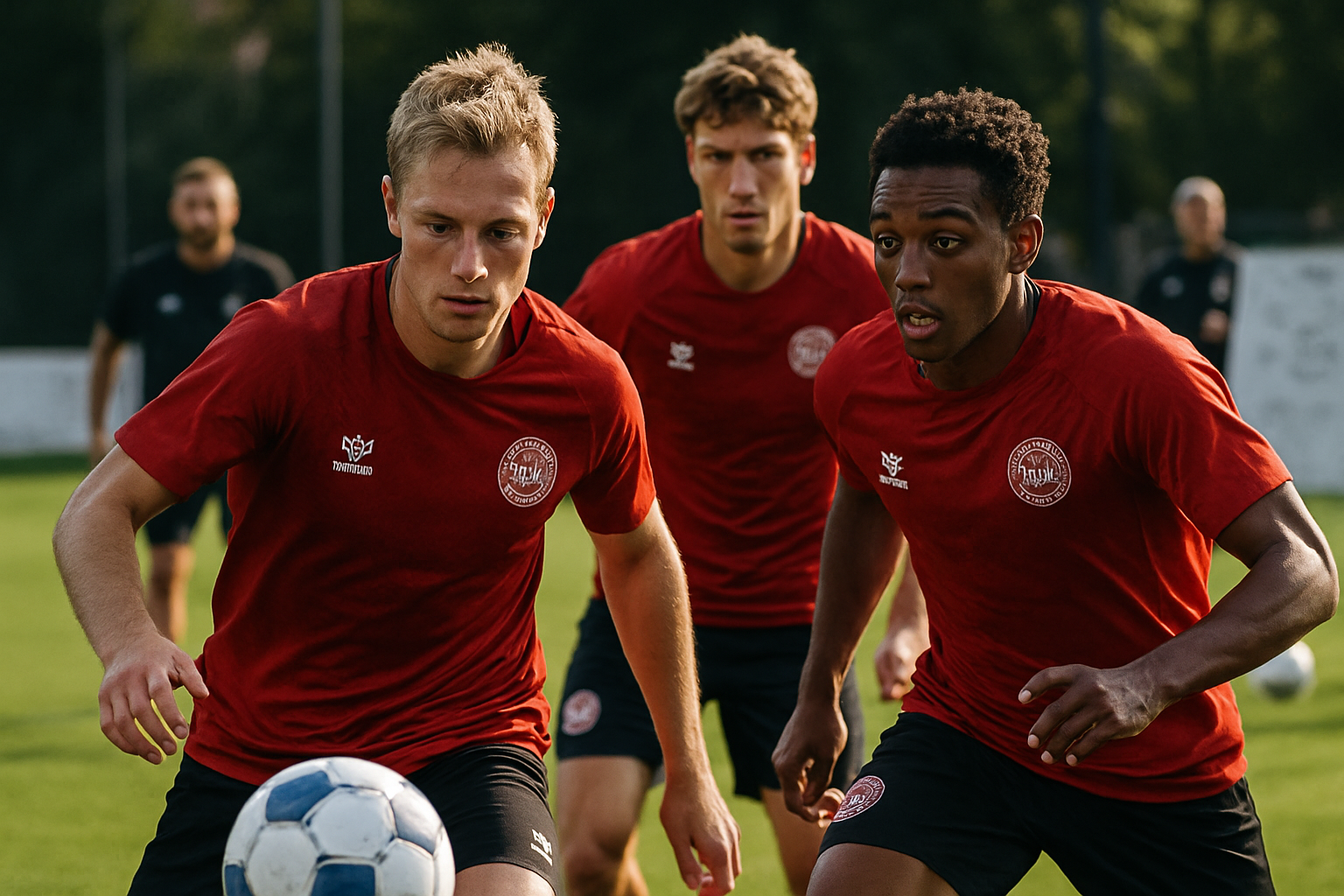
Denmark national team coach Brian Riemer has sprung significant surprises in his squad announcement for the crucial FIFA World Cup 2026 qualification playoff against North Macedonia on March 26, with the inclusion of goalkeeper Frederik Rønnow and striker Kasper Høgh highlighting a bold tactical shift as the nation battles for its World Cup place.
The squad selection, announced Tuesday morning at the Danish Football Union headquarters, marks a pivotal moment in Denmark's qualification campaign for the expanded 48-team World Cup set to take place across the United States, Canada, and Mexico from June 11 to July 19, 2026.
Unexpected Goalkeeper Selection Signals New Direction
The most striking inclusion is Union Berlin goalkeeper Frederik Rønnow, whose call-up represents a significant departure from established selection patterns. Rønnow, who has been instrumental in Union Berlin's Bundesliga campaigns, brings vast experience from German football's top tier and offers a different tactical approach compared to Denmark's traditional goalkeeping options.
The 31-year-old has consistently demonstrated exceptional shot-stopping ability and distribution skills in the Bundesliga, qualities that Riemer appears to value ahead of the high-stakes encounter against North Macedonia. His inclusion suggests the Danish coaching staff are prioritizing current form and tactical flexibility over established hierarchies.
Kasper Høgh: From Norwegian Football to Danish Dreams
Perhaps even more surprising is the selection of Kasper Høgh, the Bodø/Glimt striker who could make his international debut in this crucial fixture. The 23-year-old forward has been a revelation in Norwegian football, contributing significantly to Bodø/Glimt's domestic success and European campaigns.
Høgh's inclusion reflects Denmark's ongoing search for attacking solutions and represents a calculated gamble by Riemer. The striker's pace, work rate, and clinical finishing have caught the attention of the Danish coaching staff, who appear willing to blood new talent in their most important match of the qualification cycle.
"Frederik Rønnow and Kasper Høgh are part of the national team squad that will try to qualify Denmark for the World Cup."
— Danish Football Union Statement
The Norwegian-based striker's potential debut would mark a significant moment in his career, transitioning from club success in the Eliteserien to the international stage where Denmark's World Cup dreams hang in the balance.
March 26: A Date with Destiny
The crucial playoff match against North Macedonia on March 26 represents Denmark's last opportunity to secure qualification for the 2026 World Cup. The stakes could hardly be higher for a nation that reached the semifinals of Euro 2021 and has consistently performed on the international stage over the past decade.
North Macedonia, buoyed by their historic qualification for Euro 2021, will provide formidable opposition. Their organized defensive structure and counter-attacking prowess make them dangerous opponents, particularly in a single-game elimination format where tactical discipline often trumps individual brilliance.
Riemer's Tactical Evolution
Brian Riemer's squad selections suggest a coach willing to make brave decisions at critical moments. The inclusion of both Rønnow and Høgh indicates a tactical evolution that prioritizes adaptability and fresh energy over established combinations.
This approach reflects modern international football's demands, where coaches must balance experience with innovation, particularly in qualification scenarios where a single match can determine a nation's World Cup participation.
World Cup 2026 Context
Denmark's qualification battle takes place against the backdrop of unprecedented global football developments. The 2026 World Cup, set to be the largest in history with 48 teams, has already been marked by significant controversies, including Iran's withdrawal due to geopolitical conflicts and ongoing security concerns in host nation Mexico.
These broader challenges underscore the importance of qualification for nations like Denmark, who view World Cup participation as essential for their football development and international standing. The expanded format provides additional opportunities, but also intensifies competition as more nations vie for qualification.
Player Development and Future Planning
The inclusion of Høgh particularly reflects Denmark's long-term planning approach. By introducing promising players in crucial fixtures, the coaching staff demonstrates confidence in their development programs while providing valuable international experience that could prove invaluable in future tournaments.
This strategy aligns with Denmark's historical approach of developing players through high-pressure situations, creating resilient international performers capable of delivering when stakes are highest.
Historical Precedent and Pressure
Denmark's football history is rich with qualification drama and breakthrough moments. From their remarkable Euro 1992 triumph after a last-minute invitation to their recent Euro 2021 semifinal appearance, the national team has consistently exceeded expectations when facing adversity.
The March 26 fixture against North Macedonia continues this tradition of high-stakes encounters where Danish resilience and tactical intelligence have historically prevailed. Riemer's bold squad selections suggest confidence in this heritage while acknowledging the need for tactical innovation.
Implications for Danish Football
The squad announcement extends beyond immediate qualification concerns, signaling potential long-term shifts in Danish football philosophy. By prioritizing current form and tactical fit over established reputations, Riemer demonstrates a willingness to evolve Denmark's playing style.
This approach could influence Danish football development at all levels, encouraging coaches to value adaptability and performance over traditional hierarchies. Such philosophical shifts often prove crucial in international football's increasingly competitive landscape.
Looking Ahead to March 26
As Denmark prepares for their World Cup qualification destiny, Riemer's surprising squad selections have captured public attention and generated optimism about the team's tactical flexibility. The inclusion of Rønnow and Høgh represents calculated risks that could prove decisive in determining Denmark's World Cup participation.
The stakes remain clear: victory against North Macedonia secures Denmark's place in the 2026 World Cup, while defeat ends their qualification hopes and forces a period of reflection and rebuilding ahead of future tournaments.
With the expanded World Cup format offering new opportunities and global football facing unprecedented challenges, Denmark's March 26 encounter represents more than qualification – it symbolizes the nation's commitment to international excellence and tactical innovation in modern football's evolving landscape.