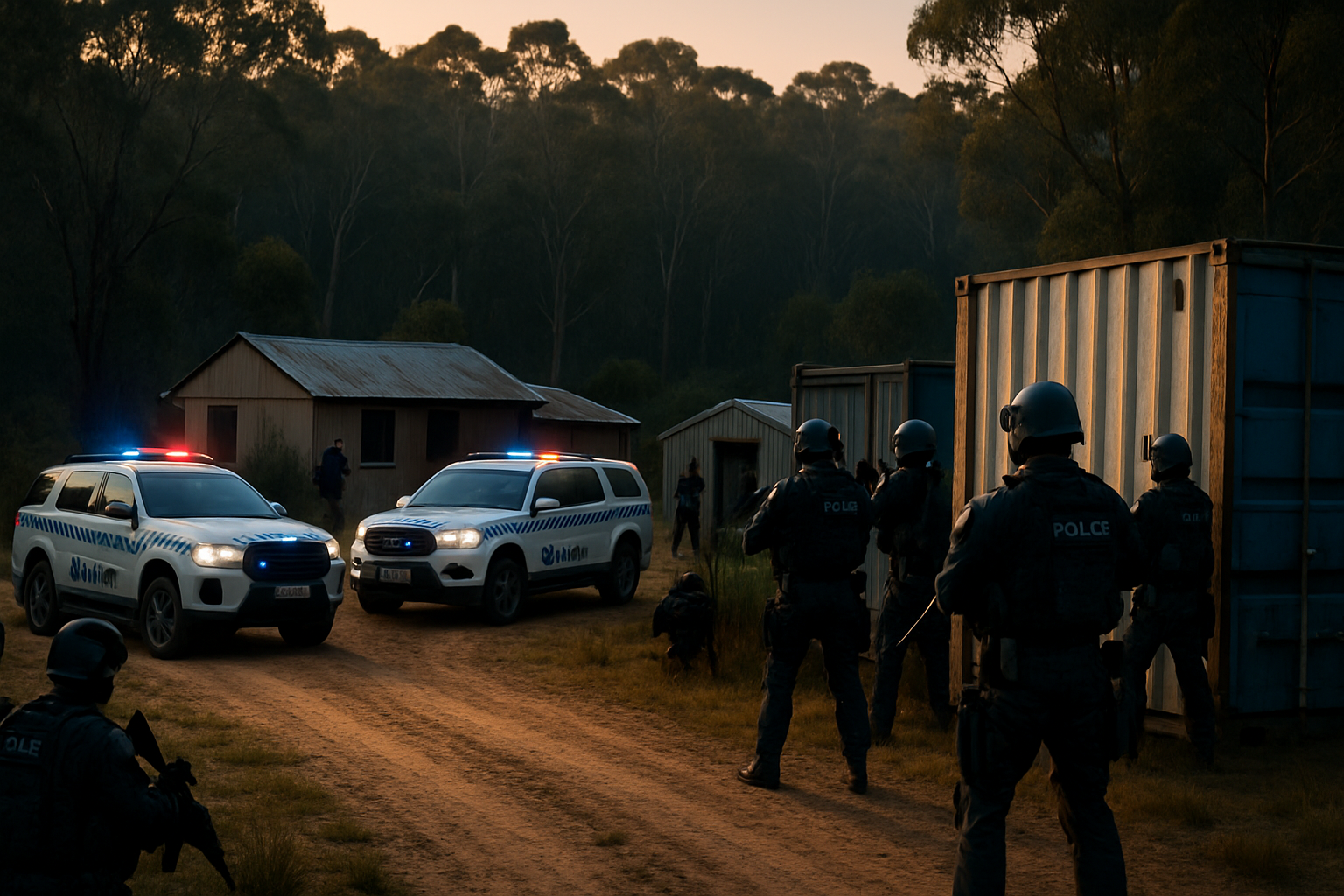
Australia's most wanted fugitive Dezi Freeman was shot dead by Victoria Police tactical officers during a dramatic three-hour standoff at a remote property near Walwa, approximately 30 kilometers from where he murdered two police officers seven months ago.
The 56-year-old double police killer, who had been on the run since August 26, 2025, emerged from a shipping container hideout wrapped in a blanket and brandishing a stolen firearm around 8:30 AM on Monday morning. The conclusion of Operation Summit brought an end to one of Victoria's most intensive and expensive police operations in modern history.
The Final Confrontation
Chief Commissioner Mike Bush confirmed that Freeman was fatally shot by police shortly after 8:30 AM following an hours-long standoff in which he failed to surrender peacefully. While Bush would not formally confirm the deceased man's identity pending official identification, he stated that the shooting concluded Operation Summit and brought closure to the families of the slain officers.
"Should [his identity] be confirmed... this brings closure to what was a tragic and terrible event. Everything I know at this point tells me that this shooting was justice."
— Chief Commissioner Mike Bush, Victoria Police
The property near Walwa, in the remote Thologolong area close to the Victoria-NSW border, had likely been under surveillance for approximately one week according to former police negotiator Dr. Vincent Hurley. Police were reportedly tipped off to Freeman's whereabouts by an associate, leading to the coordinated operation that involved multiple tactical units.
Seven Months of Terror
Freeman's reign of terror began on August 26, 2025, when he murdered Detective Leading Senior Constable Neal Thompson, 59, and Senior Constable Vadim De Waart-Hottart, 35, at his property in Porepunkah. The officers had responded to reports of shots fired when Freeman, previously known as Desmond Filby, opened fire with high-powered weapons, also seriously wounding a third officer before fleeing into the dense Victorian High Country bushland.
The subsequent manhunt involved unprecedented police resources across multiple states, including tactical units, aircraft, tracking teams, and hundreds of officers in what became one of Victoria's most intensive operations. The search covered vast areas of rugged terrain, with Freeman demonstrating sophisticated evasion techniques that kept him ahead of authorities for 216 days.
Bruce Evans, described as Freeman's close friend, revealed he had not heard from the fugitive since the initial escape and had believed Freeman was dead for months. "I had not heard from the double police killer since he escaped into dense bushland after shooting dead two police officers," Evans told media.
The Sovereign Citizen Connection
Freeman's case highlighted growing concerns about anti-government extremism within Australia's sovereign citizen movement. He had previously attempted to prosecute former Premier Daniel Andrews for treason and regularly described police as "terrorist thugs" in online posts. This ideological background provided crucial context for understanding the calculated nature of his attacks on law enforcement.
The investigation revealed Freeman's deep involvement with anti-authority movements that reject the legitimacy of government institutions. His transformation from Desmond Filby to Dezi Freeman was part of a broader pattern of identity manipulation common among sovereign citizen adherents who reject official documentation and legal frameworks.
Community Impact and Response
The seven-month manhunt terrorized Victoria's High Country communities, with residents reporting a constant state of anxiety and fear. Local schools implemented lockdown procedures, businesses altered operating hours, and families changed daily routines to accommodate the ongoing threat.
Freeman's death elicited mixed reactions from the community. While many expressed relief that the threat had ended, others described difficulty processing the conclusion of such a traumatic chapter. Freeman's eldest son Koah condemned online celebrations of his father's death, posting messages expressing grief while acknowledging the "disgusting humans" celebrating the outcome.
The best friend of slain Detective Thompson confirmed the death brought "closure" for the families, though emphasized it wouldn't bring back the fallen officers who had dedicated their lives to protecting the community.
Investigation Challenges and Breakthroughs
Despite extensive investigations, police found insufficient evidence to charge three individuals connected to the case, including Freeman's wife Amalia Freeman, 42. A 56-year-old Porepunkah man investigated for obstruction of police and a third person facing attempted theft charges all had their cases dropped due to evidentiary standards.
The breakthrough that led to Freeman's location came from a public tip-off, demonstrating the critical role of community cooperation in resolving complex fugitive cases. The intelligence allowed tactical teams to position themselves strategically around the rural property where Freeman had been hiding in shipping containers.
Institutional Oversight and Accountability
The case will undergo comprehensive review by the Independent Broad-based Anti-corruption Commission (IBAC), examining both the original Porepunkah shooting and Freeman's death to ensure procedural compliance and transparency. This oversight process reflects Victoria Police's commitment to accountability even in cases involving the most dangerous fugitives.
Questions have been raised about extremist threat assessment procedures and whether more could have been done to prevent the original tragedy. Freeman's history of anti-government activism and previous interactions with law enforcement will likely be scrutinized as part of broader prevention strategies.
A Defining Moment for Law Enforcement
Freeman's death marks the definitive end to a chapter that tested Victoria Police's capabilities and demonstrated their unwavering commitment to pursuing justice regardless of time or resources required. The case showed how law enforcement agencies can maintain public support while conducting complex operations in challenging terrain against sophisticated adversaries.
The investigation reinforced public confidence in the justice system's capacity to hold accountable those who commit the ultimate crime against sworn protectors of the community. It stands as a reminder of the dangers faced by law enforcement officers and the justice system's determination to ensure those who commit such crimes face consequences.
As Victoria's High Country communities begin the healing process, Freeman's death provides the closure necessary for moving forward while honoring the memory of the two officers who made the ultimate sacrifice in the line of duty.