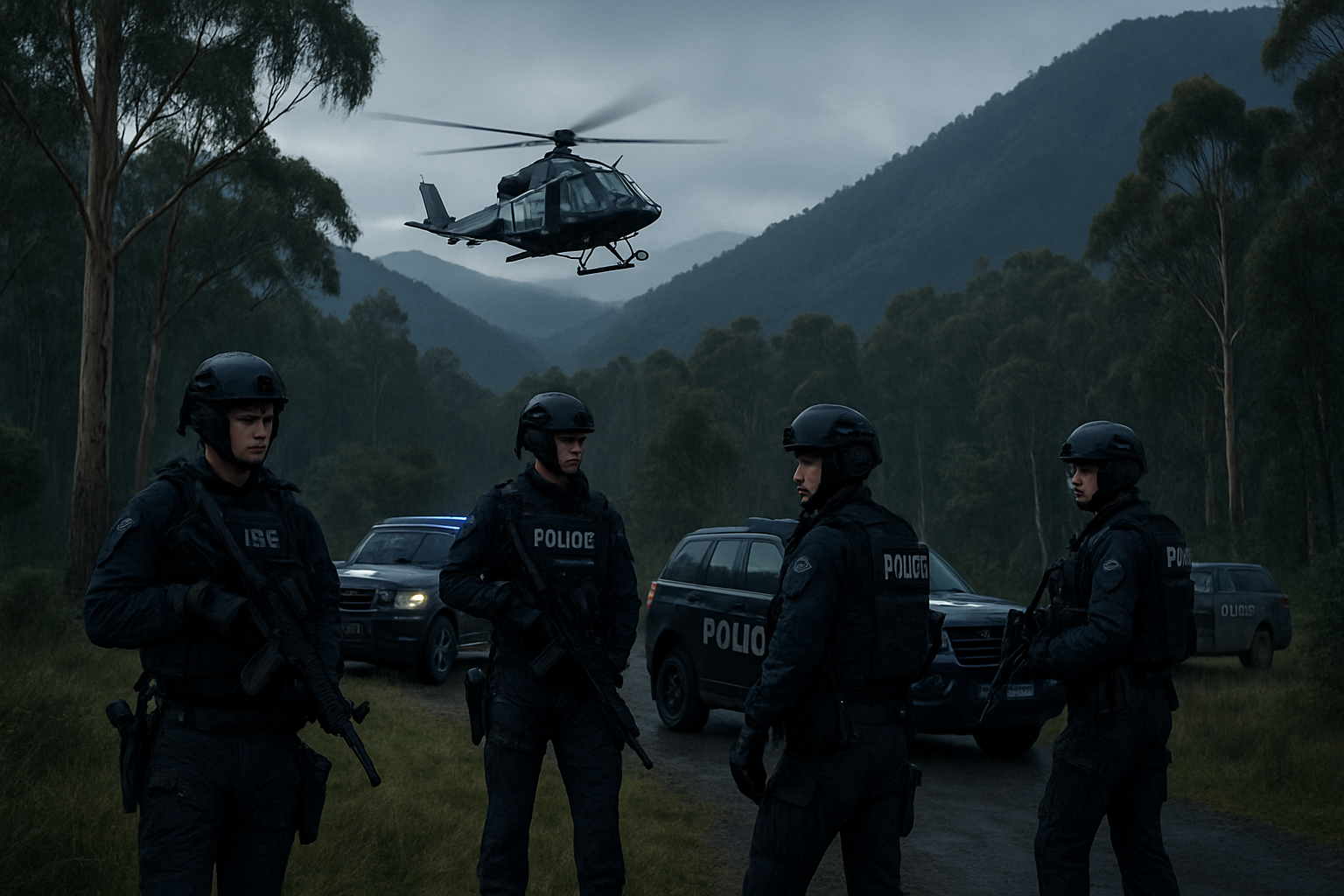
Australia's most wanted fugitive Dezi Freeman was shot dead by tactical police after a three-hour standoff at a rural property near Walwa in Victoria's northeast, ending a 216-day manhunt that gripped the nation and brought long-awaited closure to the families of two murdered police officers.
Freeman, 56, was found wrapped in a blanket and armed during the confrontation at the isolated property just before 8:30 AM on Monday morning. The fugitive, previously known as Desmond Filby, had been on the run since allegedly murdering Detective Leading Senior Constable Neal Thompson, 59, and Senior Constable Vadim De Waart-Hottart, 35, at Porepunkah in August 2025.
The Final Confrontation
Victoria Police Chief Commissioner Mike Bush confirmed that Freeman was located following a public tip-off that led authorities to a shipping container on a rural property near the NSW border. The breakthrough came after months of intensive searching across multiple states involving unprecedented police resources, tactical units, aircraft, and tracking teams.
"Everything I know at this point tells me that this shooting was justice,"
— Chief Commissioner Mike Bush
The location at Walwa, approximately 30 kilometers from the original Porepunkah shooting site, provided the isolated terrain that had enabled Freeman's months-long evasion of one of Victoria's most intensive police operations.
A Seven-Month Reign of Terror
Freeman's violent spree began on August 26, 2025, when he fatally shot two police officers and seriously injured a third during what should have been a routine property visit in the alpine town of Porepunkah. The attack, described by authorities as being carried out "in cold blood," sent shockwaves through Victoria's law enforcement community and triggered what would become one of Australia's largest manhunts.
The fugitive then disappeared into dense bushland, launching a manhunt that would captivate national attention and stretch police resources to their limits. Freeman had managed to evade capture despite being the subject of extensive searches, public appeals, and a significant reward for information leading to his arrest.
The Victims Remembered
Detective Leading Senior Constable Neal Thompson's best friend described Freeman's death as bringing "closure," though acknowledging it would not bring back his mate. The veteran officer, just four years from retirement, had dedicated his career to serving the community and was beloved by colleagues and local residents alike.
Senior Constable Vadim De Waart-Hottart, 35, left behind a young family devastated by the senseless violence. Both officers were remembered as dedicated professionals who died serving their community.
"The families of two police officers allegedly shot dead by Dezi Freeman last year finally have answers after the fugitive managed to evade police for seven months."
— Police Statement
A Troubled Ideological Background
Freeman's association with the sovereign citizen movement added another layer of complexity to the case. The anti-government ideology had previously led him to attempt prosecuting former Premier Daniel Andrews for treason and to describe police as "terrorist thugs." This belief system, characterized by rejection of government authority, provided insight into his violent confrontation with law enforcement.
The sovereign citizen movement has been described as having a "long and disturbing history" of anti-authority extremism. Freeman's case highlighted concerns about the radicalization of individuals within these movements and their potential for violence against state representatives.
Community Impact and Division
The conclusion of the manhunt brought mixed reactions from Victoria's High Country communities. While many expressed relief that the threat had been eliminated, others grappled with the complex emotions surrounding Freeman's death.
Freeman's eldest son Koah condemned online celebrations of his father's death, posting to a local Facebook group: "This is news that I'll be grieving about while some of you disgusting humans celebrate online for ME to watch." His plea highlighted the human tragedy behind the headlines and the lasting impact on families torn apart by violence.
Local residents described the atmosphere as one of "shock and relief," with many finding it "hard to feel grief that he's dead" given the terror his actions had brought to their communities.
Investigation Complexities
The manhunt's conclusion raised questions about how Freeman managed to evade capture for over seven months despite the massive resources deployed. Victoria Police had maintained that he was likely receiving assistance, though insufficient evidence was found to charge three individuals connected to the investigation, including Freeman's wife Amalia, 42.
The case demonstrated both the challenges of tracking individuals in Australia's vast rural areas and law enforcement's determination to pursue justice regardless of duration or cost. The successful resolution provided validation for the extensive resources committed to the operation.
Institutional Response and Oversight
While Victoria Police are yet to formally confirm Freeman's identity pending forensic procedures, the shooting will be subject to review by the Independent Broad-based Anti-corruption Commission (IBAC). This oversight process will examine both the original Porepunkah shooting and the circumstances of Freeman's death to ensure procedural compliance and transparency.
The case has raised broader questions about extremist threat assessment and the resources required for fugitive investigations in Australia's challenging terrain. It also highlighted the importance of community cooperation throughout the investigation process.
A Nation Watches Justice Served
Freeman's death marks the end of one of Victoria's most intensive police operations, providing closure for the officers' families while raising important questions about preventing similar tragedies. The case demonstrated law enforcement's unwavering commitment to pursuing justice and protecting the community from dangerous individuals.
The successful conclusion of the manhunt, while tragic in its necessity, reinforced public confidence in the justice system's ability to hold accountable those who attack the very officers sworn to protect society. For the families of Neal Thompson and Vadim De Waart-Hottart, Freeman's death finally brings an end to seven months of knowing their loved ones' killer remained free.
As investigations continue and the community begins to heal, the case of Dezi Freeman stands as both a reminder of the dangers faced by law enforcement officers and the determination of the justice system to ensure that those who commit the ultimate crime against society face the ultimate consequence.