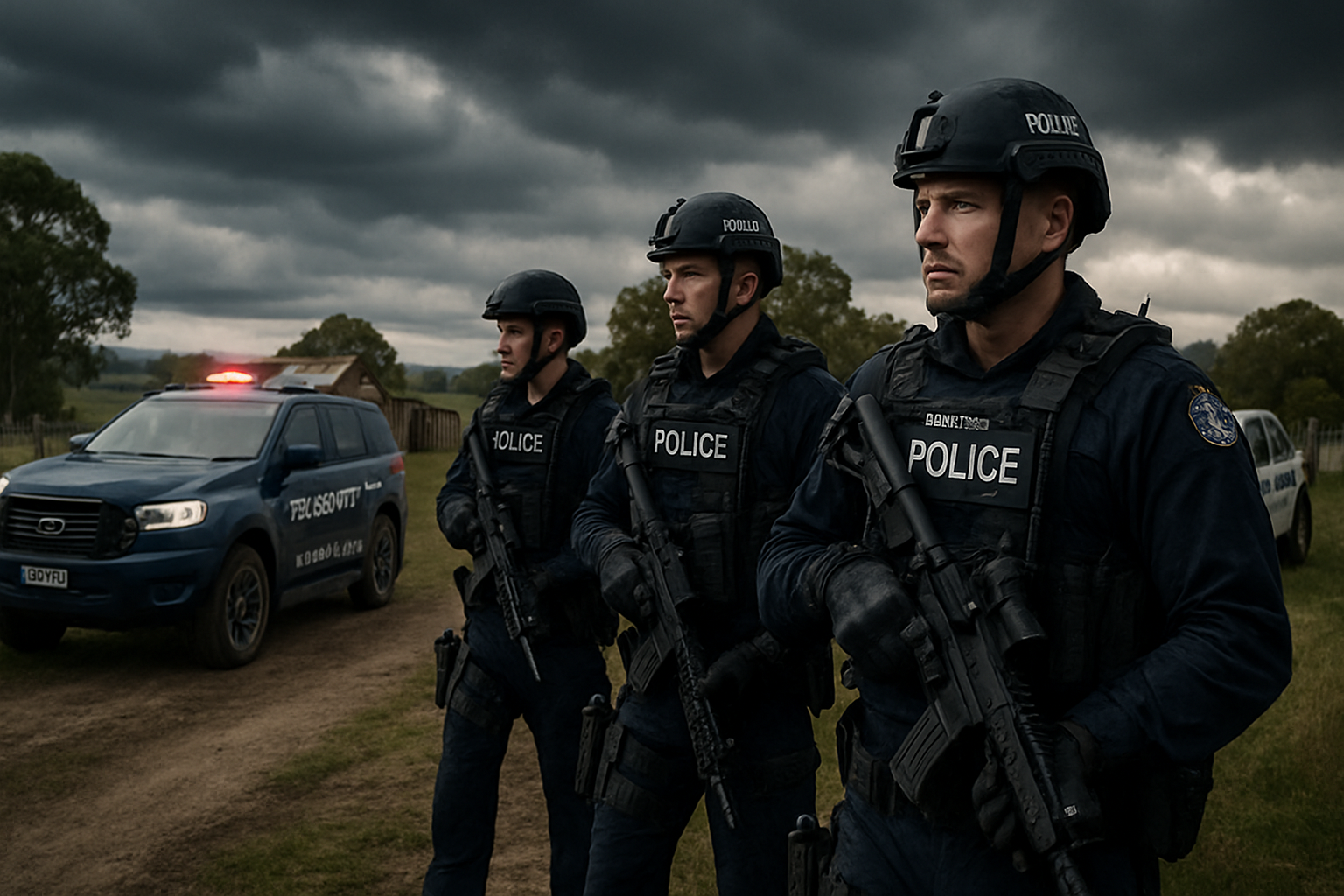
Dezi Freeman, the 56-year-old fugitive accused of killing two Victoria Police officers, was shot dead by police in a confrontation at a rural property near Walwa on Monday morning, ending one of Australia's most intensive manhunts in recent memory.
The dramatic conclusion to the seven-month search occurred just before 8:30am at a property in Walwa, northeast of Porepunkah and on the border with New South Wales. Freeman was found armed and wrapped in a blanket when confronted by police, according to Victoria Police sources.
Chief Commissioner Mike Bush confirmed the shooting was justified, stating: "Everything I know at this point tells me that this shooting was justice." The operation followed a public tip-off that led police to Freeman's hiding place on the rural property.
The Porepunkah Shooting
Freeman had been Australia's most wanted man since August 2025, when he allegedly shot and killed two police officers and wounded a third during a confrontation at his property in Porepunkah. The incident that triggered the massive manhunt occurred when officers attended Freeman's rural property on what initially appeared to be a routine matter.
The shooting shocked the small Victorian community and prompted the largest police manhunt in the state's recent history. Freeman, previously known as Desmond Filby, had been living in the area and was described by acquaintances as a "troubled and divisive figure" who was drawn to anti-authority movements.
Victoria Police had deployed unprecedented resources in the search, including specialist tactical units, aircraft, and tracking teams. The manhunt extended across multiple states as investigators followed leads and potential sightings.
The Final Confrontation
According to unconfirmed reports, Victoria Police were tipped off that Freeman was hiding in a shipping container on a rural property. When officers arrived at the Walwa location, they found Freeman armed and apparently prepared for a confrontation.
Victoria Police revealed more details about the shooting, describing it as occurring during what they termed a "developing situation." Freeman was reportedly wrapped in a blanket when discovered, suggesting he may have been attempting to conceal his location or preparing for an extended standoff.
The property where Freeman was located is situated in a remote area near the New South Wales border, approximately 30 kilometers from where the original Porepunkah shooting occurred. The rural location provided the kind of isolated terrain that had allowed Freeman to evade capture for months.
A Controversial Figure
Before his death, Freeman had become associated with the so-called "sovereign citizen" movement, a loose collection of anti-government groups that reject state authority and legal institutions. Friends and acquaintances described him as increasingly volatile and "unemployable" in the period leading up to the police shooting.
The case had attracted national attention not only for its violence but also for the ideological elements surrounding Freeman's actions. The sovereign citizen movement has been linked to various anti-government incidents across Australia and other countries, raising concerns among law enforcement about domestic extremism.
Freeman's transformation from a local resident to Australia's most wanted fugitive highlighted growing concerns about radicalization and anti-authority sentiment in rural communities. His case became a symbol of the challenges faced by law enforcement in dealing with individuals who completely reject governmental legitimacy.
Impact on the Community
The Porepunkah community had been living under a cloud since the August shooting, with residents expressing both fear about Freeman's continued freedom and grief for the fallen officers. The small town had become the center of intense media attention and police activity throughout the manhunt.
Chief Commissioner Bush acknowledged the impact on the Porepunkah community and thanked Victoria Police investigators for their persistence in the hunt for Freeman. The community had cooperated extensively with police throughout the investigation, providing crucial information and support.
The conclusion of the manhunt brings some relief to the area, though the trauma of the original shooting and subsequent months of uncertainty will require time to heal. Local counseling services and community support networks have been mobilized to help residents process the conclusion of this traumatic chapter.
Broader Implications
The Freeman case has raised significant questions about how law enforcement agencies handle individuals with anti-government ideologies who pose potential threats to public safety. The months-long manhunt demonstrated both the determination of Australian police to pursue justice and the challenges of tracking individuals in the country's vast rural areas.
The case also highlighted concerns about the influence of online extremist communities and conspiracy theories that can radicalize individuals against government institutions. Freeman's apparent involvement with sovereign citizen ideology reflects a broader pattern of anti-authority sentiment that has emerged in various countries.
Law enforcement experts note that the Freeman case provides important lessons about threat assessment, community policing, and the resources required to handle complex fugitive investigations. The successful conclusion demonstrates the effectiveness of sustained investigative efforts and community cooperation.
Investigation Continues
While Freeman's death ends the immediate manhunt, investigations continue into various aspects of the case. Earlier this year, insufficient evidence was found to charge three individuals connected to the police officer shooting investigation, including Freeman's wife Amalia and two other persons who had been under investigation for potential obstruction of police.
The Independent Broad-based Anti-corruption Commission (IBAC) and other oversight bodies will likely conduct reviews of both the original Porepunkah shooting and the circumstances surrounding Freeman's death. Such reviews are standard procedure when police use lethal force, ensuring transparency and accountability in law enforcement actions.
Victoria Police have indicated they will provide a comprehensive briefing on the operation once initial investigations are complete. The force has emphasized that the shooting occurred during what they described as legitimate law enforcement activity in response to an armed and dangerous fugitive.
A Manhunt's End
The death of Dezi Freeman marks the conclusion of one of Victoria's most intensive and prolonged police operations. The seven-month manhunt involved hundreds of officers, advanced technology, and extensive community cooperation. Freeman's ability to evade capture for so long in an era of sophisticated surveillance and tracking capabilities demonstrated the challenges law enforcement faces in pursuing determined fugitives in Australia's vast landscape.
For the families of the two slain police officers, Freeman's death provides a form of closure, though it cannot restore their lost loved ones. The case serves as a sobering reminder of the dangers faced by law enforcement officers in the line of duty and the serious consequences that flow from violent anti-authority extremism.
As investigations into the circumstances of Freeman's death continue, the case will likely influence future approaches to handling fugitive investigations and managing individuals associated with extremist movements. The successful conclusion demonstrates that Australian law enforcement agencies will pursue justice with determination and professionalism, regardless of how long such pursuits may take.