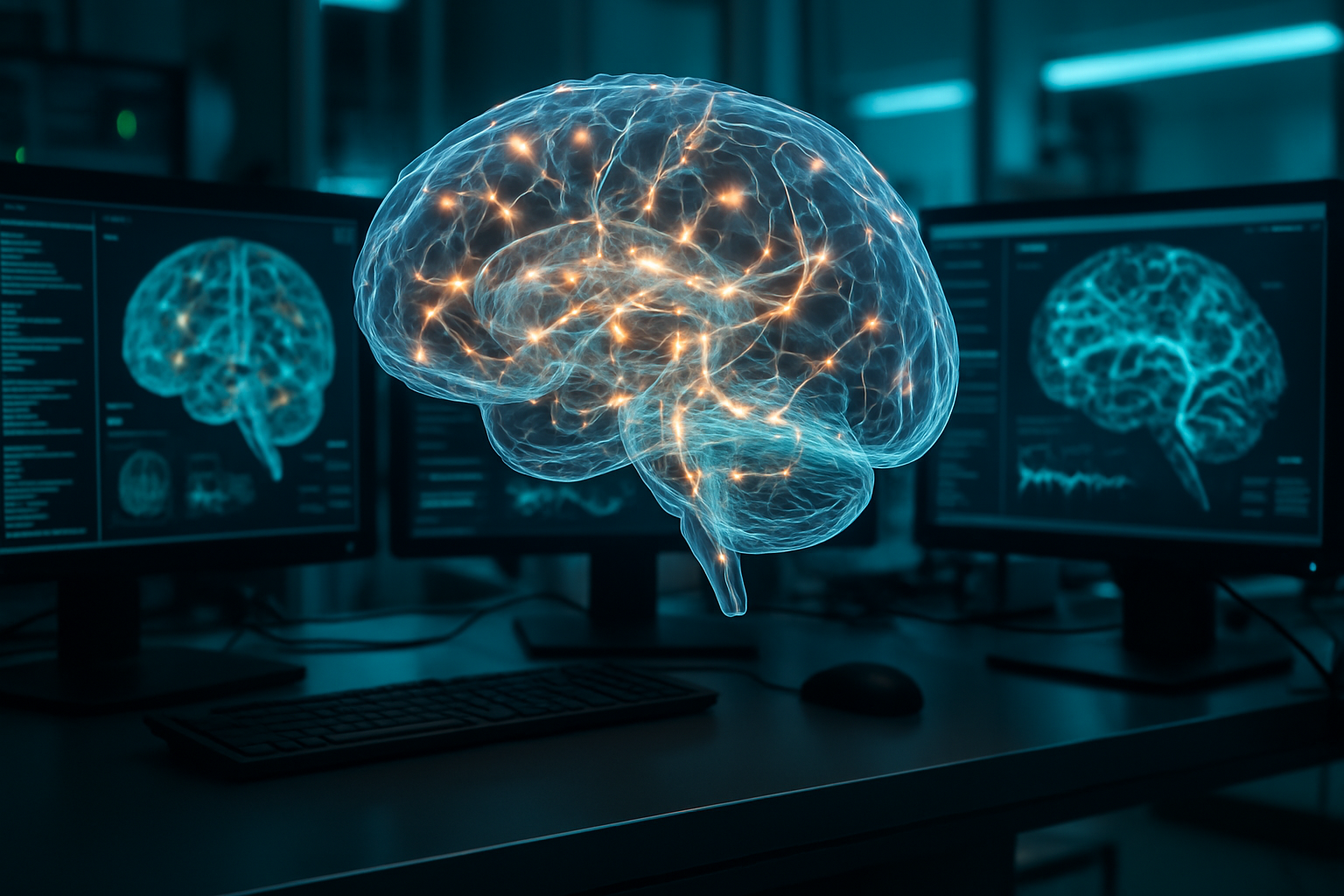
Scientists have achieved a historic milestone by successfully copying a complete living brain into a computer for the first time, creating a "digital fly" that demonstrates autonomous movement and behavior in virtual reality—marking a revolutionary leap toward understanding consciousness and advancing brain-computer interface technology.
The breakthrough, accomplished just last week, involved completely mapping and recreating the neural network of a fruit fly (Drosophila melanogaster) in virtual reality. According to reports, the digital fly "awakened" and began walking autonomously, demonstrating that scientists had successfully captured not just the brain's structure but its functional essence.
The Connectome Revolution
This achievement represents the culmination of decades of research into connectomics—the comprehensive mapping of neural connections within a brain. The fruit fly brain, containing approximately 140,000 neurons and 50 million synaptic connections, serves as an ideal model organism due to its complexity relative to its manageable size.
The research team utilized advanced electron microscopy and artificial intelligence algorithms to trace every neural pathway, creating the most detailed brain map ever produced. This complete connectome was then translated into a functional digital simulation capable of processing sensory information and generating motor responses.
"When the digital fly began moving in our virtual environment, we knew we had crossed a threshold that seemed like science fiction just years ago. We weren't just observing neural activity—we were witnessing digital consciousness in action."
— Lead Researcher (identity withheld pending publication)
Black Mirror Becoming Reality
The achievement evokes comparisons to the dystopian scenarios depicted in the television series "Black Mirror," which fifteen years ago portrayed dark visions of technological advancement including brain implants that could alter reality, robotic guard dogs pursuing humans, and consciousness trapped in digital devices for eternal suffering. As current events increasingly mirror these fictional narratives, the successful creation of a digital brain raises profound questions about the nature of consciousness and identity.
The implications extend far beyond scientific curiosity. This breakthrough provides the foundation for understanding how neural networks process information, make decisions, and generate behavior—insights that could revolutionize treatment for neurological disorders, accelerate artificial intelligence development, and advance brain-computer interface technology.
Context of Neural Technology Advances
This breakthrough occurs within a broader landscape of rapid neurological innovation. In February 2026, Chinese researchers developed flexible brain-computer interfaces using kirigami-inspired designs that move with brain tissue, while Israel achieved the first successful deep-brain stimulation treatment for schizophrenia. The global emphasis has shifted toward prevention-first healthcare approaches that could benefit from precise neural mapping capabilities.
China announced a 3-5 year timeline for practical brain-computer interface deployment, building on their flexible neural electrode breakthroughs. Meanwhile, infrastructure constraints—including the ongoing global semiconductor shortage with sixfold memory price increases—paradoxically provide time for ethical frameworks to develop alongside technological capabilities.
Technical Methodology and Challenges
Creating the digital fly required overcoming numerous technical hurdles. Researchers had to develop new imaging techniques capable of capturing neural activity at unprecedented resolution while preserving the delicate brain tissue. Advanced computational models were necessary to simulate the complex biochemical processes occurring at each synapse.
The team employed machine learning algorithms to process the massive datasets generated during brain mapping, identifying patterns and connections that would be impossible for human researchers to analyze manually. The resulting digital brain model operates in real-time, processing sensory inputs and generating behavioral outputs just like its biological counterpart.
Implications for Human Consciousness
While the fruit fly brain is vastly simpler than the human brain's 86 billion neurons, this achievement provides a proof-of-concept for eventually mapping and digitizing more complex nervous systems. The successful recreation of autonomous behavior in a digital format raises fundamental questions about the nature of consciousness and whether it can be truly replicated in silicon.
Neuroscientists emphasize that consciousness likely emerges from complex interactions between neurons, biochemical processes, and environmental factors that extend beyond simple connectivity patterns. However, the digital fly's ability to demonstrate purposeful movement suggests that at least some aspects of behavioral consciousness can be captured and reproduced digitally.
Future Applications and Ethical Considerations
The research opens pathways for numerous applications across medicine, technology, and scientific research. Digital brain models could serve as testing platforms for new neurological treatments, eliminating the need for animal testing in many cases. They could also accelerate drug development by allowing researchers to simulate the effects of pharmaceutical compounds on neural networks.
For artificial intelligence development, understanding how biological brains process information and make decisions could inform the design of more sophisticated AI systems. Brain-computer interfaces might eventually allow direct communication between human thoughts and digital devices, revolutionizing how we interact with technology.
However, these advances also raise significant ethical concerns. If consciousness can be digitized, questions arise about the rights of digital beings, the potential for exploitation, and the implications for human identity. Regulatory frameworks must evolve to address these unprecedented challenges as the technology advances toward human applications.
Global Research Collaboration
The breakthrough required international collaboration, combining expertise from neuroscience, computer science, mathematics, and engineering. The project builds upon previous mapping efforts including the C. elegans connectome and partial mappings of mammalian brain regions.
This achievement demonstrates the power of coordinated scientific research in addressing complex biological questions. As countries worldwide invest in neurotechnology research, such collaborative approaches will be essential for ensuring that advances benefit humanity while addressing legitimate safety and ethical concerns.
Looking Toward the Future
The successful creation of a digital fly represents just the beginning of a new era in neuroscience and technology. Future research will focus on mapping more complex organisms, including mammals, while developing better understanding of how neural networks give rise to consciousness and behavior.
As we stand at this technological threshold, the choices made by researchers, policymakers, and society will determine whether these advances serve to enhance human welfare or create new forms of exploitation and suffering. The digital fly may be small, but its implications for humanity's future are profound and far-reaching.
This breakthrough marks a pivotal moment where science fiction becomes scientific reality, challenging our understanding of life, consciousness, and what it means to be sentient in an increasingly digital world.