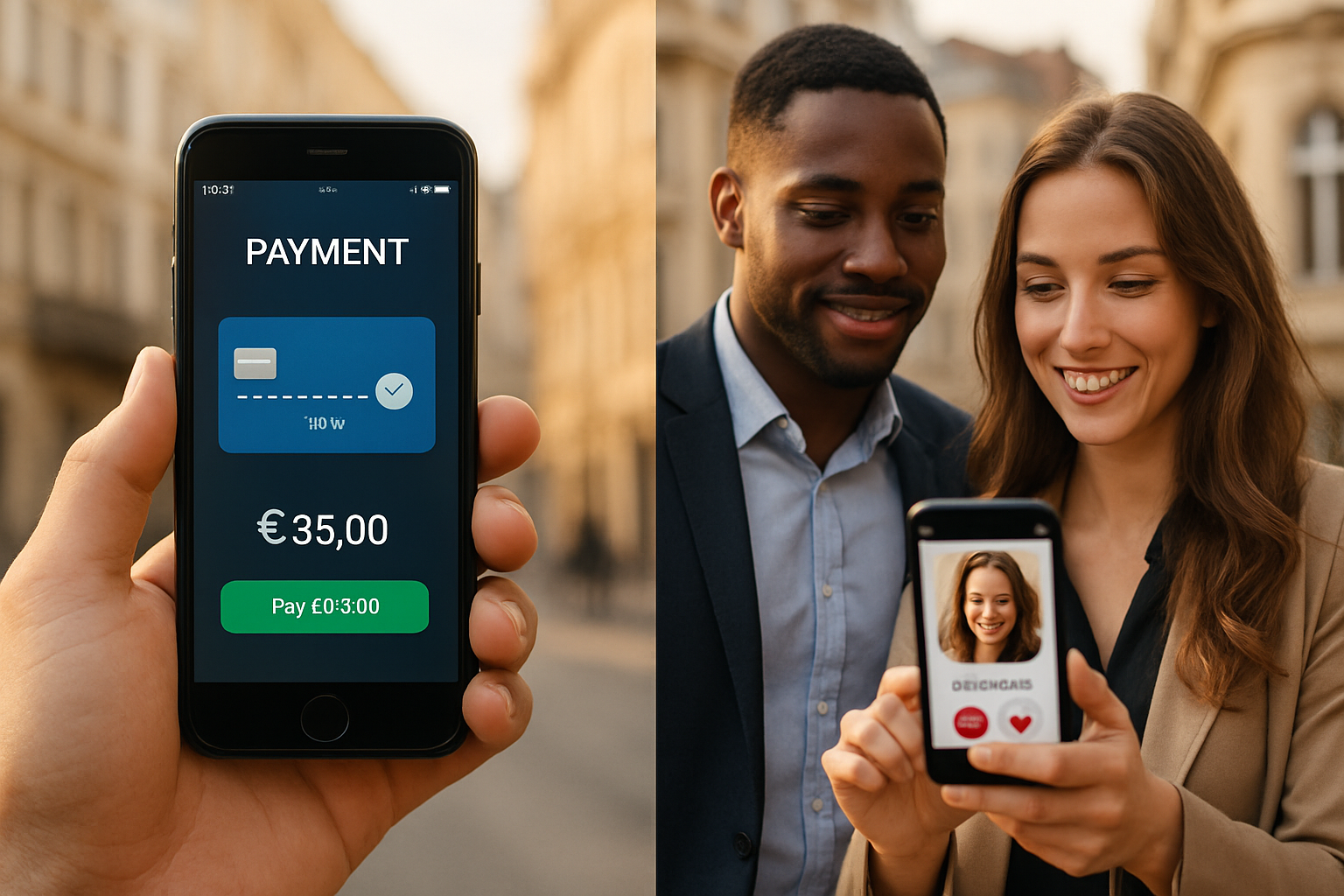
Europe's lifestyle technology sector is experiencing unprecedented innovation as entrepreneurs transform traditional services through premium experiences and inclusive design, from Monaco's exclusive dating platforms to Greenland's culturally-adapted mobile payment systems.
The convergence of high-end personalization and cultural inclusivity is reshaping how consumers interact with digital services, as demonstrated by two groundbreaking developments that signal a broader transformation in lifestyle technology approaches.
Premium Dating Technology Redefines Exclusivity
At Monaco's K2 March Investor Lounge, seven startups presented innovative concepts to European investors, with the most ambitious proposal coming from Pulse, a revolutionary dating platform that charges men €299 monthly while offering free access to women.
Co-founders Brian Lynn and Daniel Osvath positioned their platform as a response to widespread "swipe fatigue" affecting users of conventional dating applications. "People are tired of swiping," Lynn explained to the investor audience. "You don't really get quality matches a lot of the time."
The Pulse model implements comprehensive verification procedures requiring social profile submissions and face video checks to prevent fraudulent accounts. This approach represents a significant departure from free-to-use platforms that monetize through advertising and premium features.
"Every user at Pulse is manually verified, requiring social profile submissions and a face video check to prevent fake accounts and ensure authentic connections."
— Brian Lynn, Co-founder of Pulse Dating Platform
The €299 monthly fee structure creates what Lynn describes as "exclusivity and verification," targeting users seeking serious relationships rather than casual interactions. This pricing strategy reflects broader trends toward premium lifestyle services that prioritize quality over quantity.
Cultural Innovation in Mobile Payment Systems
Meanwhile, in Greenland, a fundamentally different approach to digital innovation has emerged through the introduction of MobilePay services in the Greenlandic language. This development represents a significant milestone in making digital financial services accessible to indigenous populations.
The initiative addresses critical accessibility barriers that have historically limited adoption of digital payment technologies in Arctic communities. By implementing native language support, the platform acknowledges the importance of cultural preservation in technological advancement.
This development aligns with broader global trends toward government-backed digital payment systems that prioritize practical utility and cultural sensitivity over purely technological sophistication. The success builds on established Nordic models where digital payment adoption rates exceed 90% in urban populations.
Historical Context and Market Evolution
These innovations emerge within a rapidly evolving digital landscape marked by significant contrasts between speculative technology ventures and practical solutions serving real user needs. Historical context from our analysis reveals that government-backed fintech initiatives have consistently outperformed volatile cryptocurrency markets.
The success of platforms like Nigeria's digital fuel payment systems, which now process 43% of transactions with same-day settlements, demonstrates the effectiveness of practical utility over speculative innovation. This pattern influences investor preferences toward sustainable business models with clear value propositions.
European regulatory frameworks are simultaneously tightening oversight of digital platforms while supporting innovation that serves consumer interests. Spain's implementation of criminal executive liability for tech companies creates accountability standards that affect platform design and operational practices.
Investment Patterns and Market Dynamics
The K2 March Investor Lounge represents one of Europe's more intimate startup funding platforms, reflecting a shift toward specialized investment environments where entrepreneurs can present detailed concepts to qualified investors rather than broad public pitches.
Founded by Badr Moudden and Alexandros Dohn, the event has established itself as a significant venue for European technology investment, now in its eighth edition. The intimate setting allows for detailed evaluation of business models and market positioning strategies.
Investment patterns increasingly favor companies that demonstrate clear regulatory compliance, existing infrastructure integration, and measurable economic benefits. The contrast between Pulse's premium model and conventional free platforms illustrates investors' growing interest in sustainable revenue models.
Technology Infrastructure Challenges
Both innovations face significant infrastructure constraints affecting the broader technology sector. Global memory chip shortages have created sixfold price increases for semiconductor manufacturers including Samsung, SK Hynix, and Micron, with the crisis expected to persist until 2027 when new fabrication facilities come online.
These constraints paradoxically accelerate innovation in efficient, resource-conscious solutions. Companies must maximize performance while minimizing hardware requirements, leading to more sophisticated software optimization and user experience design.
The Greenlandic MobilePay implementation demonstrates how effective digital services can be deployed even under infrastructure constraints by focusing on essential functionality rather than feature proliferation.
Cultural Adaptation as Competitive Advantage
The success of culturally-adapted technology solutions reflects broader recognition that global digital services must account for local preferences, languages, and social structures to achieve meaningful adoption rates.
Greenland's MobilePay initiative joins successful examples from across Africa and Asia where locally-adapted financial technology has achieved superior outcomes compared to standardized Western frameworks. Evidence consistently shows that cultural sensitivity in technology design yields better long-term results than one-size-fits-all approaches.
This trend influences how European companies approach international expansion, emphasizing adaptation over standardization in new markets. The approach requires more sophisticated development processes but creates stronger competitive positioning.
Future Implications for Lifestyle Technology
The convergence of premium experiences and cultural inclusivity suggests that successful lifestyle technology will increasingly serve diverse user bases through personalized approaches rather than mass-market solutions.
Monaco's premium dating platform model may influence other lifestyle sectors including fitness, wellness, and professional networking services. The willingness of users to pay significant monthly fees for enhanced experiences indicates market readiness for premium digital services across categories.
Simultaneously, the Greenlandic language payment system demonstrates the importance of accessibility and cultural preservation in technology design. This approach may become standard practice as companies recognize the economic value of serving underrepresented populations.
Regulatory Environment and Consumer Protection
European regulatory frameworks continue evolving to balance innovation encouragement with consumer protection. Recent developments include enhanced data privacy requirements and accountability standards for digital service providers.
The success of both initiatives depends partly on their ability to navigate complex regulatory environments while maintaining operational efficiency. Premium services like Pulse must demonstrate clear value delivery to justify significant pricing, while inclusive services must meet accessibility standards.
International cooperation increasingly focuses on creating standards that enable innovation while protecting consumer interests. This approach influences how companies design services and approach market entry strategies across jurisdictions.
Economic Impact and Market Opportunities
The lifestyle technology transformation creates significant economic opportunities through job creation in software development, content creation, customer service, and regulatory compliance. The sector's resilience during economic uncertainty demonstrates countercyclical characteristics that attract investment.
Premium service models like Pulse create high-value revenue streams that can sustain sophisticated development and customer service operations. This approach enables companies to maintain quality standards while pursuing sustainable growth.
Cultural adaptation initiatives like Greenland's MobilePay create opportunities for technology companies to serve previously underrepresented markets, potentially expanding addressable populations significantly.
March 2026 represents a critical juncture in lifestyle technology evolution, with successful companies demonstrating that innovation must balance technological sophistication with practical utility, premium experiences with accessibility, and global scalability with cultural sensitivity. The convergence of these approaches suggests that the future of digital services lies not in choosing between exclusivity and inclusion, but in creating platforms that serve diverse needs through sophisticated personalization and cultural awareness.