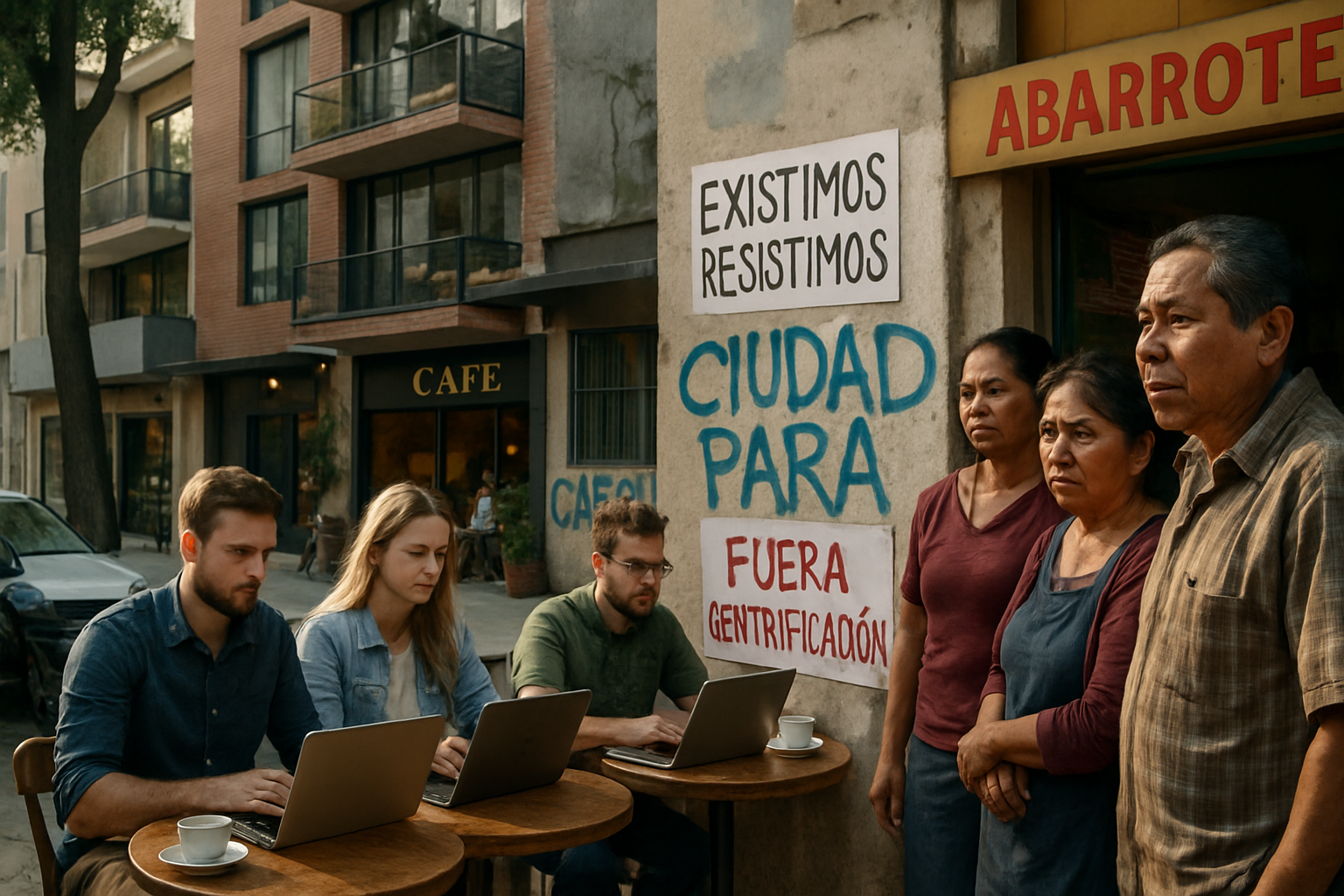
Growing tensions between digital nomads and local residents in Mexico City have reached a boiling point, with "gringo go home" sentiment rising across the capital's most gentrified neighborhoods as international remote workers transform once-affordable communities.
The influx of foreign digital nomads, primarily from the United States and Canada, has dramatically altered the social and economic fabric of Mexico City's trendy neighborhoods like La Condesa and Roma Norte. What began as a trickle during the COVID-19 pandemic has become a flood, creating unprecedented housing pressures and cultural friction.
The Numbers Behind the Displacement
Maria Moreno Carranco, an urban studies professor who has lived in La Condesa for more than 20 years, has witnessed firsthand the neighborhood's transformation. According to local housing data, rental prices in Roma Norte and La Condesa have increased by an estimated 30-40% over the past three years, with some prime locations seeing even steeper rises.
"We're seeing families who have lived here for generations being priced out by people who work remotely for companies that pay in dollars," Carranco explained. "The economic disparity is creating social tensions that didn't exist before."
The phenomenon isn't unique to Mexico City. Across Latin America, popular digital nomad destinations are grappling with similar challenges. However, Mexico's proximity to the United States and favorable exchange rates have made it particularly attractive to remote workers seeking affordable living while maintaining North American salaries.
Global Context of Remote Work Migration
The digital nomad trend gained significant momentum during the pandemic, as companies embraced remote work policies. Recent data from the Netherlands shows that remote work levels have stabilized across Europe, with 80% of Dutch companies allowing work from home arrangements. This normalization of remote work has enabled unprecedented geographic mobility for knowledge workers.
"The challenge is that many digital nomads bring purchasing power that local salaries simply cannot compete with."
— Maria Moreno Carranco, Urban Studies Professor
European markets have shown similar patterns, with some cities implementing policies to address housing pressures created by international remote workers. Spain has moved to ban social media access for under-16s partly due to concerns about digital culture's impact on local communities, while other European nations are exploring foreign investment restrictions on residential properties.
The Infrastructure Strain
Beyond housing costs, Mexico City's infrastructure faces mounting pressure. The capital recently extended Phase I atmospheric contingency measures due to dangerous air quality levels, affecting more than 21 million residents. The influx of new residents, many with different consumption patterns and lifestyle expectations, has added complexity to urban planning challenges.
Public services designed for a certain population density and income level are being stretched thin. Local hospitals, schools, and transportation systems must adapt to serve both traditional residents and an international community with different needs and expectations.
Cultural and Economic Tensions
The cultural impact extends beyond economics. Traditional Mexican businesses that have served local communities for decades find themselves competing with trendy cafes, co-working spaces, and restaurants catering to international tastes and budgets.
Local advocates argue that the transformation threatens the authentic character of historic neighborhoods. Street art expressing "gringo go home" sentiments has appeared throughout Roma Norte and La Condesa, reflecting growing resentment among some residents.

Regional Housing Crisis Patterns
Mexico City's situation reflects broader global housing challenges. Recent analysis shows construction industries worldwide face negative profit margins due to rising material costs, creating supply constraints that exacerbate housing shortages. Memory chip shortages affecting smart building technologies have further complicated new development projects.
European cities are implementing coordinated responses to similar pressures. Croatia is targeting 600,000 empty homes for affordable rental conversion, while Cyprus has advanced foreign real estate restrictions. Greece is analyzing regional price variations between major metropolitan areas to develop targeted interventions.
Government Response and Policy Challenges
Mexican authorities face a complex balancing act. Foreign residents contribute significantly to the local economy through spending and taxes, but their presence creates social tensions and housing displacement that affect Mexican citizens' quality of life.
The federal government has shown mixed signals on the issue. While President Claudia Sheinbaum's administration has maintained policies welcoming foreign investment and residents, local Mexico City authorities are beginning to explore measures to protect long-term residents from displacement.
The Broader Migration Debate
The digital nomad issue intersects with larger migration and development debates across Latin America. Recent developments include Paraguay's innovative mobile documentation program for regularizing immigrant status and Mexico's ongoing challenges with gender-based violence against migrant populations in transit.
These parallel migration pressures create additional complexity for policymakers trying to address both inbound and outbound population movements while maintaining economic growth and social stability.
International Perspectives
Other countries facing similar challenges offer potential models for Mexico. Portugal recently cancelled 6,765 of 19,000 local accommodation licenses in Lisbon, reclaiming residential stock from short-term rentals. This represents a 40% reduction in licenses for inactive properties, demonstrating aggressive policy intervention to address housing displacement.
Spain has launched public-private residential models, while Monaco continues to serve ultra-high-net-worth individuals through luxury real estate markets that function separately from local housing needs. These diverse approaches provide different templates for managing international resident populations.
Looking Forward: Sustainable Solutions
Urban planning experts suggest that sustainable solutions require careful balance between economic benefits and community protection. Technology integration, including smart city systems and digital infrastructure improvements, could help optimize resource distribution and urban planning to accommodate population changes more effectively.
Success requires locally-adapted strategies that incorporate community input, environmental considerations, and economic development needs. Policy predictability becomes increasingly important as traditional economic indicators prove insufficient for managing rapid demographic and economic changes.
"We need solutions that allow Mexico City to benefit from international residents while protecting the communities that make our neighborhoods special in the first place."
— Community Organizer, Roma Norte Residents Association
The challenge extends beyond Mexico City to encompass broader questions about global mobility, economic inequality, and community sustainability in an interconnected world. How cities manage these tensions may determine whether international remote work becomes a tool for mutual prosperity or a source of deepening social division.
The Path Ahead
As Mexico City grapples with these tensions, the outcome will likely influence policy approaches across Latin America and other emerging digital nomad destinations. The city's response to the "gringo go home" sentiment will test whether rapidly globalizing urban centers can maintain their authentic character while adapting to 21st-century economic realities.
The situation demands innovative solutions that go beyond traditional housing policy to address cultural preservation, economic equity, and sustainable urban development. Mexico City's handling of this challenge may provide a template for other cities facing similar pressures from international remote work migration.
Ultimately, the future of Mexico City's neighborhoods depends on finding ways to harness the economic benefits of international residents while ensuring that longtime communities can afford to remain in the places they call home.