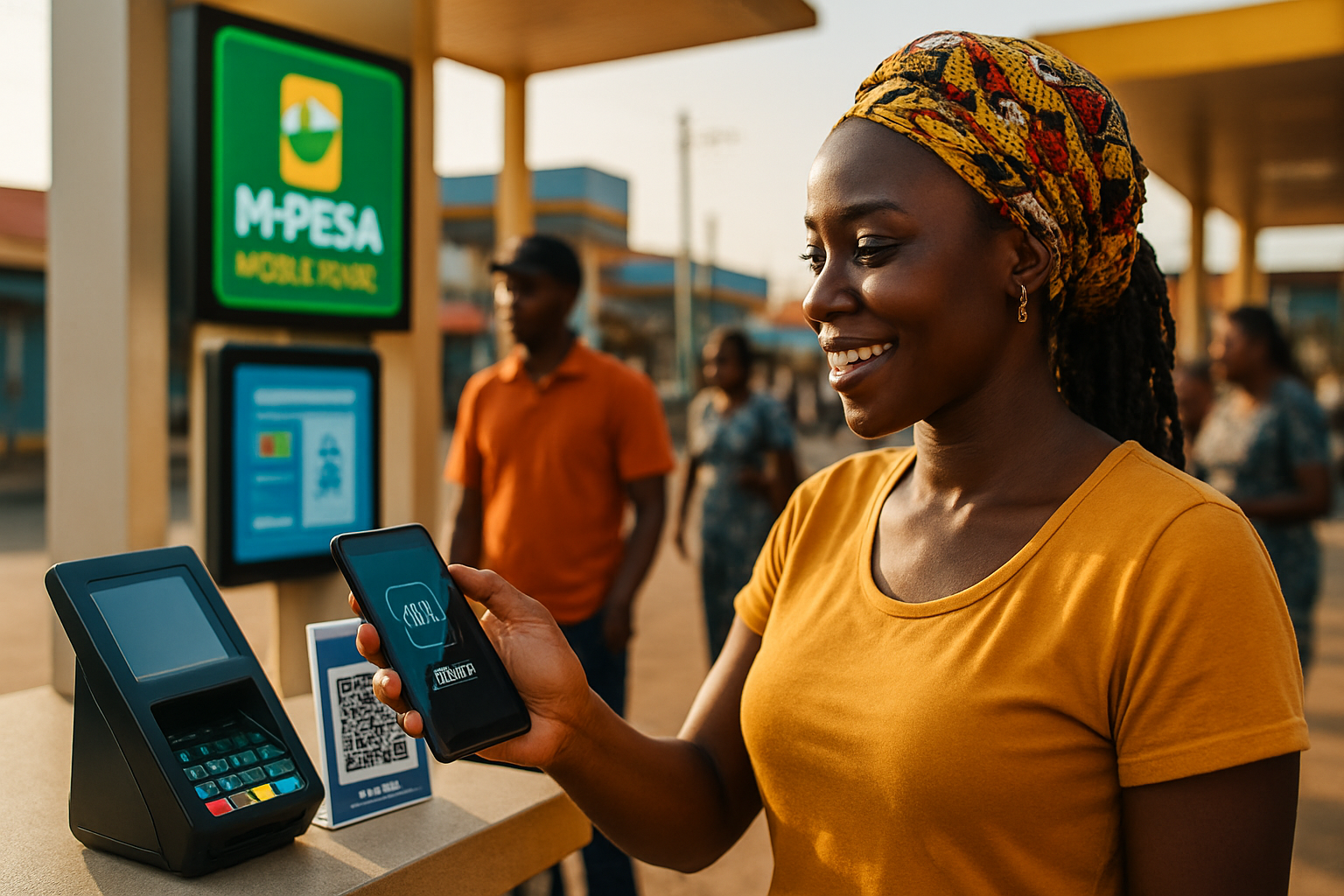
Africa's digital payment revolution is accelerating at unprecedented speed, with Nigeria's fuel sector recording 43% of sales through digital transactions as innovative platforms reshape economic accessibility across the continent.
A groundbreaking study by Moniepoint reveals that digital payments now account for nearly half of all fuel sales in Nigeria, representing a seismic shift in how Africa's largest economy conducts business. This transformation goes far beyond mere convenience, solving critical liquidity issues for fuel stations through same-day settlements that have revolutionized cash flow management for businesses across the nation.
The digital payment surge reflects a broader continental trend toward financial inclusion that builds upon Africa's pioneering mobile money foundation. From Kenya's M-Pesa model to Zimbabwe's innovative blockchain integration, African nations are not merely adopting existing financial technologies—they are creating entirely new paradigms that serve as global templates for emerging markets.
Nigeria Emerges as Continental Digital Leader
The Moniepoint study illuminates how digital payments have become integral to Nigeria's energy sector, with fuel stations benefiting from immediate settlement processes that eliminate traditional banking delays. This development represents a critical advancement for an economy where liquidity constraints have historically hampered business operations, particularly in sectors requiring high-volume cash transactions.
Beyond the private sector transformation, Nigerian state governments are implementing comprehensive digital economy strategies. Zamfara State has established the State Information Technology Development Agency (ZITDA), marking what officials describe as record-breaking progress in digitization under Governor Dauda Lawal's administration. Executive Secretary Habib Gajam emphasized how digital transformation has empowered citizens through enhanced access to information technology services and streamlined government operations.
The Zamfara initiative exemplifies how Nigerian states are moving beyond basic digitization toward comprehensive digital economies. ZITDA's establishment represents a strategic approach to technology integration that encompasses both citizen services and economic development, creating frameworks that support local innovation while connecting communities to broader digital networks.
Continental Context and Global Implications
Nigeria's digital payment evolution occurs within a remarkable continental transformation documented across multiple African nations. Recent developments include Guinea's launch of the Toullel platform by Standard Univers Services, creating proximity services marketplaces that formalize previously informal economic networks. Meanwhile, Egypt's Financial Regulatory Authority authorized securities brokerage firms to market services through electronic payment applications for the first time, democratizing investment access through mobile technology.
This coordinated advancement demonstrates sophisticated regulatory approaches that balance innovation with consumer protection. African governments increasingly recognize financial technology as critical infrastructure rather than optional enhancement, creating environments where digital payments can flourish while maintaining security standards and protecting vulnerable populations.
"Digital transformation has empowered Zamfara citizens through information technology, demonstrating our capacity for leading practical fintech solutions."
— Habib Gajam, Executive Secretary, ZITDA
The timing of these developments proves particularly significant given global cryptocurrency market turmoil. While Bitcoin has crashed 50% from its October 2025 peak of $126,199, African digital payment systems focusing on practical fiat integration and mobile accessibility have maintained stability and continued growth. Zimbabwe's Ndarama platform exemplifies this approach, offering programmable collateral-to-fiat systems that bridge tokenized real-world assets directly to traditional currency without cryptocurrency complexity.
Infrastructure and Innovation Convergence
The success of African digital payments stems from strategic infrastructure development that addresses local challenges while embracing global connectivity. Nigeria's achievement of 43% digital fuel sales demonstrates how payment technology can solve specific business problems—in this case, liquidity and settlement delays—while contributing to broader economic digitization.
This practical approach extends across the continent. South Korea and Indonesia's planned April 2026 launch of cross-border QR code payment systems provides templates that African nations can adapt for regional integration. The African Continental Free Trade Agreement (AfCFTA) creates additional opportunities for cross-border digital payment systems that could facilitate trade flows worth trillions of dollars.
Technology integration in African digital payments emphasizes accessibility and reliability over complexity. Unlike volatile cryptocurrency markets, African platforms focus on stable fiat integration, mobile-first design, and solutions for low-connectivity environments. This approach has proven more sustainable than speculative digital assets, offering practical value for users while building trust in digital financial systems.
Regional Leadership and Economic Impact
The emergence of ride-hailing platform inDrive as the world's second-most downloaded ride-hailing app for four consecutive years illustrates how African-focused digital solutions achieve global success. InDrive's peer-to-peer pricing model and expansion into super app functionality demonstrates the innovation potential when technology platforms address local market needs while maintaining global scalability.
African digital payment growth occurs amid broader regional cooperation initiatives. Recent developments include enhanced digital payment infrastructure in Azerbaijan (C2B payments projected to nearly double by 2027), coordinated fintech regulation across European markets, and strategic partnerships between African nations and established financial technology companies.
The economic implications extend far beyond transaction convenience. Digital payments enable small business growth by reducing transaction costs, improving cash flow management, and providing access to financial services previously available only to large enterprises. For fuel stations in Nigeria, same-day digital settlements represent the difference between operational viability and chronic cash flow challenges.
Future Trajectories and Global Integration
Africa's digital payment evolution positions the continent as a global leader in practical financial technology implementation. Unlike markets focused on speculative digital assets, African systems emphasize real-world utility, financial inclusion, and economic development. This approach has proven more resilient during global cryptocurrency volatility while delivering tangible benefits to users and businesses.
The success factors include government support for digital infrastructure, private sector innovation responding to local needs, and regional cooperation frameworks that enable cross-border integration. Nigeria's experience with fuel sector digitization provides a template for other sectors and countries seeking to implement practical digital payment solutions.
Looking forward, African digital payment systems are positioned to benefit from increasing global demand for stable, reliable financial technology. As traditional financial markets seek alternatives to volatile cryptocurrency systems, African models of fiat-integrated, mobile-accessible payment platforms offer proven approaches that balance innovation with stability.
Challenges and Opportunities Ahead
Despite remarkable progress, African digital payment expansion faces implementation challenges including infrastructure limitations in rural areas, digital literacy requirements, and cybersecurity concerns. However, these challenges are being addressed through comprehensive strategies that combine technology deployment with education and security enhancement.
The opportunity for continued growth remains substantial. With Africa holding significant untapped potential for digital payment adoption, successful models like Nigeria's fuel sector integration can be scaled across industries and borders. Regional frameworks like AfCFTA provide additional mechanisms for cross-border digital payment systems that could transform continental commerce.
International cooperation offers additional growth vectors. Recent partnerships between African financial technology companies and global payment processors demonstrate how local innovation can achieve international reach while maintaining focus on African market needs and preferences.
As global financial markets grapple with cryptocurrency volatility and regulatory uncertainty, Africa's practical approach to digital payments offers stability and proven results. The continent's emphasis on real-world utility over speculation positions African digital payment systems as models for sustainable financial technology development worldwide.