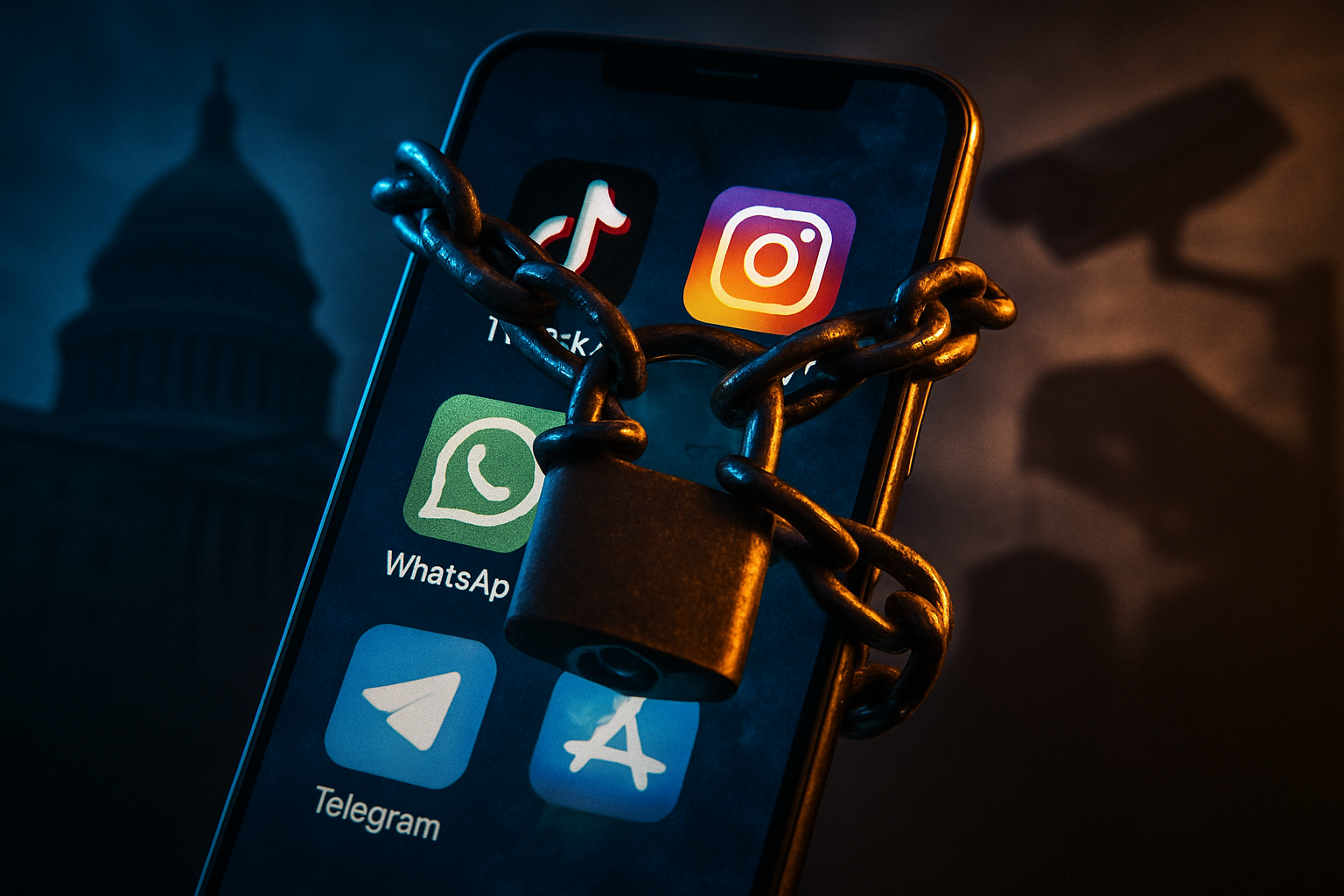
As 72,000 Austrian students voluntarily disconnect from their smartphones for three weeks and Pavel Durov announces Telegram's adaptation to Russian blocking attempts, April 2026 has emerged as a critical inflection point in the global battle over digital privacy, technology control, and the future of online freedom.
Planet News has conducted an extensive investigation into four interconnected developments that reveal the escalating tensions between personal digital autonomy, government control, and the mental health crisis affecting an entire generation of young people worldwide.
Austria's Groundbreaking Digital Detox Experiment
In what researchers are calling the most significant controlled study of youth smartphone addiction to date, 72,000 Austrian students participated in a three-week "smartphone fasting" experiment that has provided crucial data on digital dependency among young people. The results, according to parents interviewed by Der Standard, were nothing short of transformative.
"Our daughter drew for hours instead of scrolling," one parent reported, highlighting the dramatic behavioral changes observed during the digital detox period. The experiment, backed by research from Sigmund Freud Private University Vienna, demonstrated that controlled digital abstinence allows for neurological reset from constant stimulation.
The Austrian study builds on mounting scientific evidence that has become the foundation for global regulatory action. Dr. Ran Barzilay's research at the University of Pennsylvania reveals that 96% of children aged 10-15 use social media, with 70% experiencing harmful content exposure and over 50% encountering cyberbullying. Perhaps most alarming, early smartphone exposure before age 5 causes persistent sleep disorders, cognitive decline, and weight problems that extend into adulthood.
Russia's Digital Sovereignty Campaign Intensifies
While Austria explored voluntary digital wellness, Russia has taken a dramatically different approach through systematic control of digital communications. Pavel Durov, founder of Telegram, announced that the platform will "adapt to blocking conditions in Russia," marking a significant escalation in Moscow's digital sovereignty campaign.
Russian authorities have implemented what experts describe as a "degradation strategy" against international messaging platforms - a sophisticated approach that doubles response times, creates selective regional disruptions, and throttles service quality without triggering the complete blocking that typically leads to widespread circumvention efforts.
The targeting is particularly severe in remote regions such as Nenets, Magadan, and Sakhalin, where limited infrastructure makes users more vulnerable to connectivity manipulation. This represents the fourth major platform restriction implemented by Roskomnadzor in just six months, suggesting a testing phase before potential complete blocking after September elections.
Simultaneously, Russia has experienced a major failure in its digital payment infrastructure. The Vendista contactless payment system, used by small and medium businesses across the country, suffered a massive outage affecting terminals in shops, cafes, restaurants, beauty salons, hotels, gas stations, and parking facilities. Technical support confirmed the disruption but stated that restoration timeframes remain "unknown," highlighting the fragility of centralized digital systems.
Democratic Resistance and Civil Society Response
The authoritarian approach to digital control has not gone unchallenged. In Moscow, dozens of citizens gathered at the presidential administration offices to submit formal appeals against messenger blocking and mobile internet disconnection. The mass petition effort, announced by the "Rассвет" (Dawn) party, drew prominent political figures including Boris Nadezhdin and Yulia Galyamina.
"People need to understand that there are safe enough ways to express their attitude toward blocking," Galyamina explained to Sotavision, emphasizing the importance of legal channels for digital rights advocacy. This grassroots resistance demonstrates that even in restrictive environments, civil society continues to push back against digital censorship.
The contrast with democratic approaches is stark. In Latvia, coverage of Telegram's adaptation to Russian restrictions has focused on the platform's technical resilience rather than celebrating state control, reflecting different values regarding digital rights and platform independence.
The Global Mental Health Crisis Driving Policy
These developments occur within the context of what researchers have termed the "Therapeutic Revolution of 2026" - a global paradigm shift from crisis-response to prevention-first mental healthcare. The Austrian smartphone experiment provides crucial real-world data supporting this transformation.
Neuroscience research reveals that children's reward systems are extremely vulnerable to smartphone stimulation while impulse control remains underdeveloped until age 25, creating what experts describe as a "perfect storm" for addiction. Dopamine hits from likes, comments, and shares interfere with the brain's natural motivation systems, making traditional learning seem less engaging.
The University of Macau has provided definitive proof that short-form video scrolling damages cognitive development, causing social anxiety and academic disengagement. Children spending 4+ hours daily on screens face a 61% increased risk of depression through sleep disruption and decreased physical activity.
International Coordination and Platform Accountability
The Austrian and Russian cases are part of a broader global reckoning with platform power. Australia has successfully eliminated 4.7 million teen accounts through its under-16 social media ban, proving technical feasibility. Spain has implemented the world's first criminal executive liability framework, creating imprisonment risks for tech executives.
European coordination across Greece, France, Denmark, Austria, and the UK prevents "jurisdictional shopping" where platforms relocate to avoid oversight. The European Commission has found TikTok in violation of the Digital Services Act for "addictive design" features including unlimited scrolling, autoplay, and personalized recommendations, facing 6% of global revenue in penalties - potentially billions of dollars.
Industry Resistance and Market Impact
Tech industry resistance has escalated dramatically, with Elon Musk characterizing European measures as "fascist totalitarian" and Pavel Durov warning of "surveillance state" implications. The "SaaSpocalypse" of February 2026 eliminated hundreds of billions in tech market capitalization amid regulatory uncertainty.
However, the jury rejection of corporate self-regulation arguments suggests a fundamental shift in legal and public opinion toward platform accountability. Meta and Google face historic $381 million in combined damages for child harm and social media addiction, representing the end of Big Tech legal immunity.
Alternative Approaches and Philosophical Divides
Not all nations have chosen regulatory enforcement. Malaysia emphasizes parental responsibility through digital safety campaigns, with Communications Minister Datuk Fahmi Fadzil stressing that parents must control device access rather than relying on "digital babysitters." Oman has implemented "Smart tech, safe choices" education focusing on conscious awareness rather than governmental restrictions.
These alternative approaches represent a fundamental philosophical divide between government intervention and individual agency in digital governance. The success or failure of different models will likely influence global policy development for decades to come.
Implementation Challenges and Privacy Concerns
Both regulatory and authoritarian approaches face significant technical challenges. Age verification systems require biometric authentication, creating comprehensive databases that privacy advocates warn could enable broader government monitoring beyond child protection. The Netherlands' Odido breach affecting 6.2 million customers demonstrates the vulnerability of such centralized data repositories.
A global semiconductor crisis with sixfold memory chip price increases is constraining verification infrastructure until 2027, creating a "critical vulnerability window" that criminals are actively exploiting. Cross-border enforcement requires unprecedented international cooperation, raising questions about sovereignty and digital rights.
Looking Forward: April 2026 as a Turning Point
The convergence of Austria's digital wellness experiment, Russia's platform control campaign, industry legal defeats, and global regulatory coordination marks April 2026 as a critical juncture for digital governance. The decisions made in the coming months will establish precedents affecting millions of children globally and determine whether technology serves human flourishing or becomes a tool for control beyond democratic accountability.
The Austrian experiment offers a middle path between regulatory enforcement and educational intervention, demonstrating that young people can develop healthier technology relationships when given alternatives and support. Meanwhile, the Russian approach serves as a warning about how digital control mechanisms ostensibly designed for security can be weaponized against civil society.
As parliamentary approval is required across European nations throughout 2026 for coordinated implementation of new regulations, the stakes could not be higher. Success in establishing platform accountability could trigger worldwide adoption of criminal liability frameworks. Failure might strengthen anti-regulation arguments and condemn another generation to neurological damage for corporate profit.
The fundamental question facing democratic societies is whether platforms designed to maximize engagement can coexist with the healthy development of young minds. The answer will shape not only technology governance but the very conditions that enable communities to thrive for generations to come.