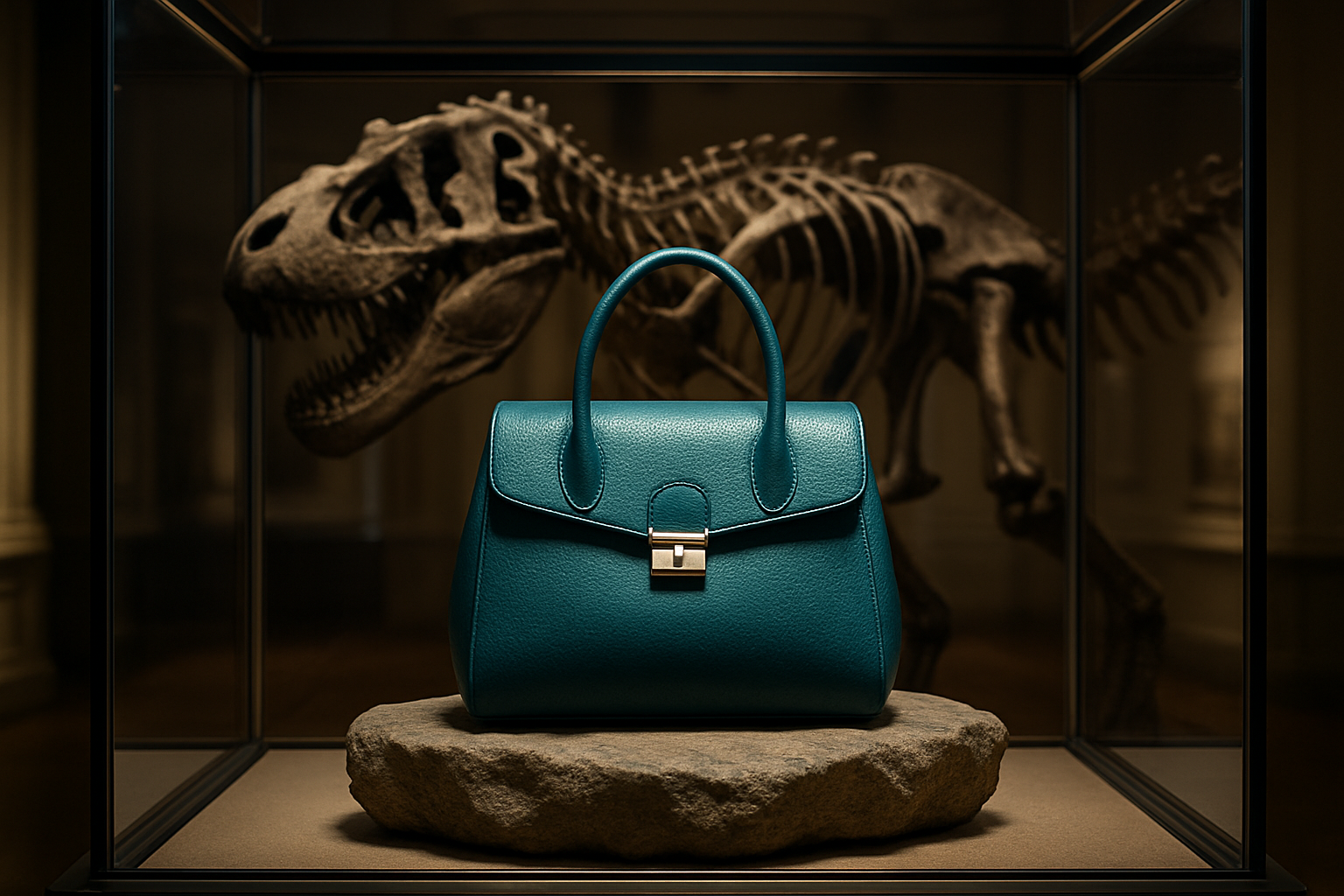
Scientists and designers have unveiled an extraordinary teal-colored handbag made from collagen derived from Tyrannosaurus rex fossils, marking a revolutionary breakthrough in sustainable luxury goods and paleontological applications that could transform both fashion and scientific research.
The unprecedented creation, currently on display at Amsterdam's Art Zoo museum until May 11, represents the culmination of groundbreaking research that successfully extracted ancient protein fragments from dinosaur remains and transformed them into high-quality leather. The handbag will subsequently be auctioned with a starting price exceeding half a million dollars, reflecting both its scientific significance and luxury status.
Revolutionary Scientific Process
"There were a lot of technical challenges," acknowledged Thomas Mitchell, CEO of The Organoid Company, one of three companies behind the innovative "T. rex leather" project. The complex process involved extracting ancient protein fragments from Tyrannosaurus rex fossils from the United States and inserting them into unidentified animal cells to produce collagen that was subsequently processed into leather.
This scientific achievement represents a fundamental departure from traditional leather production methods, demonstrating how paleontological research can intersect with modern biotechnology to create entirely new materials. The successful transformation of 65-million-year-old proteins into contemporary luxury goods showcases the potential for laboratory-grown alternatives in high-end fashion.
"This breakthrough demonstrates the value of laboratory-grown leather and opens unprecedented possibilities for sustainable luxury materials."
— Thomas Mitchell, CEO of The Organoid Company
Context in Sustainable Fashion Revolution
This dinosaur collagen innovation emerges within the broader "Great Fashion Renaissance of 2026," characterized by unprecedented industry transformation toward sustainable practices and authentic cultural expression. The breakthrough aligns with documented trends including revolutionary mycelium leather alternatives using fungi-derived materials, creating 100% biodegradable products identical to traditional leather.
The sustainable fashion revolution has gained significant momentum throughout 2026, with major developments including Ireland's "Saol Arís" circular economy initiative transforming preloved textiles into contemporary fashion, and Germany's billion-euro second-hand fashion market demonstrating shifting consumer preferences toward sustainable consumption.
Technology-Tradition Synthesis
The dinosaur leather project exemplifies the sophisticated integration of cutting-edge biotechnology with traditional craftsmanship that defines successful 2026 fashion innovations. This approach enhances rather than replaces human creativity, offering solutions to environmental challenges while maintaining the luxury quality and aesthetic standards expected in high-end fashion.
Genomic engineering firm Organoid collaborated with creative agency VML to realize this ambitious project, demonstrating how scientific research can successfully partner with design expertise to create products that serve both practical and aesthetic purposes.
Museum Display and Public Engagement
The unique handbag's presentation at Amsterdam's Art Zoo museum reflects the growing recognition of fashion as cultural artifact worthy of serious academic and public attention. Displayed dramatically on a rock within a protective cage beneath a replica Tyrannosaurus rex skeleton, the exhibition emphasizes both the scientific achievement and artistic merit of the piece.
This museum context positions the handbag not merely as luxury commodity but as educational tool demonstrating the intersection of paleontology, biotechnology, and design. The exhibition format allows public engagement with complex scientific processes while showcasing the aesthetic possibilities of laboratory-grown materials.
Economic and Industry Implications
The project's anticipated auction price of over half a million dollars reflects both the rarity of the materials and the significant research investment required for development. However, the broader implications extend beyond individual luxury purchases to potential transformation of the entire leather industry.
Laboratory-grown leather alternatives could address multiple challenges facing traditional leather production, including environmental impact, animal welfare concerns, and supply chain sustainability. The successful demonstration of dinosaur collagen's viability provides proof of concept for scaling similar biotechnology approaches to more readily available protein sources.
Scientific Research Applications
Beyond fashion applications, the successful extraction and processing of ancient proteins offers significant implications for paleontological research and biotechnology development. The techniques developed for creating dinosaur leather could advance understanding of protein preservation, cellular engineering, and biomaterial development.
This interdisciplinary collaboration between paleontology and fashion design demonstrates how scientific research can find unexpected commercial applications while advancing knowledge in multiple fields simultaneously.
Global Sustainable Fashion Context
The dinosaur collagen breakthrough occurs within a broader context of fashion industry transformation emphasizing environmental consciousness, technological innovation, and authentic cultural expression. Major brands worldwide are increasingly shifting toward sustainable materials and production methods, creating market demand for innovative alternatives like laboratory-grown leather.
International cooperation in sustainable fashion development has accelerated throughout 2026, with countries sharing expertise in circular economy principles, digital technologies, and traditional craft preservation. This collaborative approach enhances innovation while maintaining cultural authenticity in global fashion markets.
Future Implications and Scaling Potential
While the dinosaur collagen handbag remains a unique prototype, the successful demonstration of ancient protein processing opens possibilities for developing similar techniques using more abundant protein sources. Future research could explore whether laboratory-grown leather production can be scaled economically while maintaining quality standards.
The project establishes important precedents for cross-industry collaboration between scientific research institutions and luxury fashion brands, suggesting potential for additional partnerships that could accelerate sustainable material development.
Consumer and Market Response
The project's reception reflects growing consumer appreciation for products that combine innovation, sustainability, and cultural significance. The willingness to invest substantial sums in experimental luxury goods demonstrates market readiness for alternatives to traditional production methods, particularly when they offer both environmental benefits and compelling narratives.
This consumer enthusiasm for scientifically innovative fashion products suggests strong market potential for additional laboratory-grown luxury materials, encouraging further investment in biotechnology research for fashion applications.
The dinosaur collagen handbag represents more than scientific curiosity or luxury accessory—it embodies the future of sustainable fashion where ancient discoveries inform contemporary innovation. As the fashion industry continues its transformation toward environmental responsibility and technological integration, this breakthrough provides both inspiration and practical demonstration of possibilities when scientific research meets creative vision in service of sustainable luxury.