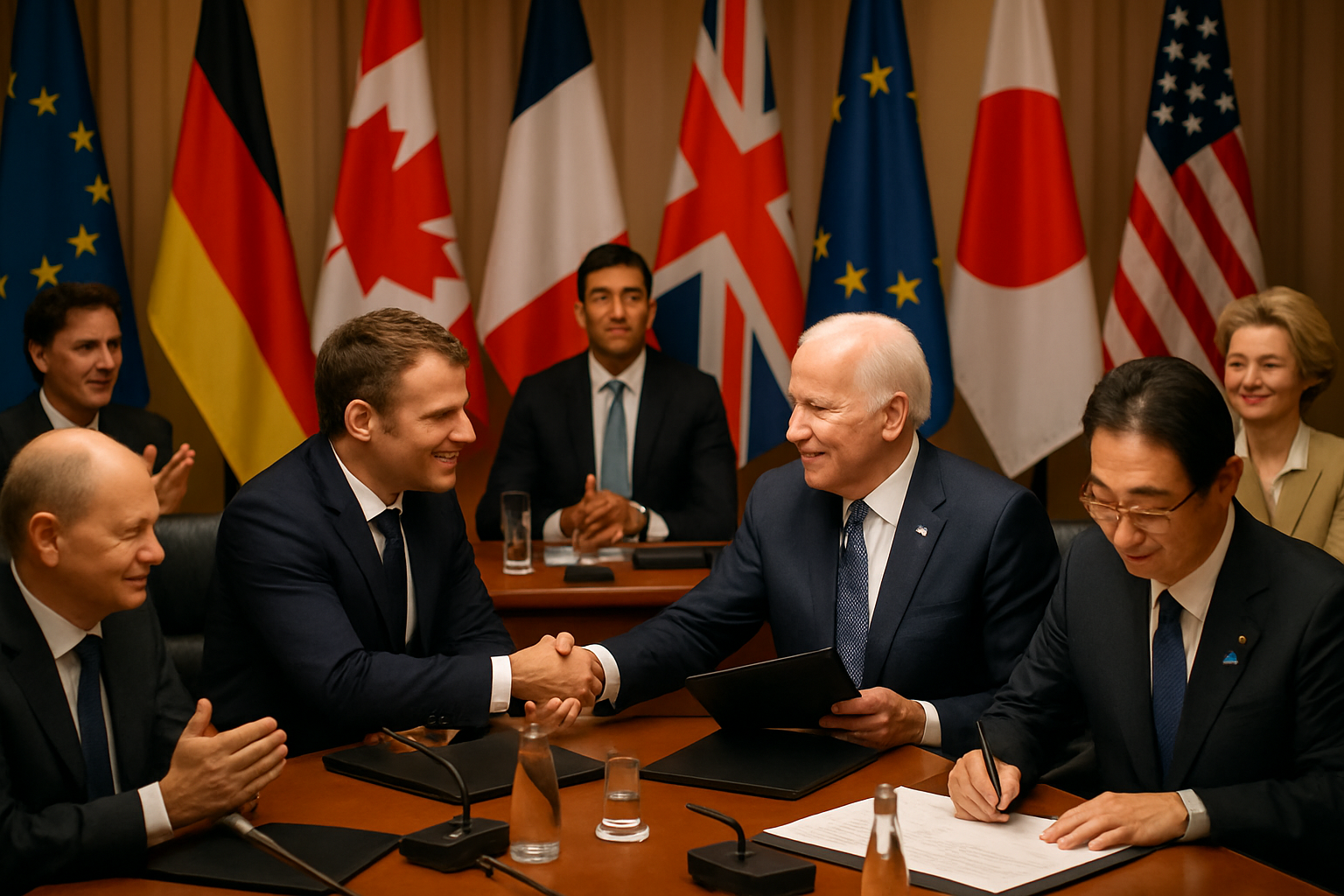
International diplomatic relations experienced significant momentum in April 2026 as multiple nations pursued strategic partnerships and cooperation frameworks, demonstrating adaptive approaches to contemporary global challenges while strengthening multilateral coordination mechanisms.
Armenia-NATO Partnership Agenda Advances
Armenian Prime Minister Nikol Pashinyan conducted substantive discussions with Kevin Hamilton, NATO's Secretary General's Special Representative for the Caucasus and Central Asia, during high-level meetings in Yerevan. The talks focused on expanding the Armenia-NATO partnership agenda, marking continued diversification of Armenia's foreign policy engagement beyond traditional regional frameworks.
These developments align with Armenia's broader diplomatic realignment strategy, as evidenced by concurrent planning for upcoming European Political Community and Armenia-EU summits scheduled for May 2026 in Yerevan. Foreign Ministers Ararat Mirzoyan and Belgium's Maxime Prévot coordinated via telephone regarding agenda preparation, with particular emphasis on strengthening economic ties between Armenia and European partners.
France-Poland Strategic Partnership Deepening
Presidents Emmanuel Macron and Donald Tusk utilized a bilateral summit in Poland to inject fresh momentum into defense, industrial, and political cooperation between France and Poland. The meeting represented a significant step in deepening strategic partnership as European nations recalibrate security architectures amid evolving global challenges.
"France and Poland have stepped up efforts to deepen their strategic partnership through enhanced defense cooperation and industrial collaboration."
— Diplomatic Sources, Franco-Polish Summit
This development reflects broader European strategic autonomy initiatives, where member nations are strengthening bilateral defense ties while maintaining NATO commitments. The cooperation spans multiple sectors including advanced technology sharing, joint industrial projects, and coordinated security planning.
Estonia-Hungary Bilateral Relations Enhancement
Estonian Foreign Minister Margus Tsahkna expressed optimism for strengthened bilateral relations with Hungary following productive telephone consultations with Hungary's incoming foreign minister. The diplomatic engagement signals Estonia's commitment to maintaining constructive relationships across Europe despite varying policy approaches among EU member states.
Estonia's diplomatic leadership has been particularly active in regional cooperation initiatives, reflecting its strategic positioning as a bridge between Nordic and Baltic cooperation frameworks. The country's technological advancement and renewable energy achievements provide substantial foundations for enhanced bilateral partnerships.
Azerbaijan-EU Relations and Regional Positioning
The EU Council's scheduled discussions on Azerbaijan-Armenia relations underscore the region's strategic importance in European policy considerations. Azerbaijan has positioned itself as a crucial energy coordinator and diplomatic bridge connecting Europe, Asia, and the South Caucasus, building on substantial infrastructure investments and regional cooperation initiatives.
Recent developments highlight Azerbaijan's role as a regional stabilizer, hosting diverse international visitors and maintaining diplomatic relationships across traditional alliance lines. The country's energy infrastructure, including significant BP investments in the Shah Deniz project, positions it as an important alternative to traditional energy supply routes.
Kuwait's Diplomatic Engagement Expansion
His Highness Sheikh Meshal Al-Ahmad Al-Jaber Al-Sabah, Amir of Kuwait, received credentials from ambassadors representing multiple nations including Bhutan, Brunei Darussalam, India, China, and Thailand. This ceremony demonstrated Kuwait's commitment to maintaining and expanding diplomatic relationships across diverse regions, reinforcing its role as a diplomatic hub in the Gulf region.
The credential presentation ceremony reflects Kuwait's strategic approach to international engagement, emphasizing relationship-building across Asia-Pacific nations while maintaining traditional partnerships. This diplomatic expansion occurs within broader regional cooperation frameworks addressing shared security and economic challenges.
21st-Century Diplomacy Innovation
These diplomatic developments collectively demonstrate significant innovation in contemporary international relations. Nations are pursuing bilateral partnerships, regional cooperation mechanisms, and issue-specific agreements that emphasize flexibility, pragmatism, and mutual benefit over rigid ideological alignments.
The integration of economic considerations with political objectives represents a sophisticated approach to modern diplomacy. Energy cooperation, trade development, and security coordination are pursued simultaneously, creating comprehensive partnership frameworks that address multiple national interests.
Regional Stability and Security Architecture
Current diplomatic initiatives contribute to broader regional stability efforts by creating additional dialogue channels and cooperation frameworks. In regions experiencing tensions, such as the South Caucasus, every diplomatic bridge enhances conflict resolution possibilities and provides alternatives to military solutions.
The emphasis on middle-power diplomacy emergence reflects changing global governance patterns where smaller and medium-sized nations achieve significant international influence through strategic excellence and authentic engagement, offering alternatives to traditional great-power dynamics while preserving coordination benefits.
Template-Setting Implications
Success of these bilateral and multilateral initiatives may influence broader international cooperation patterns, offering alternatives to traditional frameworks while maintaining institutional benefits. The diplomatic innovations demonstrate sophisticated toolkit adaptation for addressing contemporary challenges including climate change, technological disruption, and economic interdependence.
These developments provide practical templates that other nations can adapt to specific circumstances, demonstrating that effective 21st-century diplomacy requires both traditional state engagement and innovative approaches to humanitarian and economic cooperation.
Future Diplomatic Trajectories
The success of current initiatives will likely influence broader international cooperation patterns, offering models for sustained diplomatic relationships that balance strategic autonomy with alliance commitments. The focus on practical cooperation and mutual benefit suggests diplomatic evolution toward more sophisticated, flexible approaches to international relations.
As these partnerships mature, they may establish precedents for managing complex international relationships in an increasingly interconnected but politically diverse global environment. The emphasis on sustained commitment, authentic expression, and practical results provides framework for maintaining international cooperation while addressing contemporary governance challenges.