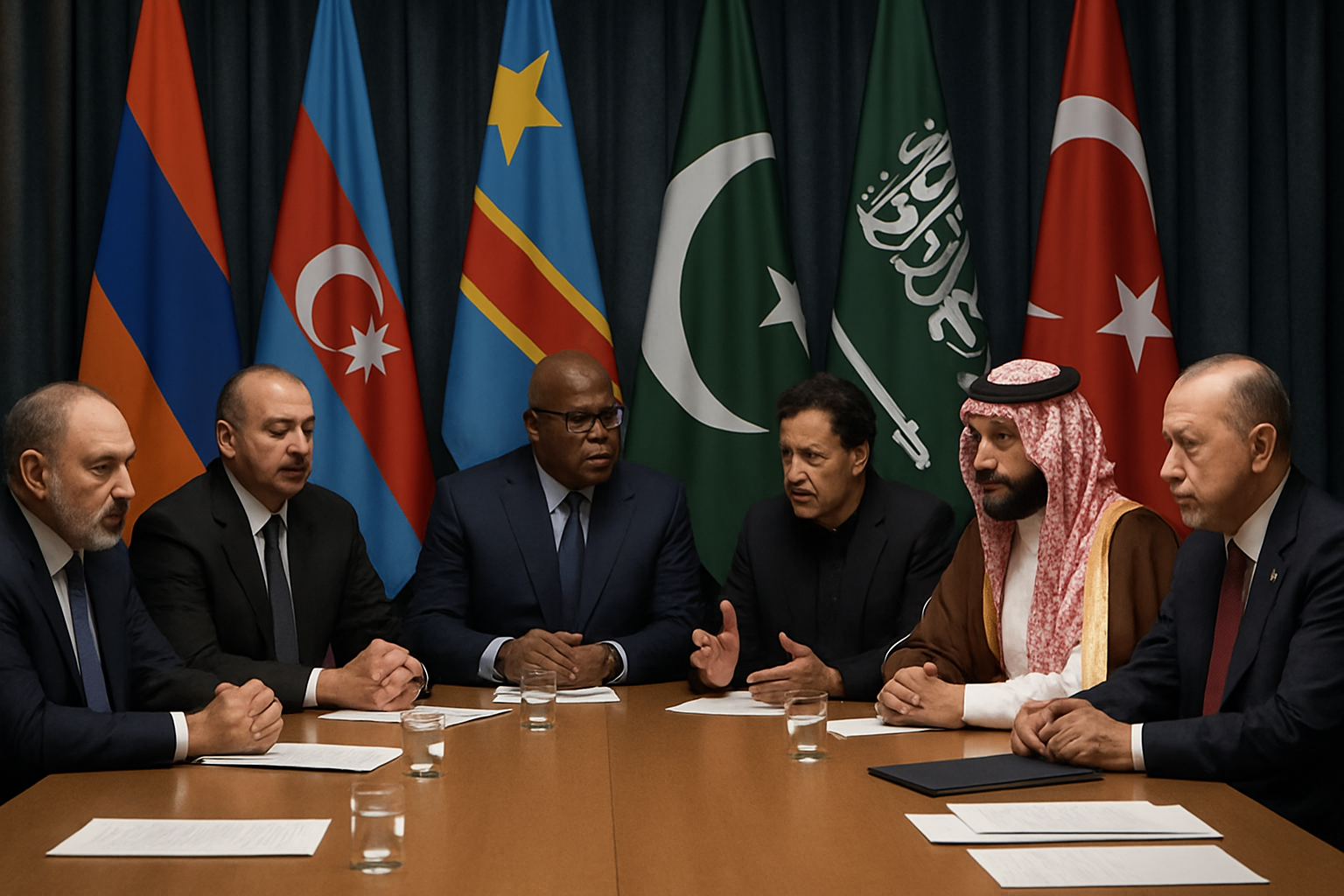
International diplomacy witnessed significant developments across multiple theaters in early April 2026, as nations pursued various diplomatic initiatives against the backdrop of ongoing regional tensions and the urgent need for innovative climate solutions.
Pakistan's Historic Climate Diplomacy Breakthrough
Pakistan achieved a landmark diplomatic victory by signing its first-ever bilateral carbon market agreement with Norway under Article 6.2 of the Paris Agreement, marking a pivotal moment in climate diplomacy and international cooperation. The memorandum of understanding, signed in Islamabad, formally brings Pakistan into the international carbon market, creating what officials describe as a "credible pathway for international cooperation and investment in Pakistan's climate priorities."
Federal Minister for Climate Change and Environmental Coordination, Musadik Malik, described the development as a "historic milestone," emphasizing Pakistan's transition "from policy preparation to practical implementation in carbon trading." The agreement is expected to unlock significant financial flows for climate action and sustainable development, positioning Pakistan as a key player in the global carbon market.
"This agreement creates a credible pathway for international cooperation and investment in Pakistan's climate priorities."
— Musadik Malik, Federal Minister for Climate Change
The timing of this breakthrough is particularly significant given Pakistan's recent emergence as a regional diplomatic mediator. Historical context from memory reveals Pakistan's crucial role in facilitating indirect US-Iran talks through a message relay system during the March 2026 Middle East crisis, demonstrating the country's growing diplomatic influence and its capacity to bridge international divides.
UK-Pakistan Strategic Dialogue Intensifies
British diplomatic engagement with Pakistan intensified with the visit of Ed Llewellyn, Director General (Political) at the Foreign, Commonwealth and Development Office, who reaffirmed the United Kingdom's commitment to Pakistan and regional stability. Accompanied by British High Commissioner Jane Marriott and senior mission officials, Llewellyn held key engagements with Pakistani officials focusing on regional and global challenges.
The British official particularly welcomed Pakistan's efforts to de-escalate tensions in the Middle East, emphasizing the importance of restraint and dialogue. This acknowledgment reflects Pakistan's emerging role as what European diplomatic sources have described as a "net regional stabilizer," capable of maintaining relationships across traditional alliance lines during crisis periods.
The discussions underscored deepening cooperation between the two countries on security, economic growth, and climate resilience, with particular emphasis on protecting civilian infrastructure amid ongoing regional instability. The UK's recognition of Pakistan's peace efforts comes at a time when the country has been actively mediating in multiple regional crises.
South Asian Regional Dynamics
Bangladesh marked its 55th Independence and National Day with a diplomatic reception hosted by the High Commission in Islamabad, drawing together diplomats and civil society representatives in a show of regional solidarity. The event, which brought together a "large and diverse gathering," highlighted the importance of strengthening bilateral ties between Bangladesh and Pakistan amid broader regional security challenges.
This diplomatic celebration takes on added significance given the historical context of regional tensions. Memory records indicate that Pakistan has been dealing with serious security challenges along its border with Afghanistan, including the most serious confrontation since the Taliban's 2021 return to power. The Pakistani military has been conducting operations against cross-border terrorism while simultaneously pursuing diplomatic solutions through faith-based mediation efforts led by Saudi Arabia, Qatar, and Turkey.
African Economic Cooperation Advances
In Central Africa, the Democratic Republic of Congo and Angola launched the third edition of their Economic Forum in Kinshasa, with Prime Minister Judith Suminwa Tuluka opening proceedings under the theme of efficiency and practical results. The forum represents a significant step toward transforming bilateral cooperation ambitions into concrete actions for cross-border trade development.
Suminwa emphasized the need for "tangible results" from the forum, reflecting a broader trend toward results-oriented diplomacy in regional cooperation. The DRC-Angola economic partnership demonstrates how neighboring African nations are prioritizing practical economic integration over symbolic agreements.
South Caucasus Diplomatic Movements
Regional diplomacy in the South Caucasus saw movement with Turkish Vice President Cevdet Yılmaz arriving in Azerbaijan on April 2, continuing the close diplomatic coordination between Ankara and Baku. This visit occurs within the context of broader regional realignments and Turkey's growing influence in post-Soviet spaces.
Meanwhile, tensions persist in Armenia's relationship with Russia, with allegations that Moscow seeks to influence upcoming Armenian elections through the emergence of pro-Russian leadership. This represents a continuation of Armenia's complex balancing act between traditional Russian influence and seeking greater independence in its foreign policy choices.
Middle East Diplomatic Coordination
Saudi Foreign Minister Prince Faisal bin Farhan engaged in high-level diplomatic consultation with UN Secretary-General António Guterres via telephone, discussing latest regional developments and their implications. The conversation reviewed international efforts to address current challenges, reflecting ongoing diplomatic coordination at the highest levels of international governance.
This consultation takes place against the backdrop of what UN Secretary-General Guterres has previously described as the "greatest test of multilateral cooperation in the modern era," referring to the complex crisis management challenges facing the international community. The Saudi-UN dialogue represents continued efforts to maintain diplomatic channels during periods of regional tension.
Environmental and Climate Dimensions
The Pakistan-Norway carbon market agreement represents more than bilateral cooperation; it exemplifies a new model of climate diplomacy that could influence international environmental governance. The agreement comes during what climate scientists describe as an unprecedented period of global warming, with January 2026 marking the 21st consecutive month of temperatures exceeding 1.5°C above pre-industrial levels.
This historic achievement in climate diplomacy occurs as nations worldwide seek innovative approaches to environmental challenges. The Pakistan-Norway partnership demonstrates how developing countries can engage with international climate mechanisms while addressing domestic development priorities, potentially serving as a template for other nations seeking similar agreements.
Strategic Implications and Regional Architecture
These diverse diplomatic initiatives collectively represent what observers describe as an evolution in 21st-century international relations. Pakistan's simultaneous engagement in climate diplomacy, regional mediation, and strategic partnerships with major powers demonstrates the emergence of middle-power diplomacy as a significant factor in global governance.
The historical context reveals Pakistan's transformation from a country acknowledging "diminished Afghanistan influence versus wealthier powers" to one capable of facilitating dialogue between major adversaries. This evolution reflects broader changes in international relations, where traditional alliance structures are being complemented by issue-specific partnerships and mediation networks.
Looking Forward
The diplomatic developments of early April 2026 suggest a maturing of regional diplomatic mechanisms and the emergence of new frameworks for international cooperation. From climate finance in Pakistan to economic integration in Central Africa, from South Asian reconciliation to Middle Eastern crisis management, these initiatives represent diverse approaches to contemporary governance challenges.
The success of these various diplomatic tracks will significantly influence the trajectory of international relations in the coming months. As nations navigate complex regional tensions while addressing global challenges like climate change and economic development, the innovations emerging from these diplomatic initiatives may provide templates for broader international cooperation mechanisms.
The convergence of these diplomatic activities in April 2026 underscores the interconnected nature of contemporary international challenges and the necessity for multifaceted diplomatic responses. Whether addressing climate change through innovative financial mechanisms or managing regional security through cultural and religious frameworks, these developments highlight diplomacy's evolving role in addressing 21st-century governance challenges.