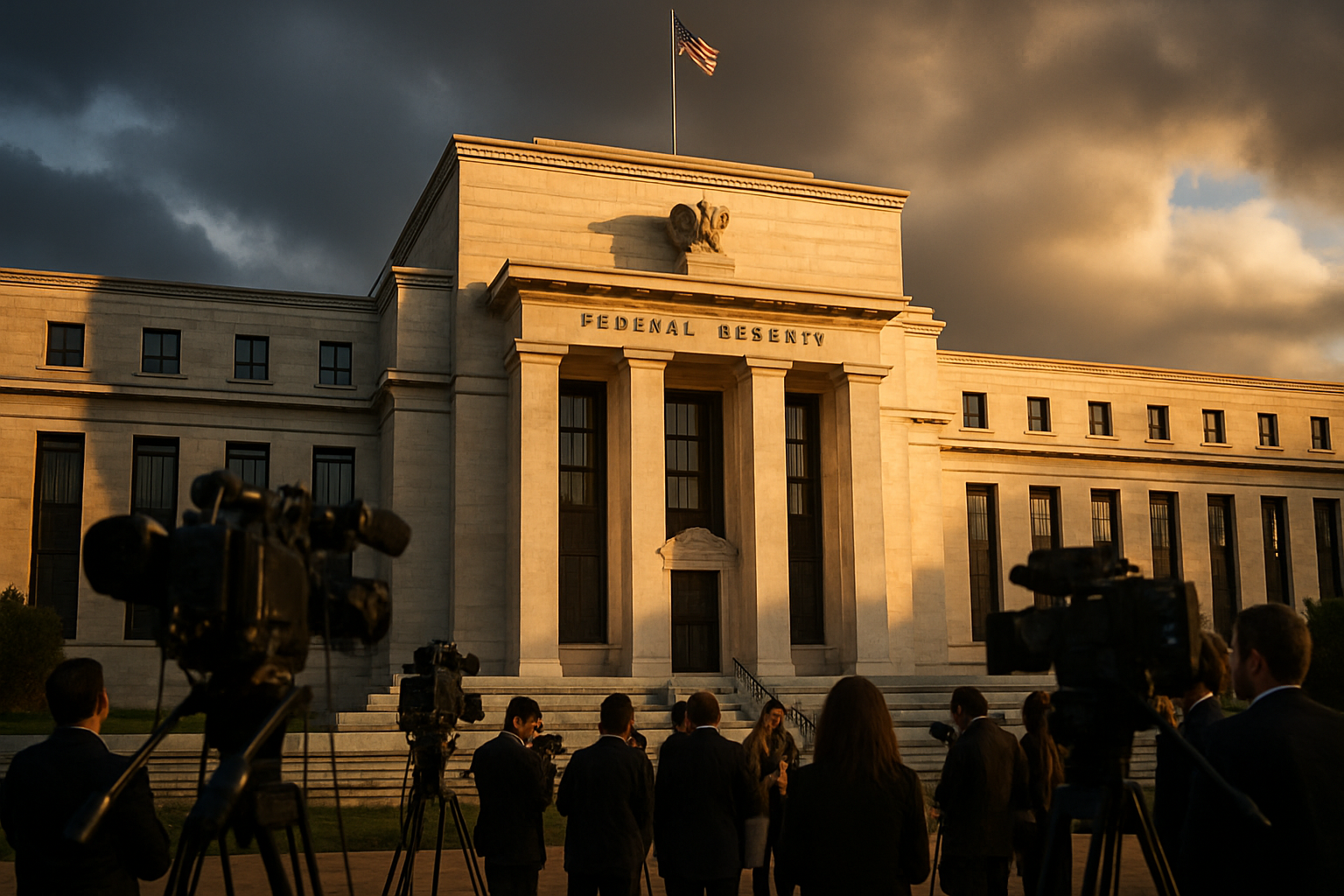
The U.S. Justice Department officially ended its criminal investigation into Federal Reserve Chairman Jerome Powell on Friday, closing a politically charged probe that had threatened to undermine the central bank's independence and creating a clear path for President Trump's nominee Kevin Warsh to assume leadership of the nation's monetary policy.
U.S. Attorney for the District of Columbia Jeanine Pirro announced on social media that her office was terminating its investigation into cost overruns related to the Federal Reserve's extensive building renovations, stating that the Fed's inspector general would handle the matter instead. The decision marks the end of one of the most controversial investigations ever launched against a sitting Fed chairman.
Political Context and Judicial Precedent
The closure comes just weeks after a federal judge delivered a scathing rebuke of the Trump administration's investigation strategy. In March 2026, U.S. District Judge James Boasberg blocked Justice Department subpoenas targeting Powell, ruling in a 47-page decision that the investigation was "politically motivated harassment" designed to pressure Powell into lowering interest rates or resigning.
"The prosecutors have produced essentially zero evidence to justify their January subpoenas," Judge Boasberg wrote. "There is a mountain of evidence that the primary purpose was to harass Mr. Powell to make him yield to President Trump."
— Federal Judge James Boasberg, March 13, 2026
The judicial intervention represented the most significant federal court protection of Fed independence since the institution's establishment in 1913. Internal DOJ communications, revealed during court proceedings, showed officials acknowledged the lack of criminal evidence while continuing to pursue the investigation.
The Warsh Nomination Path
With the investigation's closure, Kevin Warsh's path to Fed leadership now appears significantly clearer. Warsh, who previously served on the Fed's Board of Governors from 2006 to 2011, has pledged what he calls "robust" transformation of the central bank, including new approaches to monetary policy and a comprehensive communications overhaul.
During his April 2026 confirmation hearings before the Senate Banking Committee, Warsh faced intense questioning about his plans for "regime change" at the Fed. However, he attempted to assuage concerns about institutional independence, stating that Trump "never asked me to commit" to interest rate cuts.
The nomination has faced bipartisan resistance, with Republican Senator Thom Tillis using his full questioning time to explain his opposition to the appointment. The hearing left key questions unresolved about balancing Warsh's reform agenda with maintaining the Fed's traditional independence from political pressure.
Background of the Investigation
The criminal probe centered on allegations that Powell mismanaged a $2.5 billion headquarters renovation project that experienced significant cost overruns. The investigation was part of a broader pattern of Trump administration pressure on Federal Reserve leadership, which included public criticism of Powell's monetary policy decisions and calls for more aggressive interest rate cuts.
The timing of the original subpoenas raised immediate red flags among legal observers. They coincided with Trump's public criticism of Powell's interest rate policies ahead of the 2026 midterm elections, creating the appearance of using criminal investigations as leverage in monetary policy disputes.
Congressional and Market Response
The investigation's closure has drawn mixed reactions from Capitol Hill. Democratic lawmakers have characterized the probe's end as validation of their concerns about the weaponization of the Justice Department. Representative Maxine Waters, ranking member of the House Financial Services Committee, called the original investigation "a clear example of weaponization" of federal law enforcement.
Interestingly, some Republicans also expressed private concerns about the administration's approach. Even Senator Elizabeth Warren, typically a critic of Federal Reserve policies, defended Powell during the investigation, stating that the probe "crosses a red line" regarding Fed independence.
Financial markets reacted positively to news of the investigation's closure, with Treasury bonds strengthening and the dollar gaining ground. The confirmation of Fed independence appeared to reassure international observers who had expressed private concerns about the Trump administration's approach to central bank autonomy.
International Implications
Central bank independence has become a crucial factor in international financial stability and cooperation. European Central Bank officials had privately expressed concerns about the precedent that a successful pressure campaign against the Fed might set for other democracies facing populist challenges to institutional independence.
The resolution also comes at a critical time for international monetary policy coordination. With the ECB maintaining rates at 2% and the Reserve Bank of Australia at 3.85%, the Federal Reserve's policy decisions under new leadership will have significant implications for global financial markets and currency stability.
Historical Significance
Legal experts note that federal appeals courts typically defer to trial judges on factual findings regarding motivation, making any Justice Department appeal of Judge Boasberg's ruling an uphill battle. The Supreme Court has consistently ruled that Federal Reserve monetary policy functions require political insulation despite the Fed's location within the executive branch.
The case represents the most direct challenge to Fed independence since the 1970s Nixon-Arthur Burns episode, which contributed to the inflation crisis of that decade. Congress subsequently reinforced Fed protections through 1977-1978 legislation that established the dual mandate while protecting the institution from political interference.
Looking Forward
With the criminal investigation behind him, Powell can complete his term as Fed Chairman without the distraction of ongoing legal proceedings. The Federal Reserve will be able to continue its data-driven approach to monetary policy without the cloud of potential criminal liability hanging over its leadership.
For the Trump administration, the investigation's closure represents a tactical retreat that allows focus on other priorities while avoiding a protracted legal battle with uncertain prospects for success. The administration now faces a choice between pursuing an unsuccessful appeal or concentrating on advancing its broader economic agenda through other means.
The case establishes a powerful precedent for protecting independent institutions from political pressure in an increasingly polarized era. As democratic institutions worldwide face similar challenges, the successful defense of Federal Reserve independence provides a template for institutional resilience against political overreach.
Implications for Economic Policy
The resolution of this controversy allows the Federal Reserve to focus on its core mission of promoting maximum employment and price stability. With ongoing economic uncertainties including inflation pressures and international tensions affecting energy markets, the central bank's ability to operate independently from political considerations becomes even more crucial.
As Kevin Warsh prepares for his confirmation process, the financial community will be closely watching for signals about how he plans to balance his stated reform agenda with the institutional independence that Judge Boasberg's ruling so forcefully protected. The ultimate test of Fed independence may come not from criminal investigations, but from how effectively the institution maintains its traditional insulation from political pressure while adapting to new economic challenges.
The Justice Department's decision to end this investigation marks not just the conclusion of a specific legal matter, but potentially a turning point in the ongoing tension between presidential authority and institutional independence that has defined much of the current political era.