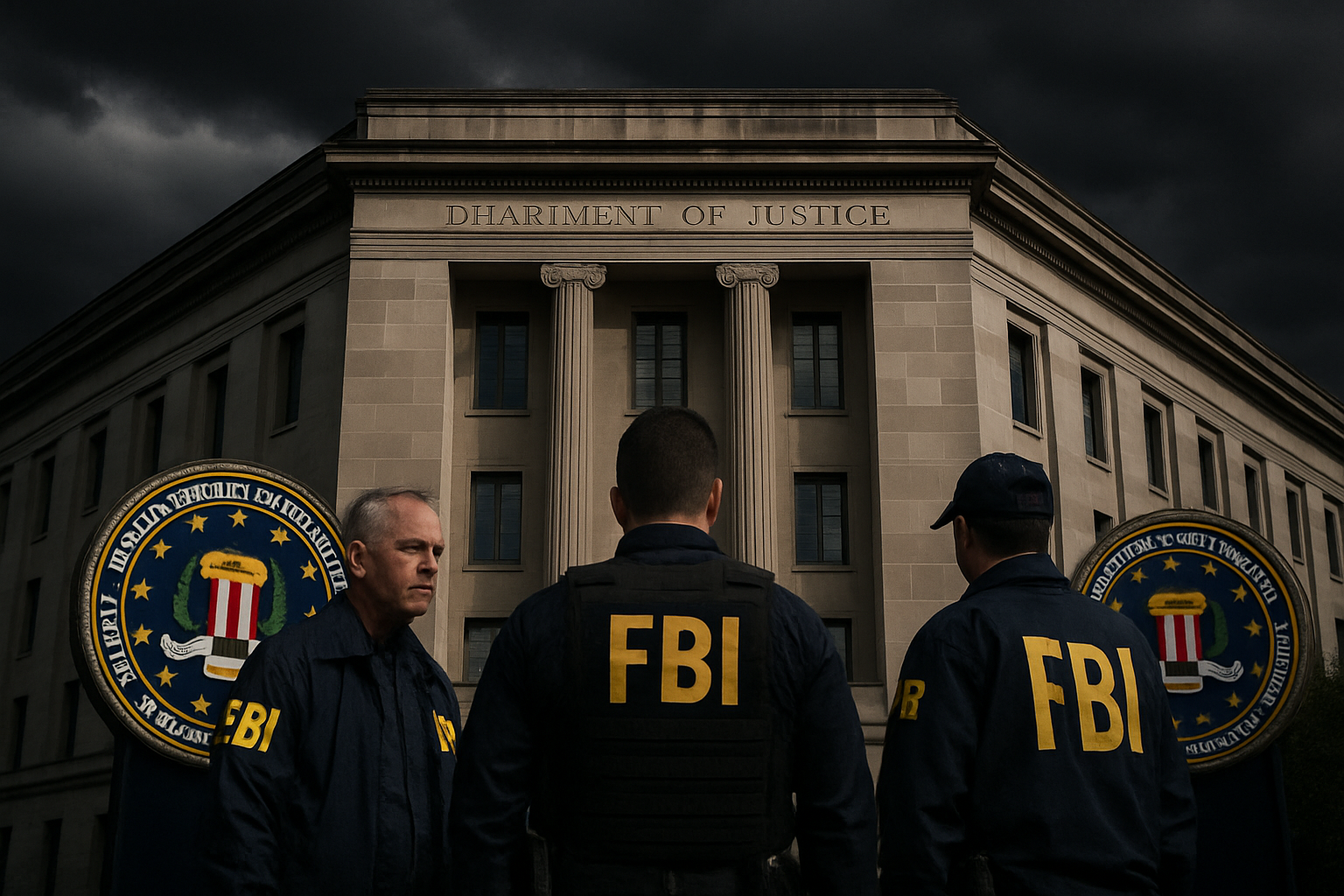
The US Justice Department has released previously classified FBI records from the Jeffrey Epstein investigation that contain new sexual assault allegations against President Donald Trump, marking a significant escalation in the ongoing international scandal surrounding the deceased financier's criminal network.
The documents, released Thursday following mounting congressional pressure, include four FBI interview summaries from 2019 with an unidentified woman who accused both Epstein and Trump of sexual misconduct when she was between 13 and 15 years old in the 1980s. The revelations come as part of what European law enforcement officials have described as the "largest international elite criminal network exposure in recent memory."
Previously Withheld Documents Surface
According to multiple international sources, the Justice Department had initially withheld these records, which were incorrectly classified as "duplicates" in their filing system. The 16 pages of FBI interview summaries describe encounters that allegedly took place in New York or New Jersey during the 1980s, when the woman claims she was introduced to Trump through Epstein.
The documents detail allegations that Trump "attempted to force her to engage in sexual acts" after meeting the then-minor through Epstein's network. These records were among 53 pages that an NPR investigation revealed had been specifically removed from earlier public releases, prompting accusations from congressional Democrats of the "largest government cover-up in modern history."
"The Justice Department had previously released a log confirming that the interviews took place, but released a summary of only one of those four meetings, in which she accused Epstein of molesting her when she was a teenager."
— Dawn News, Pakistan
White House Denies All Allegations
The White House has categorically denied all accusations contained in the newly released documents, characterizing them as "baseless and lacking evidence." However, the allegations add to mounting pressure on the Trump administration as investigations continue across multiple countries.
These latest revelations follow previous FBI documents showing that Trump told Palm Beach police in 2006 that "everyone knew" about Epstein's inappropriate behavior, contradicting the administration's repeated claims of minimal contact between the two men.
International Investigation Scope Unprecedented
The document release comes amid an expanding international investigation that has already led to major political upheavals across six countries. Law enforcement agencies in the United States, United Kingdom, Norway, France, Latvia, and Poland are coordinating what officials describe as an unprecedented investigation into a transnational elite criminal network.
In Norway, Crown Princess Mette-Marit faces potential criminal proceedings after being mentioned over 1,000 times in the documents. The Baltic states have launched coordinated investigations into trafficking networks, with Latvia declaring its probe of the "Natalie" modeling agency a national priority.
"Si tratta di 16 delle 53 pagine rivelate da un'inchiesta di Npr che non erano state incluse tra i documenti perché 'considerati come duplicati', ha fatto sapere il dipartimento."
— Repubblica.it, Italy
Congressional Pressure Intensifies
The release follows months of pressure from House Oversight Committee members, particularly Representative Robert Garcia, who has demanded explanations for the missing documents. Congressional investigators have accused the Justice Department of deliberately withholding evidence related to Trump while exposing details about other political figures.
The timing of the release is particularly significant, coming just days after historic congressional testimony from Bill and Hillary Clinton—the first time a former U.S. president has been compelled to testify in a criminal investigation of this scope. The Clinton testimonies, conducted under oath, focused on documented connections to Epstein's network spanning decades.
Victim Protection Failures Continue
Even as new documents emerge, the Justice Department continues to face criticism for catastrophic failures in protecting victim privacy. Officials have accidentally exposed the identities of over 100 survivors, including 31 minors, through what Deputy Attorney General Todd Blanche characterized as "technical and human errors."
Federal judges are currently hearing emergency petitions from victims whose personal information—including photographs, bank account details, and Social Security numbers—was inadvertently released in document batches. The privacy breaches have threatened future cooperation with law enforcement and drawn sharp criticism from victim advocacy groups.
Corporate and Political Fallout Expands
The ongoing revelations have triggered a wave of high-profile resignations across multiple sectors. Goldman Sachs General Counsel Kathy Ruemmler resigned after emails revealed she called Epstein "big brother" and minimized his crimes. DP World CEO Sultan Ahmed bin Sulayem was forced out after being named over 9,400 times in documents as Epstein's "most trusted friend."
In the UK, Prime Minister Keir Starmer faces a severe political crisis after admitting he was "lied to" by Peter Mandelson regarding Epstein connections before appointing him as U.S. Ambassador. Metropolitan Police have searched Mandelson's properties as part of an investigation into potential misconduct in public office.
No New Federal Prosecutions Planned
Despite the massive scope of evidence contained in over 3 million pages of documents, Deputy Attorney General Blanche has confirmed that no new federal prosecutions are planned. This decision has frustrated congressional investigators and victim advocates who argue the evidence demonstrates clear patterns of criminal activity spanning multiple jurisdictions and decades.
The lack of new prosecutions has become a central point of criticism, with lawmakers from both parties questioning whether the Justice Department is adequately pursuing justice for victims or protecting powerful individuals from accountability.
Disinformation Campaign Complicates Investigation
French authorities have detected sophisticated Russian-linked disinformation campaigns designed to exploit the Epstein revelations for geopolitical purposes. These operations include creating false connections between world leaders and Epstein using artificial intelligence to generate convincing fake images "in seconds."
The disinformation efforts appear designed both to protect actual perpetrators and to undermine legitimate investigations by flooding information channels with false claims and conspiracy theories.
Democratic Accountability Under Global Scrutiny
The Epstein files release represents what many observers consider a fundamental test of democratic institutions' ability to address elite criminal networks that span multiple countries and jurisdictions. Enhanced cooperation between European law enforcement agencies is setting new precedents for international criminal investigations.
Cultural institutions worldwide are conducting comprehensive reviews of their relationships with figures named in the documents, with some—like Norway's Sex og Samfunn—taking the unprecedented step of severing all ties with royal family members implicated in the scandal.
Looking Forward
As investigations continue across multiple continents, the ultimate question remains whether these unprecedented revelations will lead to meaningful accountability or represent another example of elite impunity despite massive public exposure. The resolution of these investigations will likely establish crucial precedents for how 21st-century democratic institutions respond to sophisticated transnational criminal networks.
With more document releases expected and investigations ongoing, the Epstein files continue to reshape the international political landscape, forcing a global reckoning with the intersection of power, privilege, and criminal behavior at the highest levels of society.