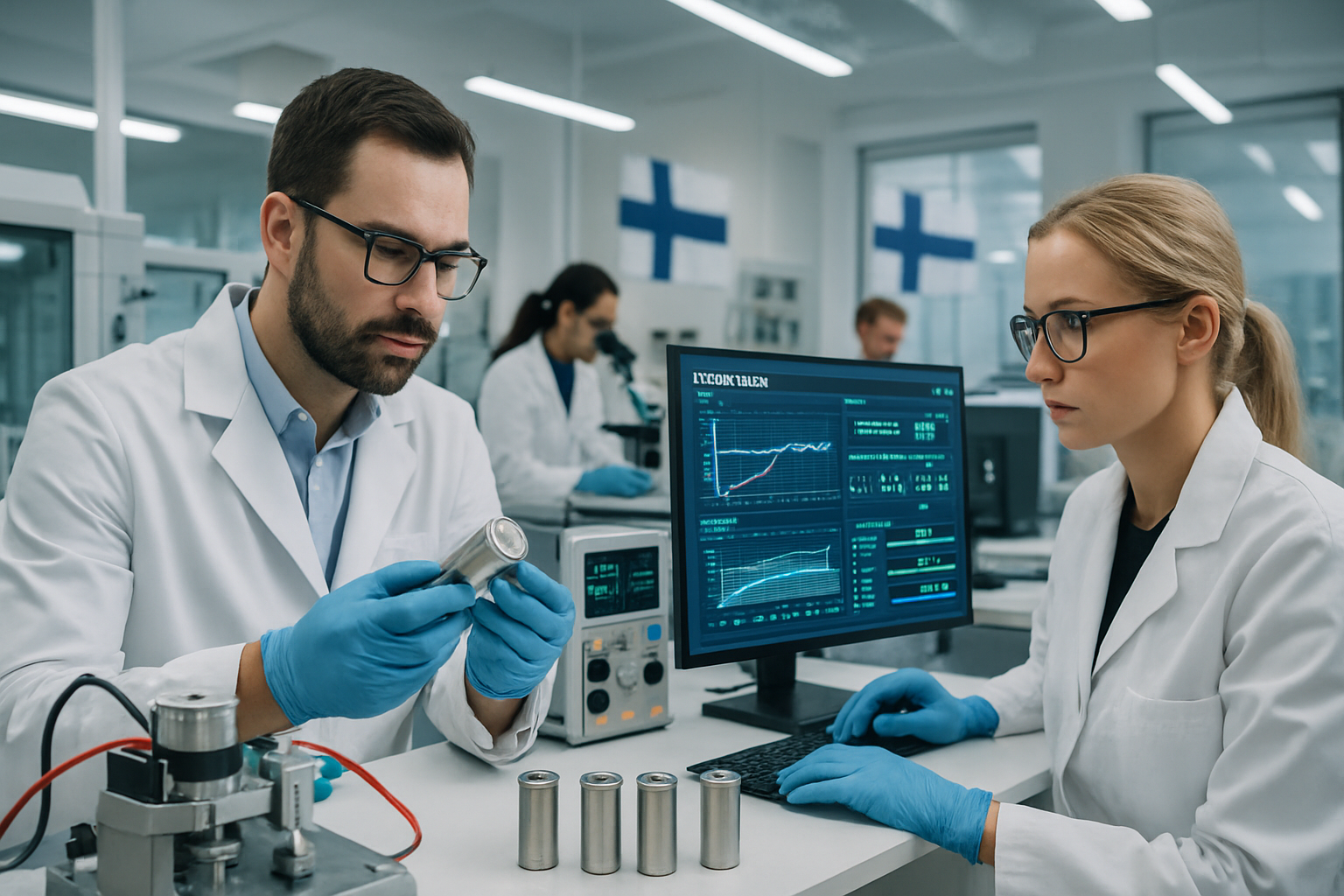
Finnish technology company Donut Lab has finally released its much-anticipated first research results on superaccumulator technology, concluding months of bold promises about breakthrough energy storage capabilities. However, independent testing conducted by VTT (Technical Research Centre of Finland) reveals that while the company fulfilled nearly one of its core promises, industry experts are describing the findings as predictable and lacking significant innovation.
The announcement comes at a critical moment for the global battery technology sector, which is experiencing unprecedented developments across multiple fronts. According to the original Finnish reporting from Yle Uutiset, the company had been promising revolutionary battery technology for months, positioning its superaccumulator as a potential game-changer in energy storage.
VTT Testing Results Show Mixed Performance
The comprehensive testing conducted by VTT, Finland's premier technical research institution, found that Donut Lab's battery cell achieved nearly complete fulfillment of one specific promise made by the company. However, the research organization's methodology and findings suggest that the technology falls short of the revolutionary breakthrough status claimed by its developers.
This development occurs against the backdrop of a global energy storage revolution, with countries worldwide racing to develop advanced battery technologies to support renewable energy transitions. Estonia recently opened continental Europe's largest battery storage facility with capacity to serve 90,000 households, while Romania is advancing a €1 billion Battery Energy Storage System project spanning 2,500 MW across multiple locations.
Industry Expert Skepticism Grows
Energy storage specialists contacted for independent analysis expressed reservations about Donut Lab's claims. According to the Finnish reporting, experts characterized the results as containing "nothing new or surprising," suggesting that the company's promises may have been overstated from the beginning.
This skepticism reflects broader challenges in the battery technology sector, where breakthrough claims often fail to materialize in real-world applications. The global memory crisis, with semiconductor prices surging sixfold and affecting companies like Samsung, SK Hynix, and Micron, has created additional pressure on battery control systems and technological development.
"The testing results show that while Donut Lab achieved some of their technical targets, the innovation level doesn't match the revolutionary claims made over recent months."
— Industry Analysis, based on VTT findings
Global Battery Technology Context
The Donut Lab announcement emerges during a period of intense competition in battery technology development. Chinese scientists recently achieved a significant breakthrough in water-based battery technology featuring organic electrodes and electrolyte described as "safe as tofu brine," representing a paradigm shift toward environmentally sustainable energy storage with substantially lower production costs than traditional battery chemistry.
Meanwhile, China's CATL has deployed the world's first sodium-ion batteries in passenger cars through their Naxtra system, while maintaining the country's dominance in battery technology innovation. China controls approximately 60% of global critical mineral production and 90% of refining capacity for lithium, cobalt, and rare earth elements essential for battery manufacturing.
The US-EU-Japan Critical Minerals Partnership, involving 55 countries and seven African alternative suppliers including Angola, DRC, Guinea, Kenya, Morocco, Sierra Leone, and Zambia, represents a coordinated response to address these supply chain vulnerabilities and reduce dependence on Chinese-controlled materials.
Finnish Innovation in Global Perspective
Finland's position in the global battery technology race remains complex. The country recently achieved Europe's first major lithium mining operation after 25 years of development and 800 million euro investment, addressing European battery manufacturing needs and reducing dependence on Chinese supply chains. This strategic breakthrough for EU renewable energy infrastructure and electric vehicle industry is expected to create thousands of high-tech jobs and generate significant export revenue.
However, Donut Lab's results suggest that private sector innovation may be lagging behind these infrastructure developments. The company's superaccumulator technology, while meeting some technical specifications, appears to lack the revolutionary characteristics necessary to compete with established players like CATL or emerging breakthroughs in water-based battery systems.
Market Implications and Future Outlook
The limited innovation demonstrated by Donut Lab highlights ongoing challenges in battery technology commercialization. Despite months of promises and significant research investment, the company's findings suggest that genuine breakthrough technologies remain elusive for many smaller players in the sector.
This development occurs amid Europe's broader energy transition challenges, including persistently high electricity prices that the European Central Bank warns are undermining the EU's central electrification strategy for net-zero emissions. European electricity consumption has actually declined 6.3% between 2015-2023, despite Commission targets to increase electricity's share from 23% to 32% by 2030.
The global context includes January 2026 marking the 18th consecutive month of temperatures exceeding 1.5°C above pre-industrial levels, demonstrating the urgent need for effective energy storage solutions to support renewable energy systems and address climate change acceleration.
Looking Forward: The Challenge of Innovation
Donut Lab's experience illustrates the broader challenges facing battery technology startups attempting to compete with established industry leaders. While the company achieved partial success in meeting one of its technical promises, the lack of significant innovation highlighted by experts suggests that breakthrough battery technologies require substantially more research and development investment than initially anticipated.
The global battery sector continues to evolve rapidly, with established players like CATL advancing sodium-ion technology and Chinese researchers developing water-based alternatives that could revolutionize the entire industry. For companies like Donut Lab, the challenge lies in identifying truly innovative approaches that can compete with these major technological developments.
As the world moves toward renewable energy systems requiring massive energy storage capabilities, the success or failure of companies like Donut Lab will ultimately depend on their ability to deliver genuine technological breakthroughs rather than incremental improvements to existing battery chemistry and design approaches.