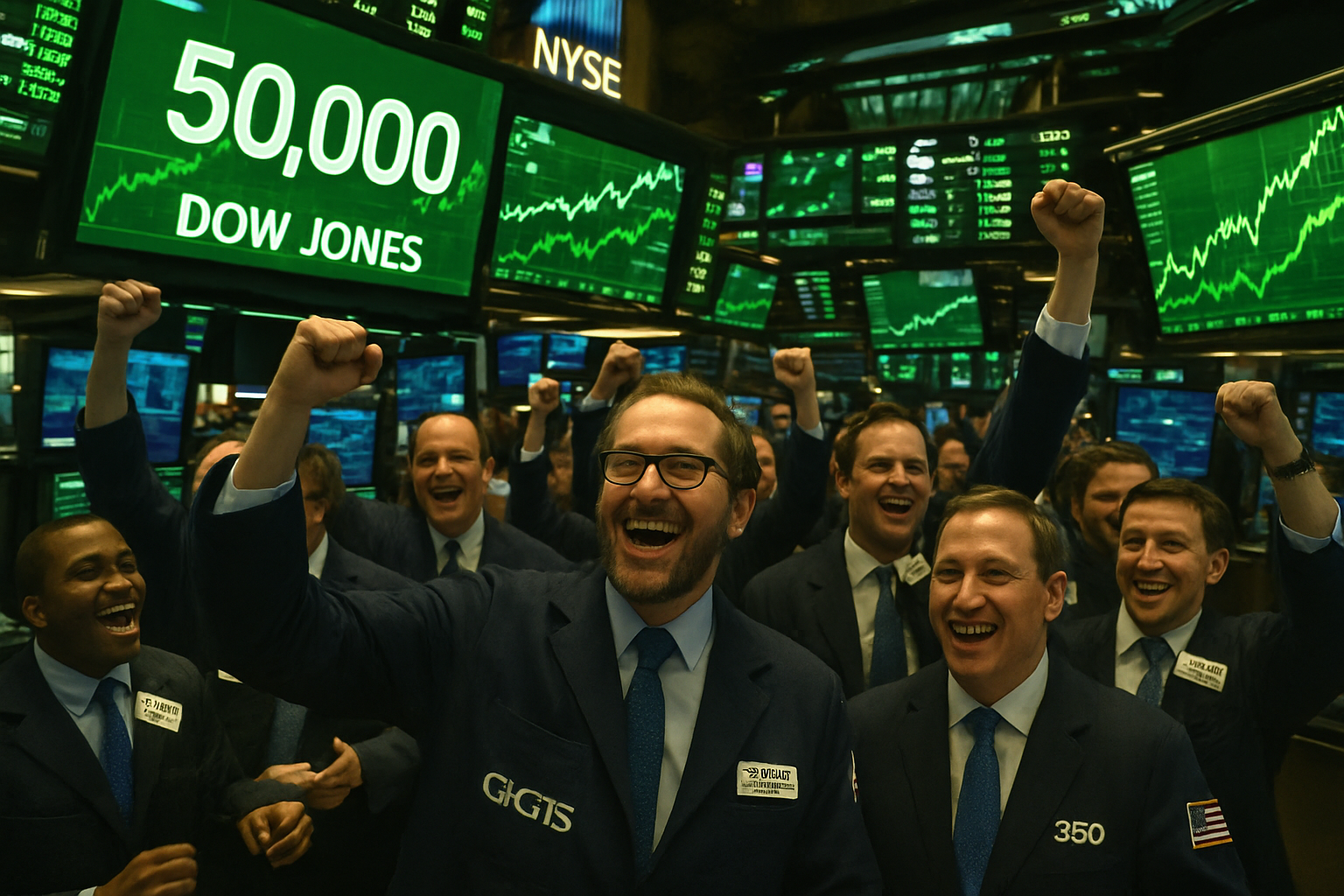
The Dow Jones Industrial Average achieved a historic milestone Friday, surging past the 50,000-point barrier for the first time in its 129-year history, as U.S. markets staged a dramatic recovery from earlier weekly losses while global markets displayed contrasting performances.
The Dow soared 1,206 points, or 2.5 percent, in its best single-day performance since May, closing above the psychological 50,000 threshold. The broader S&P 500 rallied 2 percent, while the Nasdaq composite jumped 2.2 percent, as technology stocks recovered from earlier selloffs that had erased hundreds of billions in market value.
Technology Sector Leads Recovery
Semiconductor companies spearheaded the rally, with Nvidia jumping 7.8 percent to help trim its weekly losses. The rebound came as markets stabilized following concerns about artificial intelligence spending and its impact on traditional software companies, which had triggered what analysts dubbed the "SaaSpocalypse" earlier in the week.
The recovery marked a stark reversal from earlier market turbulence that saw AI-related fears dominate trading. However, Friday's bounce demonstrated the resilience of U.S. equity markets and the continued investor confidence in the technology sector's long-term prospects.
Global Markets Paint Mixed Picture
While Wall Street celebrated, international markets presented a more complex narrative. The MSCI All-Country World Index managed to rally off session lows to trade flat, but remained on track for its worst weekly performance since mid-November, declining 1.6 percent for the week.
A projected $600 billion AI spending spree by tech giants Amazon, Microsoft, Google, and Meta this year has intensified fears about the cost of the artificial intelligence boom. Concerns about disruption in sectors including software and data services continued to weigh on global technology valuations.
Emerging Markets Show Resilience
Despite the global volatility, several emerging markets demonstrated remarkable strength. Brazil's Ibovespa held near record levels, with exchange operator B3 surging 4.8 percent to a 52-week high following a brokerage upgrade. The rally single-handedly dragged the Brazilian index into positive territory despite broad weakness in financial stocks.
Brazil's financial sector showed mixed results during earnings season, with Bradesco posting solid fourth-quarter numbers including R$6.5 billion in net income, up 20.6 percent year-over-year. The Brazilian real also strengthened toward 5.22 against the dollar, testing its strongest levels since May 2024 as the central bank signaled potential easing measures beginning in March.
Cryptocurrency Market Volatility Continues
The equity market recovery contrasted sharply with continued turbulence in cryptocurrency markets. Bitcoin had experienced significant volatility throughout the week, highlighting the divergent paths of traditional and digital assets during periods of market stress.
The cryptocurrency market's struggles have been attributed to regulatory uncertainty, with Congressional legislation supporting digital assets remaining stalled despite pro-crypto rhetoric from the current administration. This regulatory vacuum has created headwinds for digital assets while traditional markets found their footing.
Historical Significance of Dow Milestone
The Dow's breakthrough past 50,000 represents more than just a numerical achievement. German media described it as the "highest level in the history of the U.S. stock index," emphasizing the global significance of the milestone. The achievement validates the index's diversified composition of 30 blue-chip companies, which has provided stability during volatile periods.
Experts suggest the Dow could continue climbing throughout 2026, supported by strong corporate earnings and continued economic resilience. The milestone reflects successful adaptation of American industry over more than a century, from the index's 1896 inception tracking 12 industrial companies to its modern composition spanning technology, healthcare, financial services, and manufacturing.
"This milestone represents the enduring strength of American enterprise and the market's confidence in the future of our economy."
— Market analyst commenting on the historic achievement
International Context and Challenges
The achievement occurred against a backdrop of complex global market dynamics. European markets faced continued pressure from geopolitical tensions and energy price volatility, while Asian markets grappled with supply chain constraints and memory chip shortages affecting major technology companies.
The global semiconductor industry continues to face significant challenges, with memory prices experiencing sixfold increases affecting major manufacturers Samsung, SK Hynix, and Micron. These supply chain pressures have created bottlenecks in AI development and contributed to broader technology sector volatility.
Central Bank Policy Divergence
Central bank policies across major economies have begun to diverge, creating additional complexity for global investors. While some emerging markets like Brazil signal potential monetary easing, developed markets face different inflation and growth dynamics that could influence capital flows and market performance.
The contrasting monetary policy trajectories highlight the challenges facing global investors in navigating different economic environments and their impact on asset allocation decisions.
Looking Ahead
Market observers cite several factors that will influence future trajectory, including geopolitical developments, trade policy changes, and the sustainability of current corporate earnings levels. The ability of companies to manage costs while maintaining growth will be crucial for continued market advancement.
The successful navigation of recent volatility demonstrates the resilience of diversified equity markets compared to more speculative asset classes. The Dow's achievement provides a foundation of confidence as markets adapt to rapidly evolving technological and economic landscapes.
As global markets continue to evolve, the contrast between traditional equity strength and emerging asset class volatility underscores the importance of diversified investment strategies and careful risk management in an increasingly complex financial environment.