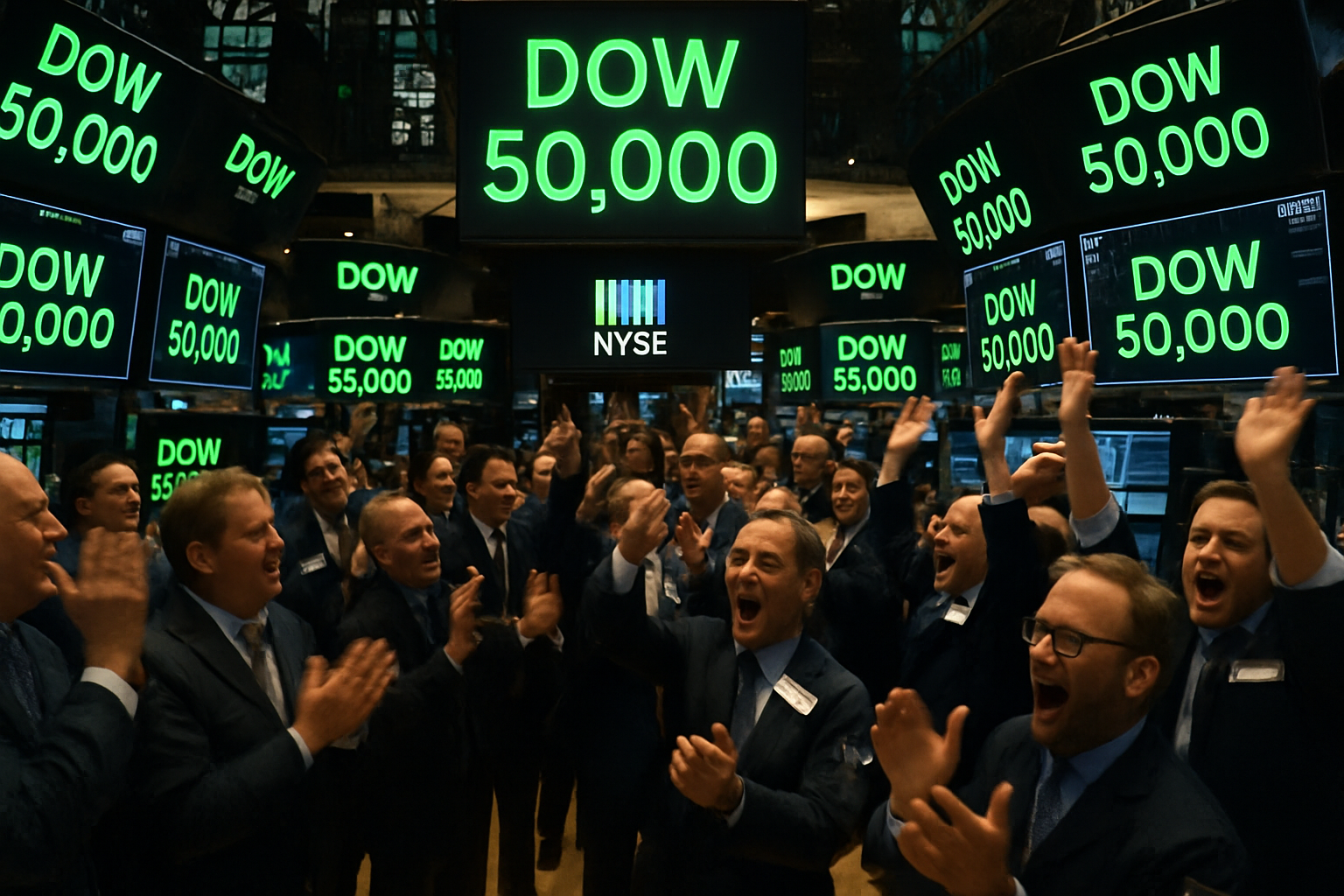
The Dow Jones Industrial Average shattered a historic barrier on February 6, 2026, surpassing 50,000 points for the first time in its 129-year history, marking an unprecedented milestone that was celebrated by President Donald Trump and investors worldwide despite ongoing market volatility.
The iconic Wall Street index reached this symbolic threshold during a week of significant market fluctuations, representing a remarkable achievement for the New York Stock Exchange's most closely watched indicator. According to multiple international sources, this breakthrough comes after years of steady growth punctuated by periods of dramatic volatility, including recent challenges from cryptocurrency crashes and precious metals market disruptions.
Technology Stocks Drive Historic Rally
International financial analysts point to technology sector strength as a primary driver behind the Dow's historic ascent. Slovak financial markets reported that American stocks strengthened following gains in technology titles and improved consumer confidence data, reflecting broader optimism about the sector's resilience despite recent AI-related market turbulence.
This milestone achievement occurs against the backdrop of what analysts have termed the "SaaSpocalypse" – a period of significant technology stock volatility triggered by artificial intelligence developments. However, the Dow's performance demonstrates the index's ability to weather sector-specific disruptions through its diversified composition of industrial leaders.
"This is a historic moment that reflects the underlying strength of American enterprise and innovation."
— Financial Market Analysis, Slovakia
Presidential Celebration Amid Market Complexity
President Trump celebrated the achievement as validation of his administration's economic policies, though the milestone comes during a period of complex market dynamics. The breakthrough follows recent volatility in multiple asset classes, including a catastrophic cryptocurrency crash that saw Bitcoin fall below $65,000 and precious metals experiencing their worst performance in decades.
Greek financial media highlighted that Wall Street reached "historic highs" with the Dow surpassing the 50,000 milestone as investors returned dynamically to equities, demonstrating renewed confidence in traditional stock market investments over alternative assets like cryptocurrencies and commodities.
International Recognition
The achievement garnered attention across global financial centers, with Italian financial publication Il Sole 24 ORE describing it as the first time in the historic index's history that it crossed this "symbolic threshold." Finnish media YLE reported the milestone jump above 50,000 points as a significant development in international markets.
Market Context and Broader Economic Implications
The Dow's historic performance stands in stark contrast to other asset classes experiencing significant turbulence. While the index celebrates this milestone, cryptocurrency markets have lost approximately $2 trillion in value since their October 2025 peaks, and precious metals markets experienced their worst crash since the 1980 Hunt Brothers silver collapse.
This divergence illustrates investors' flight to quality and established financial instruments during periods of uncertainty. The Dow's composition of 30 blue-chip American companies has provided stability that alternative investments have failed to deliver during recent market volatility.
Technology Sector Recovery and AI Revolution
Despite previous concerns about artificial intelligence disrupting traditional business models, technology companies within the Dow have demonstrated resilience. Recent developments include major AI infrastructure investments by companies like Alphabet ($180 billion) and Amazon ($1 trillion+), signaling long-term confidence in the sector's transformation potential.
The memory chip crisis affecting Samsung, SK Hynix, and Micron has created supply constraints that paradoxically benefit established technology companies with diversified revenue streams and supply chain management capabilities – many of which are represented in the Dow's composition.
Global Competitive Dynamics
The milestone occurs amid intensifying global competition in technology and AI development, with Chinese companies like DeepSeek challenging American technological dominance. However, the Dow's achievement suggests that established American corporations continue to adapt and thrive despite these competitive pressures.
Historical Perspective and Future Outlook
The Dow Jones Industrial Average, created in 1896, has weathered numerous economic crises, world wars, and technological revolutions. This latest milestone represents not just numerical achievement but validation of American industrial and technological leadership over more than a century.
From its inception tracking 12 industrial companies to today's 30 blue-chip corporations spanning technology, healthcare, financial services, and traditional manufacturing, the Dow has evolved to reflect America's changing economic landscape while maintaining its role as a barometer of national economic health.
"After 129 years of operation, crossing 50,000 points demonstrates the enduring strength and adaptability of American enterprise."
— Market Analysts
Economic Policy Implications
The achievement provides political validation for current economic policies while raising questions about market sustainability at these elevated levels. Analysts note that the milestone reflects both genuine economic strength and potential concerns about asset price inflation in an era of complex monetary policy challenges.
Looking Forward: Challenges and Opportunities
While celebrating this historic achievement, market observers identify several factors that will influence the Dow's future trajectory. These include ongoing geopolitical tensions, trade policy developments, regulatory responses to AI technology, and the resolution of supply chain constraints affecting multiple industries.
The index's ability to reach 50,000 points during a period of significant volatility in other asset classes demonstrates the continued relevance of traditional equity markets. However, analysts caution that maintaining these levels will require sustained corporate earnings growth and resolution of various economic uncertainties.
- Technology sector adaptation to AI revolution
- Resolution of global supply chain constraints
- Geopolitical stability and trade relations
- Monetary policy normalization
- Corporate earnings sustainability
International Market Implications
The Dow's milestone has implications beyond American borders, influencing global investment flows and market sentiment. International investors often view Dow performance as a leading indicator for global economic health, making this achievement significant for worldwide financial stability.
As markets continue to navigate the complex interplay of technological disruption, geopolitical tensions, and economic policy changes, the Dow's historic achievement serves as both celebration and reminder of the dynamic nature of modern financial markets. The index's ability to reach this milestone while other asset classes struggle demonstrates the enduring appeal of diversified, established equity investments in an uncertain world.