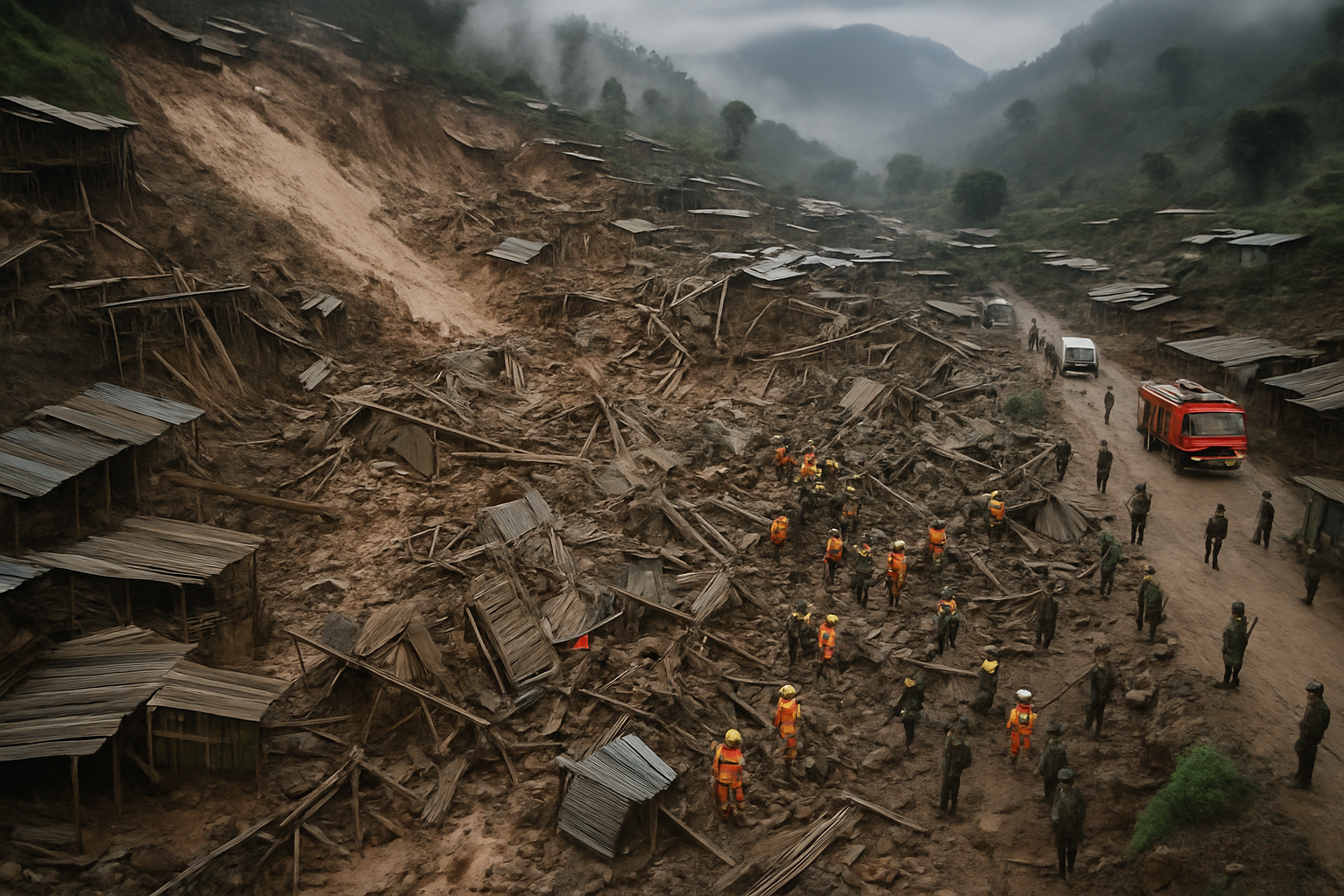
At least 200 people, including approximately 70 children, were killed in a catastrophic landslide at the Rubaya coltan mine in eastern Democratic Republic of Congo on March 4, 2026, marking the second major disaster at the same site in just five weeks.
The tragedy struck the same location where approximately 300 people died in a similar landslide on February 1, 2026, creating one of the deadliest series of mining disasters in the region's history. The Rubaya mine, located in North Kivu province, produces between 15 and 30 percent of the world's coltan supply—a critical mineral essential for smartphone and electronic device manufacturing.
According to multiple international sources, the latest disaster occurred following heavy rainfall that triggered the deadly landslide. The area has been under the control of the M23 rebel group since May 2024, complicating rescue operations and highlighting the dangerous intersection of armed conflict and artisanal mining in eastern Congo.
Pattern of Recurring Tragedies
The March 4 collapse represents the second major catastrophe at the exact same mining site within five weeks, raising urgent questions about safety protocols and the sustainability of mining operations in the region. The February 1 disaster, which killed approximately 300 people, occurred under identical circumstances—heavy rains triggering a massive landslide at the artisanal mining site.
The Democratic Republic of Congo's Mining Ministry confirmed that among the 200+ victims were 70 children, underscoring the tragic reality that entire families work in these dangerous conditions without basic safety protections. Survivors were evacuated to medical facilities in Goma, the provincial capital of North Kivu.
Local officials initially reported conflicting casualty figures, with M23 representatives claiming only 5-6 deaths. However, government sources and international media confirmed the much higher death toll, highlighting the challenges of obtaining accurate information from rebel-controlled territories.
Critical Supply Chain Implications
The Rubaya mine's strategic importance extends far beyond the DR Congo's borders. As a source of 15-30% of the world's coltan supply, disruptions at this site have immediate implications for global electronics supply chains. Coltan contains tantalum, an essential component in capacitors used in smartphones, laptops, gaming consoles, and other electronic devices.
The repeated disasters at Rubaya occur at a particularly sensitive time for global supply chains. The site's production is crucial for meeting growing demand from the technology sector, and the ongoing instability threatens to further complicate international efforts to secure ethical mineral supplies.
The mine's location in M23-controlled territory adds another layer of complexity to the global supply chain debate around "conflict minerals." International companies face increasing pressure to ensure their supply chains are free from minerals extracted under conditions that fuel conflict or involve human rights abuses.
The Human Cost of Artisanal Mining
The recurring tragedies at Rubaya expose the deadly reality of artisanal mining in eastern Congo, where women and children work alongside men in dangerous conditions without basic safety infrastructure. These small-scale operations lack the advanced safety systems, proper ventilation, and structural engineering that characterize modern industrial mining.
Artisanal miners, driven by economic necessity, often work in improvised tunnels and unstable pits that become death traps during heavy rains. The lack of proper drainage systems, structural support, and emergency protocols means that natural weather events can quickly turn into human disasters.
The presence of children at these sites reflects the desperate economic conditions that force entire families to seek income from mining activities. Despite international protocols prohibiting child labor in mining, enforcement remains nearly impossible in remote, conflict-affected areas under rebel control.
Geopolitical Complications
The M23 rebel group's control over the Rubaya mine since May 2024 has significantly complicated both rescue operations and efforts to improve safety standards. The group's presence makes it difficult for humanitarian organizations, government officials, and international monitors to access the site and implement necessary safety measures.
The ongoing conflict in eastern Congo creates a dangerous environment where armed groups profit from mineral extraction while local communities bear the human cost. The M23's control over such a strategically important mining site gives the rebel group significant leverage and funding for their operations.
Recent U.S. sanctions imposed on Rwanda's Defense Forces over alleged support for M23 have further complicated the regional security situation. The sanctions, implemented just days before the latest mining disaster, highlight the interconnected nature of regional conflicts and mineral extraction in eastern Congo.
International Response and Reform Efforts
The recurring disasters at Rubaya have intensified international calls for comprehensive mining sector reform in the DR Congo. The country is a key participant in the U.S.-EU-Japan Critical Minerals Partnership, which aims to develop alternative supply chains to reduce dependence on Chinese-dominated mineral processing.
However, the partnership's success depends on the ability to ensure safe and ethical mining practices in source countries like the DR Congo. The repeated tragedies at Rubaya underscore the gap between international strategic objectives and ground-level realities in artisanal mining communities.
Environmental and safety enforcement has been increasingly emphasized, with the Congolese government recently suspending operations at several mining facilities for environmental violations. However, enforcement remains challenging in remote areas under rebel control, where government authority is limited or non-existent.
Economic and Social Impact
Beyond the immediate human tragedy, the recurring disasters at Rubaya reflect broader challenges facing the DR Congo's mining sector. While the country possesses vast mineral wealth estimated at $24 trillion, much of the extraction occurs under dangerous conditions that perpetuate cycles of poverty and conflict.
The artisanal mining sector employs hundreds of thousands of Congolese, providing crucial income for families in regions with few economic alternatives. However, the dangerous working conditions and lack of safety infrastructure mean that mining communities live under constant threat of disasters like those at Rubaya.
The international community faces a complex challenge in balancing the need for critical minerals with the imperative to protect human rights and ensure safe working conditions. The Rubaya disasters highlight the urgent need for comprehensive approaches that address both supply chain security and the welfare of mining communities.
Looking Forward: Urgent Need for Change
The second major disaster at Rubaya within five weeks represents a critical moment for the global mining industry and the international community. The repeated loss of life at the same location under identical circumstances demonstrates the inadequacy of current approaches to artisanal mining safety in conflict-affected regions.
Comprehensive solutions will require coordinated efforts involving the Congolese government, international partners, technology companies, and local communities. This includes developing safer mining practices, establishing proper safety infrastructure, creating alternative economic opportunities, and addressing the underlying conflicts that make enforcement of safety standards nearly impossible.
The tragic pattern at Rubaya—where hundreds have died in the pursuit of minerals that power the world's electronic devices—serves as a stark reminder of the human cost of our interconnected global economy. Without decisive action to address both the immediate safety challenges and the broader structural issues, more tragedies seem inevitable at this critical link in the global supply chain.