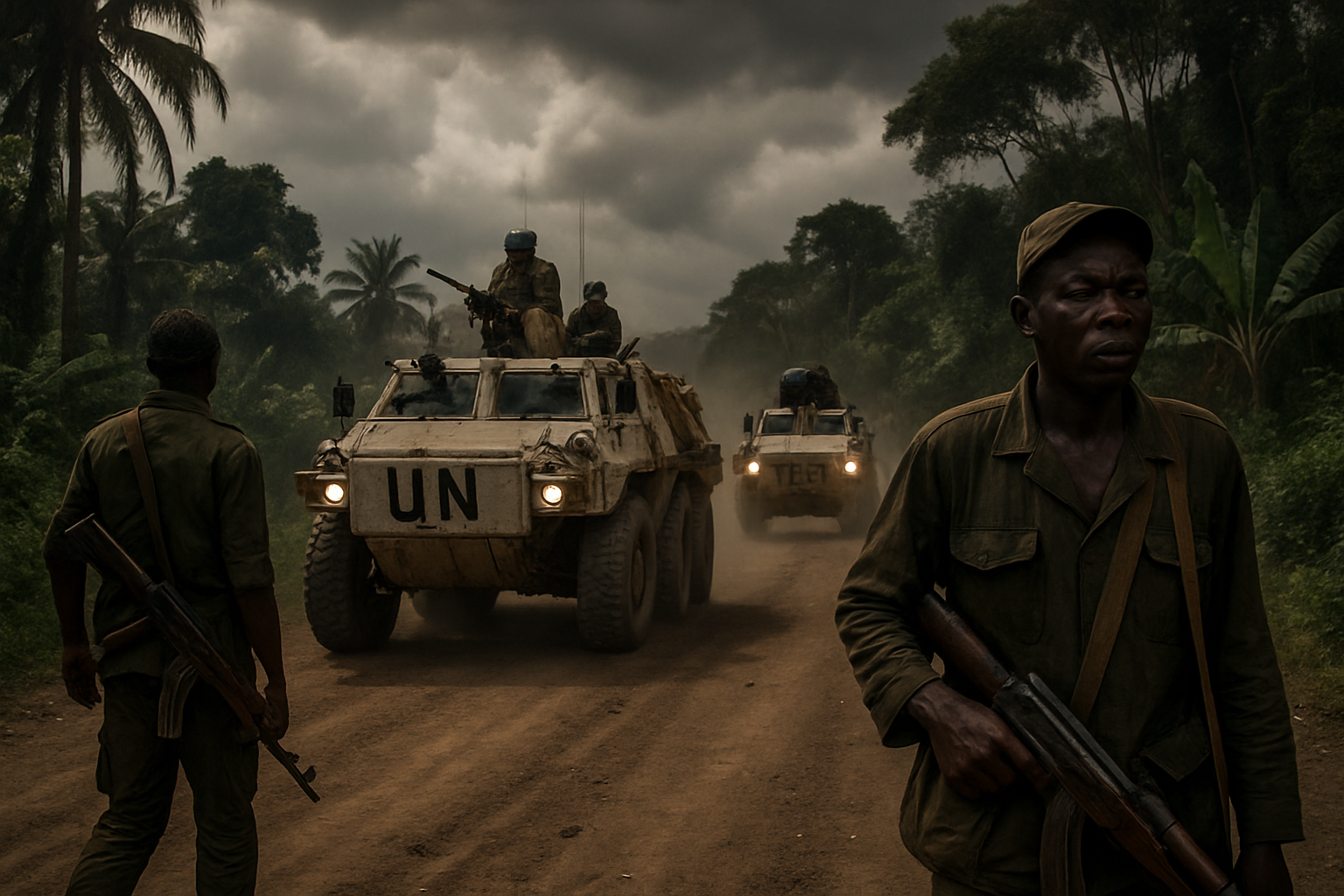
The Democratic Republic of Congo faces a dangerous escalation in its ongoing conflict as fierce battles between M23 rebels and Wazalendo militias have paralyzed critical supply routes in North Kivu province, while kamikaze drone attacks on Kisangani's Bangboka airport signal a troubling new phase in the eastern DRC violence.
For more than five days, hundreds of motorcycle taxi drivers and their passengers have been stranded on both sides of combat zones in the Masisi territory, cutting off one of North Kivu's main supply arteries. The fighting between the March 23 Movement (M23) and Wazalendo militia forces has effectively blocked transportation along routes vital to the province's economic survival.
Drone Warfare Marks New Escalation
The conflict took an alarming turn on Sunday, March 1, 2026, when Bangboka International Airport in Kisangani came under attack from kamikaze drones loaded with submunitions. The Tshopo provincial government attributed these attacks to the Rwandan Defense Forces (RDF) and M23 rebels, marking a significant escalation in the sophistication of weapons being deployed.
According to official statements, the drone strikes were deliberately timed during peak airport operational hours, maximizing disruption to civilian and military air traffic. This represents the latest in a series of attacks on the strategic airport, highlighting the growing use of advanced military technology in the conflict.
"These attacks have intensified during the busiest hours of airport activities, demonstrating a calculated strategy to disrupt both civilian and military operations."
— Tshopo Provincial Government Statement
International Sanctions Response
The escalating violence has prompted swift international action. On March 2, 2026, the United States announced the imposition of sanctions against the Rwandan Defense Forces (RDF) and four of their senior officers. Washington cited "direct operational support to the March 23 Movement (M23) and its affiliates in eastern Democratic Republic of Congo" as justification for the punitive measures.
These sanctions come despite previous diplomatic efforts, including a December 2025 peace accord between DRC President Félix Tshisekedi and Rwandan President Paul Kagame, mediated by then-President-elect Donald Trump in Washington. The agreement now appears to be unraveling as violence continues to escalate.
Humanitarian Crisis Deepens
The ongoing conflict has created a humanitarian catastrophe in eastern DRC. The blockade of supply routes has left communities cut off from essential goods, medicine, and food supplies. Motorcycle taxis, which serve as the primary mode of transportation for many residents in remote areas, have become casualties of the fighting as drivers and passengers find themselves trapped between opposing forces.
The strategic importance of the blocked routes cannot be overstated. These transportation arteries serve as lifelines for communities across North Kivu, facilitating trade, medical evacuations, and the movement of humanitarian aid. Their closure has effectively isolated thousands of civilians in conflict-affected areas.
M23's Strategic Objectives
The March 23 Movement, which has controlled significant territory in eastern DRC since its resurgence in 2021, appears to be pursuing a strategy of territorial consolidation and economic disruption. By blocking key supply routes and controlling strategic locations, the group has demonstrated its ability to project power far beyond the areas under its direct control.
The group's collaboration with Rwandan forces, as alleged by Congolese and international authorities, provides access to sophisticated weaponry including the drone technology used in recent attacks. This partnership has transformed M23 from a primarily ground-based rebel movement into a force capable of conducting complex military operations.
Regional Security Implications
The current escalation has broader implications for regional stability in Central and Eastern Africa. The conflict has strained relationships between DRC and Rwanda, despite previous diplomatic initiatives aimed at resolving their differences. The involvement of various militia groups, including the Wazalendo forces fighting against M23, has created a complex web of alliances and rivalries that defies simple resolution.
The use of advanced drone technology in the conflict also raises concerns about the proliferation of sophisticated weapons systems in the region. The ability to conduct precision strikes using kamikaze drones represents a significant escalation in the technical capabilities available to non-state armed groups.
International Community Response
Beyond the U.S. sanctions, the international community has struggled to develop an effective response to the escalating violence. Previous peace initiatives, including the East African Community-led diplomatic efforts, have failed to achieve lasting results as armed groups continue to compete for territorial control and resource access.
The involvement of multiple external actors, including alleged Rwandan support for M23 and various forms of international assistance to the Congolese government, has complicated efforts to achieve a negotiated settlement. Each new escalation appears to harden positions and reduce the space for diplomatic compromise.
Economic Impact
The conflict's economic impact extends far beyond the immediate areas of fighting. North Kivu province, rich in mineral resources including coltan essential for electronic devices, has seen its mining operations disrupted by ongoing violence. The province's mining sector, already affected by previous conflicts, faces new challenges as transportation networks remain compromised.
Local businesses dependent on cross-regional trade have suffered severe losses as supply chains remain disrupted. The motorcycle taxi industry, which provides employment for thousands of young people, has been particularly hard hit by the current crisis.
Looking Forward
The current escalation represents one of the most serious challenges to stability in eastern DRC since the height of previous conflicts in the region. The combination of traditional ground warfare, sophisticated drone technology, and the involvement of multiple armed groups creates a complex security environment that defies easy solutions.
The effectiveness of recently imposed international sanctions will likely depend on broader regional cooperation and the willingness of all parties to engage in meaningful dialogue. Without addressing the underlying causes of the conflict, including competition for natural resources and ethnic tensions, military solutions alone are unlikely to achieve lasting peace.
As hundreds of travelers remain stranded and communities face increasing isolation, the human cost of the conflict continues to mount. The international community faces growing pressure to develop more effective mechanisms for conflict resolution in one of Africa's most strategically important but troubled regions.