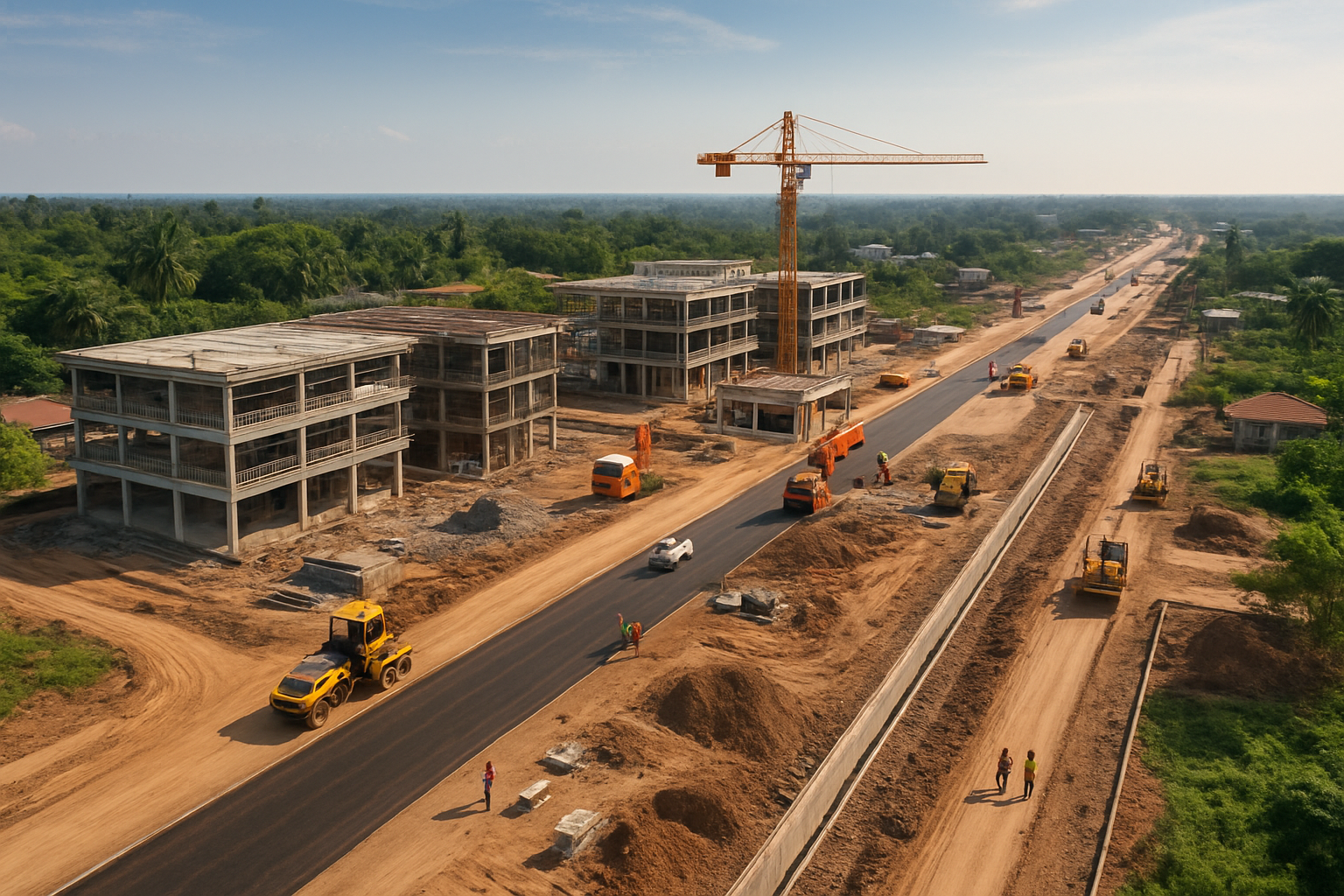
The Democratic Republic of Congo (DRC) is accelerating its development agenda through two major initiatives signed this week: a comprehensive urban governance improvement project for Boma city in partnership with Expertise France and the expansion of the STAR project into the country's western provinces.
The urban development protocol, signed Monday in Kinshasa between Expertise France and the Ministry of Territorial Development, focuses on enhancing the resilience of Boma city and improving living conditions for its inhabitants. Located in Kongo Central province, Boma represents a strategic test case for urban governance reforms that could be scaled across other Congolese cities.
Simultaneously, the STAR project—originally concentrated in the eastern provinces of Ituri, North Kivu, and South Kivu—is extending its reach to western regions including Mai-Ndombe, Kwilu, and Kwango provinces. This expansion signals a comprehensive national approach to development challenges that have long affected the vast Central African nation.
Boma Urban Governance Initiative
The agreement with Expertise France represents a shift toward evidence-based urban planning in the DRC, where rapid urbanization has often outpaced infrastructure development. Boma, historically significant as a former colonial administrative center, now serves as a laboratory for modern governance approaches that emphasize community resilience and sustainable development.
The initiative comes as part of France's broader engagement with francophone Africa, building on successful urban development partnerships across the continent. According to diplomatic sources, the project will focus on strengthening local administrative capacity, improving basic services delivery, and creating frameworks for community participation in urban planning decisions.
Urban development experts familiar with the project indicate that Boma's selection reflects its manageable size and strategic importance as a regional administrative hub. The lessons learned from this pilot program are expected to inform similar initiatives in larger Congolese cities including Kinshasa, Lubumbashi, and Kisangani.
STAR Project Western Expansion
The STAR project's expansion into western provinces represents a significant geographic broadening of what has been primarily an eastern DRC initiative. Originally designed to address specific challenges in conflict-affected eastern regions, the program's extension suggests its methodologies have proven effective enough to warrant national application.
Brigitte Kapinga, the project's national coordinator, confirmed during a Radio Okapi broadcast that the expansion reflects the program's success in building institutional capacity and delivering tangible improvements to local communities. The western provinces of Mai-Ndombe, Kwilu, and Kwango present different challenges from the eastern regions, requiring adapted approaches while maintaining core project principles.
The expansion aligns with the DRC's broader decentralization policies, which aim to strengthen provincial governance and reduce over-reliance on central government resources. These western provinces, rich in natural resources but historically underserved by development programs, represent significant potential for economic growth if properly supported.
Continental Development Context
These initiatives unfold within a broader continental infrastructure renaissance that has seen unprecedented investment across Africa. According to memory records from recent months, the DRC is participating in multiple development frameworks including the African Continental Free Trade Area (AfCFTA) and strategic partnerships with international donors.
The timing of these announcements coincides with major infrastructure developments across the continent, including Algeria's Gara Djebilet railway project accessing some of the world's largest iron ore reserves, Angola's Lobito Corridor revival connecting Atlantic ports to DRC mining regions, and Tanzania's completion of railway feasibility studies for over 1,000 kilometers of new track.
African Finance Corporation data indicates that the continent holds $29.5 trillion in mineral reserves, with $8.6 trillion remaining untapped. The DRC, as one of Africa's most mineral-rich nations, stands to benefit significantly from improved governance and infrastructure development that can attract responsible international investment.
Implementation Challenges and Opportunities
Both projects face significant implementation challenges common to development initiatives in post-conflict societies. The DRC's vast territory, limited infrastructure, and complex governance structures require innovative approaches to program delivery and monitoring.
Security considerations remain paramount, particularly for the STAR project's operations in regions that have experienced decades of conflict. However, the project's expansion suggests that security conditions have improved sufficiently to warrant increased investment and presence.
The urban governance project in Boma faces different but equally complex challenges related to building sustainable local capacity, ensuring community buy-in, and creating systems that can function independently of international support. Success will require balancing international expertise with local knowledge and priorities.
"These projects represent more than infrastructure development—they're about building the foundations for sustainable governance and economic growth that can benefit all Congolese citizens."
— Development sector analyst familiar with DRC programs
Regional Integration Implications
The DRC's development initiatives occur within the context of increased regional integration efforts. As a member of multiple regional organizations including the East African Community (EAC) and the Southern African Development Community (SADC), the DRC's progress has implications beyond its borders.
The country's strategic position linking Central, Eastern, and Southern Africa makes its development crucial for regional trade and economic integration. Improved governance and infrastructure could position the DRC as a key player in continental trade networks envisioned under the AfCFTA.
Recent diplomatic developments, including the DRC's participation in various African Union initiatives and its engagement with international partners, suggest growing confidence in the country's institutional capacity and political stability.
Technology and Innovation Integration
Modern development projects increasingly incorporate digital technologies for monitoring, evaluation, and service delivery. Both the Boma governance project and STAR expansion are expected to utilize technology solutions adapted to local contexts and capacity constraints.
The integration of mobile communication platforms, digital payment systems, and data collection tools represents an opportunity for the DRC to leapfrog traditional development phases, similar to advances seen in mobile banking and telecommunications across Africa.
However, technology integration must be balanced with capacity building and infrastructure development to ensure sustainability and broad accessibility across diverse populations and geographic regions.
Looking Ahead
The success of these initiatives will be measured not only by immediate outputs but by their contribution to longer-term institutional capacity building and sustainable development outcomes. Both projects include provisions for knowledge transfer, local capacity building, and gradual transition to national ownership.
As the DRC continues to emerge from decades of conflict and instability, these development partnerships represent crucial steps toward building resilient institutions and sustainable economic growth. The expansion of successful programs and adoption of proven methodologies suggest a maturing approach to development cooperation.
The international community's continued engagement, combined with growing domestic capacity and political commitment, creates optimism for sustained progress. However, success will ultimately depend on maintaining focus on governance improvements, community participation, and transparent implementation of development programs.
With these two major initiatives now underway, the DRC is positioning itself as an increasingly capable partner in international development cooperation, while working to address the fundamental governance and infrastructure challenges that have long constrained its vast potential.