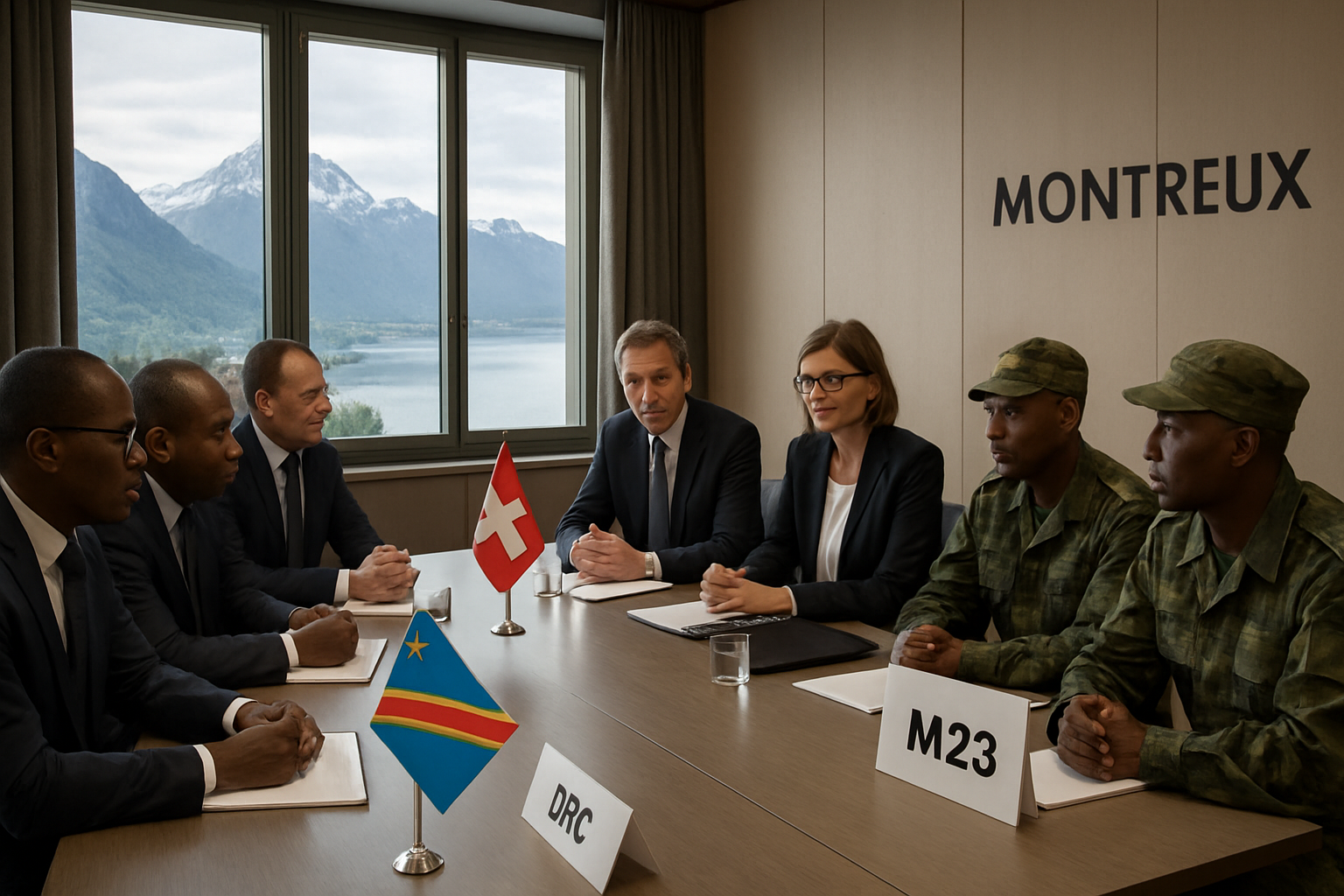
The Democratic Republic of Congo government and M23 rebel coalition announced historic agreements on Sunday to facilitate humanitarian aid deliveries and protect civilians following intensive negotiations in Montreux, Switzerland, representing the most significant diplomatic breakthrough in the eastern DRC conflict since 2021.
The agreements, reached after multi-day talks between representatives of the DRC government and the Alliance Fleuve Congo/Mouvement du 23 Mars (AFC/M23), establish protocols for humanitarian access, civilian protection, prisoner releases, and ceasefire monitoring mechanisms. MONUSCO, the UN peacekeeping mission in DRC, welcomed the progress in a communiqué published Sunday, describing the developments as crucial steps toward lasting peace in the region.
Breakthrough Humanitarian Commitments
Under the agreements reached in Montreux, both parties committed to facilitating humanitarian aid deliveries within 10 days and establishing prisoner release mechanisms. The Rwanda-backed AFC/M23 group, which has controlled large swaths of eastern DRC territory since resuming operations in 2021, agreed to ensure safe passage for humanitarian organizations operating in contested areas.
The talks also produced significant progress on developing a comprehensive protocol for ceasefire oversight, addressing one of the most challenging aspects of previous peace initiatives. International mediators praised the establishment of judicial protection mechanisms and frameworks for ensuring humanitarian access to vulnerable populations.
"The progress made in Montreux represents a critical step toward addressing the humanitarian crisis affecting millions of civilians in eastern DRC."
— MONUSCO Official Statement
Historical Context of the Conflict
The current agreements come after years of escalating violence in eastern DRC, where M23 has controlled significant territory including strategic mining areas since May 2024. The rebel group's resurgence in 2021 coincided with broader regional instability and has been complicated by allegations of Rwandan support, leading to US sanctions against Rwandan Defense Forces in March 2026.
The conflict has exacted a devastating humanitarian toll, with recent mining disasters at the Rubaya coltan mine—under M23 control—claiming over 500 lives in 2026 alone. The site, which produces 15-30% of the world's coltan supply essential for electronics manufacturing, exemplifies how the conflict intertwines with global supply chains and mineral resources.
Previous diplomatic efforts, including a December 2025 peace accord between DRC President Félix Tshisekedi and Rwandan President Paul Kagame mediated by then-President Trump, failed to achieve lasting stability. The March 2026 US sanctions and subsequent escalations, including drone attacks on Goma that killed UN personnel, demonstrated the urgency of renewed diplomatic engagement.
Strategic Implications for Regional Security
The Montreux agreements represent a potential turning point in a conflict that has regional and global implications. Eastern DRC contains critical mineral reserves including cobalt, lithium, and coltan essential for renewable energy technologies and electronic devices. The DRC's participation in the US-EU-Japan Critical Minerals Partnership, aimed at challenging Chinese dominance in strategic minerals, depends partly on stabilizing the security situation.
The humanitarian focus of the current agreements addresses immediate civilian protection needs while creating potential pathways for broader political resolution. Unlike previous initiatives that prioritized territorial arrangements, the emphasis on humanitarian access and civilian protection reflects lessons learned from earlier failed negotiations.
International Support and Mediation
Switzerland's role as neutral mediator proved crucial in facilitating dialogue between parties that have maintained fundamental disagreements over territorial control and political representation. The choice of Montreux, known for hosting previous international diplomatic initiatives, underscored the seriousness of the current effort.
The African Union and regional organizations have emphasized the importance of African-led solutions while acknowledging the need for international support. Recent AU Peace and Security Council elections brought both DRC and other regional actors into leadership roles, potentially enhancing prospects for sustained diplomatic engagement.
Implementation Challenges and Opportunities
Despite the breakthrough agreements, significant implementation challenges remain. The eastern DRC region faces ongoing instability from multiple armed groups beyond M23, including the Allied Democratic Forces (ADF), which has conducted attacks resulting in hundreds of casualties. Humanitarian organizations will need security guarantees and practical access arrangements to effectively reach vulnerable populations.
The 10-day timeline for humanitarian aid implementation will test both parties' commitment to the agreements. Previous initiatives have foundered on verification and monitoring mechanisms, making the establishment of effective oversight protocols essential for success.
Economic dimensions also complicate implementation. The region's strategic mineral wealth creates incentives for continued conflict, while legitimate economic development remains constrained by insecurity. Successful implementation would require addressing both immediate humanitarian needs and longer-term economic governance challenges.
Regional and Global Stakes
The success or failure of the Montreux agreements carries implications extending beyond the immediate parties. Regional stability in Central Africa affects continental integration efforts through the African Continental Free Trade Agreement (AfCFTA) and broader infrastructure development initiatives including the Angola Lobito Corridor connecting Atlantic ports to DRC's mineral-rich interior.
Global supply chain considerations add urgency to conflict resolution efforts. The semiconductor industry's dependence on DRC cobalt and coltan makes eastern DRC stability a matter of international economic security. Recent disruptions to copper export corridors from bridge collapses have demonstrated how regional instability can affect global markets.
"These agreements represent hope for millions of civilians who have endured years of conflict and displacement in eastern DRC."
— International Observer
Path Forward
The immediate focus will be on implementing the agreed humanitarian protocols and monitoring compliance with civilian protection commitments. Success in these initial phases could create momentum for addressing broader political questions including territorial arrangements and long-term governance structures.
The emphasis on humanitarian access reflects recognition that civilian protection must precede political resolution. Previous peace efforts that prioritized territorial settlements while neglecting humanitarian concerns failed to achieve sustainable outcomes. The current approach seeks to build confidence through concrete improvements in civilian welfare.
International partners will play crucial roles in providing technical support, monitoring mechanisms, and resources for humanitarian implementation. The EU's €90 billion commitment to regional stability initiatives and China's expanded African engagement create opportunities for coordinated international support if properly managed.
Looking Ahead
While the Montreux agreements represent significant progress, they constitute only initial steps toward comprehensive conflict resolution. The true test will come in implementation, particularly whether both parties can maintain commitments amid ongoing military pressures and competing political interests.
The humanitarian focus provides a foundation for broader peace efforts by demonstrating practical cooperation benefits. If successful, these agreements could serve as templates for addressing other regional conflicts where humanitarian access and civilian protection have been compromised by political disputes.
The international community's sustained engagement will prove essential for supporting implementation and maintaining momentum toward comprehensive peace. The convergence of humanitarian urgency, strategic mineral considerations, and regional stability needs creates both opportunities and obligations for effective international cooperation in supporting DRC's path toward lasting peace and development.