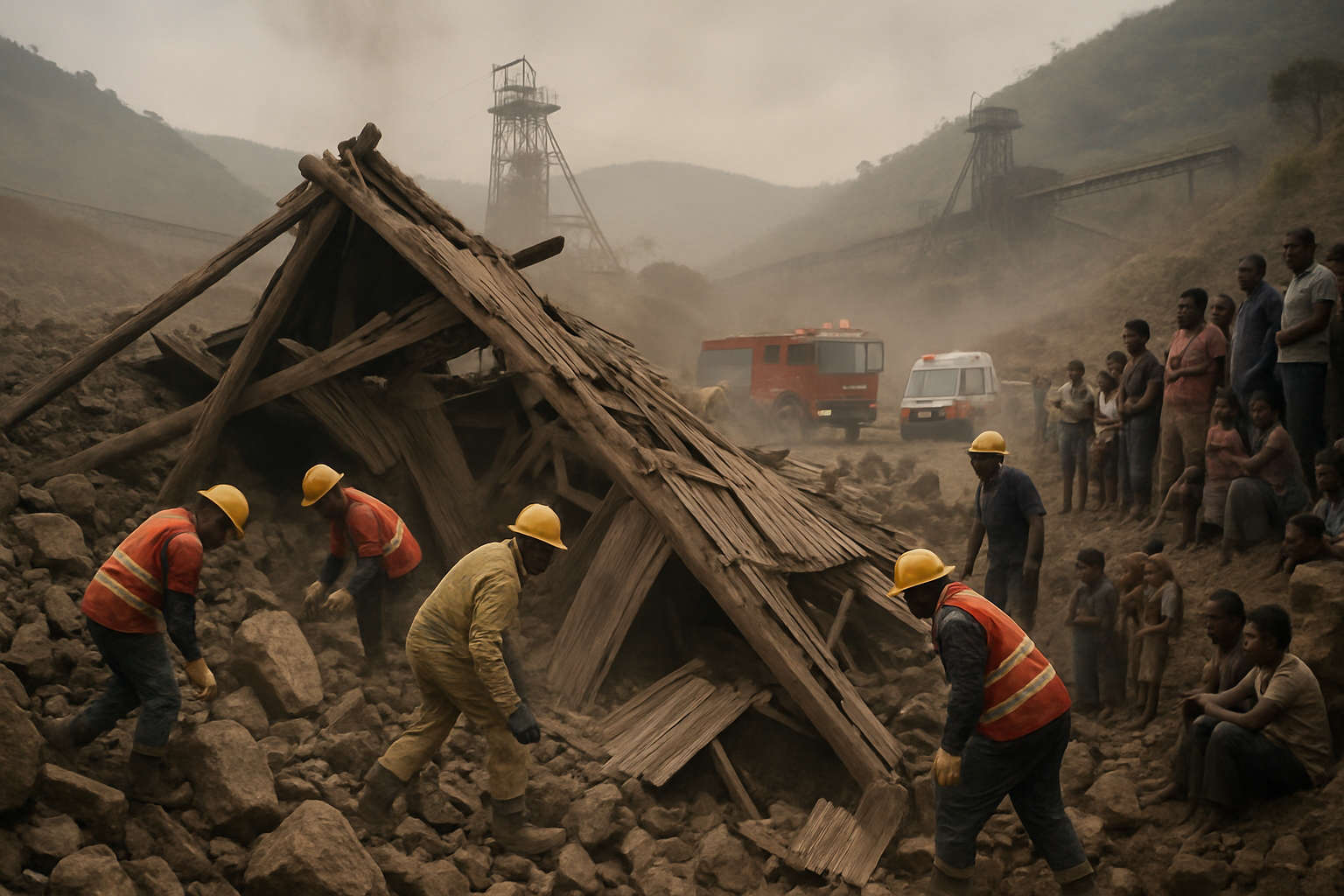
The Democratic Republic of Congo's Mining Minister Louis Watum Kabamba expressed "deep consternation" following another deadly collapse at the Rubaya mining site in North Kivu's Masisi territory, pointing to systematic failures in safety protocol compliance at one of the world's most critical coltan mining locations.
The Minister's statement on March 5, 2026, comes as the latest tragedy at the strategically important mining site underscores the persistent safety crisis plaguing African mining operations. While presenting condolences to victims' families, Kabamba specifically highlighted the "negligence of security standards" at the Rubaya site, which supplies an estimated 15-30% of the world's coltan—a mineral essential for smartphone and electronic device manufacturing.
Pattern of Recurring Disasters
The Rubaya mine has become synonymous with mining tragedies in the Democratic Republic of Congo. Previous incidents at the same location have claimed hundreds of lives, with February and March 2026 marking particularly devastating months. According to mining safety records, the site has experienced multiple catastrophic landslides, with heavy rains frequently triggering deadly collapses that trap miners working in dangerous underground conditions.
The latest incident adds to a grim tally that has seen over 500 deaths at the Rubaya location across multiple disasters this year alone. The site's proximity to areas controlled by the M23 rebel group since May 2024 has complicated rescue operations and regulatory oversight, creating a complex web of security and safety challenges.
Strategic Importance Amid Safety Crisis
Despite its deadly reputation, Rubaya remains crucial to global electronics supply chains. The mine's coltan deposits are among the most significant worldwide, making the site strategically important for international technology companies dependent on the mineral for manufacturing capacitors and other electronic components.
"Every safety violation here affects not just our workers and their families, but the global supply chain that depends on these resources."
— Louis Watum Kabamba, DRC Minister of Mines
The Minister's criticism of safety standard violations comes at a time when the Democratic Republic of Congo is positioning itself as a key partner in the US-EU-Japan Critical Minerals Partnership, aimed at challenging China's dominance in critical mineral processing. The country's participation in this strategic alliance makes the safety crisis at Rubaya particularly problematic for its international reputation and investment attractiveness.
Artisanal Mining's Human Cost
The Rubaya site exemplifies the challenges facing artisanal mining operations across Africa. Women and children regularly work at the location under dangerous conditions without basic safety protections, highlighting the human cost of mineral extraction that powers the global digital economy.
Witnesses and mining safety experts describe working conditions characterized by inadequate structural support, poor ventilation systems, and the absence of emergency response protocols. The remote location of many mining sites, combined with limited government oversight capacity in conflict-affected regions, creates an environment where safety standards are routinely ignored.
Regulatory Response and Reform Efforts
Minister Kabamba's condemnation represents part of a broader push for mining sector reform in the Democratic Republic of Congo. The government has already demonstrated its willingness to take enforcement action, including the suspension of Congo Dongfang Mining operations in Lubumbashi following environmental violations in 2025.
However, implementing safety standards in artisanal mining operations presents unique challenges. Unlike industrial mining operations with standardized safety protocols, artisanal sites often lack the infrastructure and capital investment necessary for comprehensive safety systems.
International Implications
The ongoing safety crisis at Rubaya threatens to complicate the Democratic Republic of Congo's participation in international critical minerals partnerships. As Western nations seek alternatives to Chinese-controlled supply chains, safety and environmental standards have become increasingly important factors in partnership agreements.
The African Continental Free Trade Area (AfCFTA) framework has created opportunities for cross-border mining ventures and regional value chains, but persistent safety challenges could undermine investor confidence and limit the country's ability to capitalize on these opportunities.
Technology and Safety Integration
Mining safety experts suggest that modern technology could significantly improve conditions at sites like Rubaya. Digital monitoring systems, automated safety alerts, and real-time geological assessments represent potential solutions, but implementing such technologies requires substantial investment and technical expertise.
The integration of advanced safety systems with traditional mining practices presents both opportunities and challenges. While technology can enhance worker protection, successful implementation requires community engagement, training programs, and sustained financial commitment.
Economic Development vs. Human Safety
The Rubaya tragedy highlights the broader tension between economic development and human safety in Africa's mining sector. The continent holds an estimated $29.5 trillion in mineral reserves, with $8.6 trillion remaining untapped according to African Finance Corporation data. However, realizing this potential requires addressing fundamental safety and governance challenges.
Recent mining investments across Africa, including significant projects in Ivory Coast, South Africa, and Burkina Faso, have incorporated enhanced environmental and safety standards as prerequisites for international investment. These examples provide potential models for improving conditions at artisanal sites like Rubaya.
Path Forward
Minister Kabamba's call for improved safety standards represents a critical moment for the Democratic Republic of Congo's mining sector. The government's acknowledgment of safety failures at Rubaya could signal a shift toward more rigorous enforcement of mining regulations.
Success in addressing the Rubaya crisis will require coordinated action across multiple fronts: enhanced regulatory oversight, investment in safety infrastructure, community engagement, and potentially international technical assistance. The global importance of the site's coltan deposits provides leverage for demanding higher standards from international partners and technology companies that depend on these resources.
As the Democratic Republic of Congo seeks to position itself as a responsible mining partner in global supply chains, the safety record at sites like Rubaya will increasingly determine its success in attracting sustainable international investment and ensuring that mineral wealth benefits local communities rather than extracting a deadly toll from them.